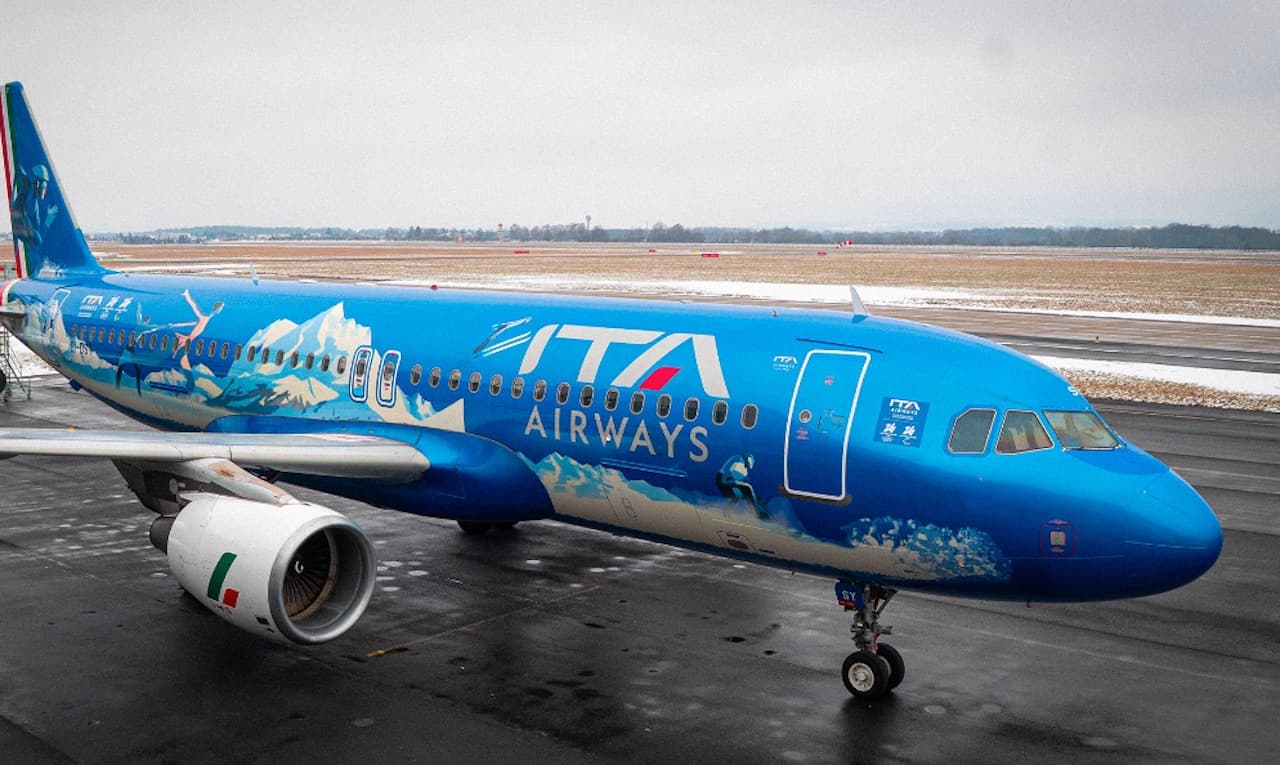
ITA Airways has announced a significant expansion of its summer 2026 network, centered on its Rome-Fiumicino hub. The Italian carrier is launching three new daily seasonal routes to Malaga, Valencia, and Marseille, operating from June 1 to September 30, 2026. These additions complement existing Mediterranean services to Ibiza, Palma de Mallorca, and Nice, reinforcing ITA's position as a key player in the region. For ATPL and ATC students, this expansion illustrates how airlines optimize hub-and-spoke networks during peak seasons, a core concept in airline management and flight planning.
Beyond the Mediterranean, ITA Airways is strengthening its long-haul operations. The Rome-Houston route, a first non-stop connection between the two cities, will operate five times weekly from June to September. Additionally, frequencies on Rome-Bangkok will increase from three to five weekly flights in August, while Rome-Delhi becomes daily with seven weekly services. These moves respond to growing demand for travel to North America and Asia, highlighting the importance of network planning and capacity management—key topics in ATPL syllabus modules on flight planning and airline operations.
The airline is also upgrading its fleet, deploying newer-generation Airbus A320neo, A321neo, and A330neo aircraft on European and intercontinental routes. This modernization reduces fuel consumption and CO₂ emissions, aligning with environmental trends that ATC and pilot trainees must understand, such as noise abatement procedures and fuel-efficient flight profiles. Meanwhile, ITA's integration into the Lufthansa Group, with a 41% stake and planned entry into Star Alliance in 2026, will reshape its network through code-sharing with Lufthansa, Swiss, Austrian, and Brussels Airlines. Rome-Fiumicino is set to become a Mediterranean hub for the group, a development that ATC students should monitor for changes in traffic flows and slot coordination.
For ATPL students, this news offers a practical case study in seasonal network adjustments, fleet planning, and alliance dynamics. ATC trainees can analyze how increased frequencies and new routes impact airspace capacity, especially at busy hubs like Rome-Fiumicino. Understanding these strategic decisions helps future aviation professionals anticipate operational challenges and opportunities in their careers.