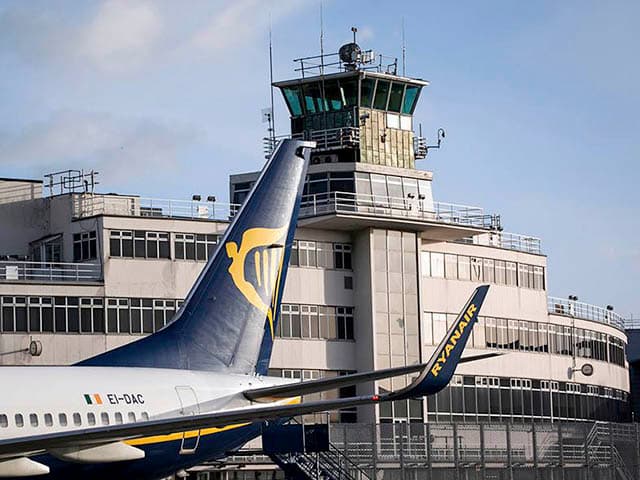
The Irish government is preparing to remove a major constraint on Dublin Airport (DUB): the annual passenger cap of 32 million. A legislative reform, expected by summer, could unlock growth at Ireland's main hub, as airlines and authorities worry about a potential freeze on flight slots under European legal pressure.
**Why this matters for aviation training**
For ATPL and ATC students, this is a textbook example of how non-operational regulations shape daily operations. The cap, introduced in 2007 as part of the airport's planning conditions, was meant to manage local environmental impact. But traffic has since surged: in 2025, Dublin handled over 36 million passengers, exceeding the limit by 4 million. The Irish Aviation Authority (IAA) now faces a legal challenge that could force it to strictly apply the cap when allocating takeoff and landing slots. If the Court of Justice of the European Union (CJEU) rules in favor of strict enforcement, airlines could see immediate reductions in flight numbers, new route freezes, and capacity constraints.
**Operational impact and airline stakes**
Ryanair and Aer Lingus are leading the push for the cap's removal. Ryanair has already reported losing over a million seasonal seats at Dublin in 2024 due to the limit. Aer Lingus relies heavily on Dublin as a transatlantic hub, with U.S. preclearance making it a key gateway for Europe–North America flows. Any slot restriction would directly affect its connecting model. The case highlights how regulatory frameworks can override market demand, a reality pilots and controllers must navigate when planning schedules or managing delays.
**Legal timeline and training relevance**
The High Court suspended the IAA's approach in November 2024 and referred questions to the CJEU. A decision is expected in the coming months. For students, this is a real-world example of how EU law interacts with national aviation policy. Understanding slot allocation rules (IATA guidelines, EU Regulation 95/93) is part of ATPL and ATC curricula, and this case shows how legal interpretations can suddenly alter capacity. The Irish government hopes to pass the Dublin Airport Passenger Capacity Bill 2026 before the summer recess, but if delayed, the cap could remain a binding constraint.
**Conclusion**
Dublin's situation is a reminder that aviation is never just about aircraft performance or air traffic control—it is deeply embedded in legal and political frameworks. For those training to become pilots or controllers, following such developments builds awareness of the broader context in which they will operate.