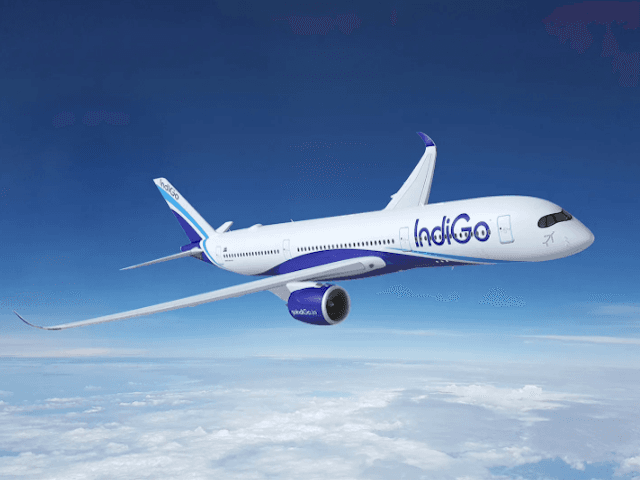
IndiGo, India's dominant low-cost carrier, has confirmed it is developing a dedicated business class product for its future Airbus A350-900 fleet, expected to enter service around 2027. This announcement, made during a recent investor presentation, signals a major strategic pivot for an airline that has built its success on short- and medium-haul point-to-point operations. While specific details about seat design, cabin configuration, or service standards remain undisclosed, the move is clearly aimed at capturing a share of the rapidly growing India-Europe travel market.
The decision to introduce a long-haul business class comes as IndiGo expands its A350 order book from 30 to up to 60 aircraft, following a doubling of its commitment in 2025. These widebodies will primarily serve European destinations, a market where Indian carriers are gaining ground amid shifting dynamics among Gulf and European competitors. For aviation students, this evolution illustrates how low-cost business models are adapting to intercontinental routes, blending cost efficiency with premium service—a trend that will reshape fleet planning, crew training, and operational strategies.
IndiGo already offers a premium product called "IndiGoStretch" on select Airbus A321neo and A321XLR aircraft, as well as on wet-leased Boeing 787-9s from Norse Atlantic Airways. However, this regional business class is not fully competitive with international long-haul standards. The A350's dedicated cabin is expected to bridge that gap, with the airline planning to grow its premium seat count from 2,800 in March 2026 to approximately 4,300 by March 2027, driven by new A321XLR deliveries. This ramp-up reflects a broader industry trend: low-cost carriers moving upmarket to capture higher-yield passengers on long-haul routes.
From a financial perspective, IndiGo is also restructuring its fleet ownership model. Currently, about 75% of its 441 aircraft are under operating leases, but the airline aims to increase owned and financed aircraft to 30–40% by 2030, citing long-term profitability benefits. This shift has implications for ATPL students studying airline economics, as it affects balance sheets, depreciation, and fleet management decisions. With a backlog of over 900 aircraft, IndiGo's trajectory offers a real-world case study in scaling operations while transitioning from a pure low-cost to a hybrid carrier.
For ATC trainees, IndiGo's expansion means increased traffic complexity at Indian hubs like Delhi and Mumbai, especially as long-haul flights to Europe require coordination with multiple air navigation service providers. Understanding how airline strategies influence route networks and slot allocation is essential for future controllers. Overall, IndiGo's move into long-haul premium travel is a textbook example of how market forces drive airline evolution—a topic central to ATPL and ATC training.