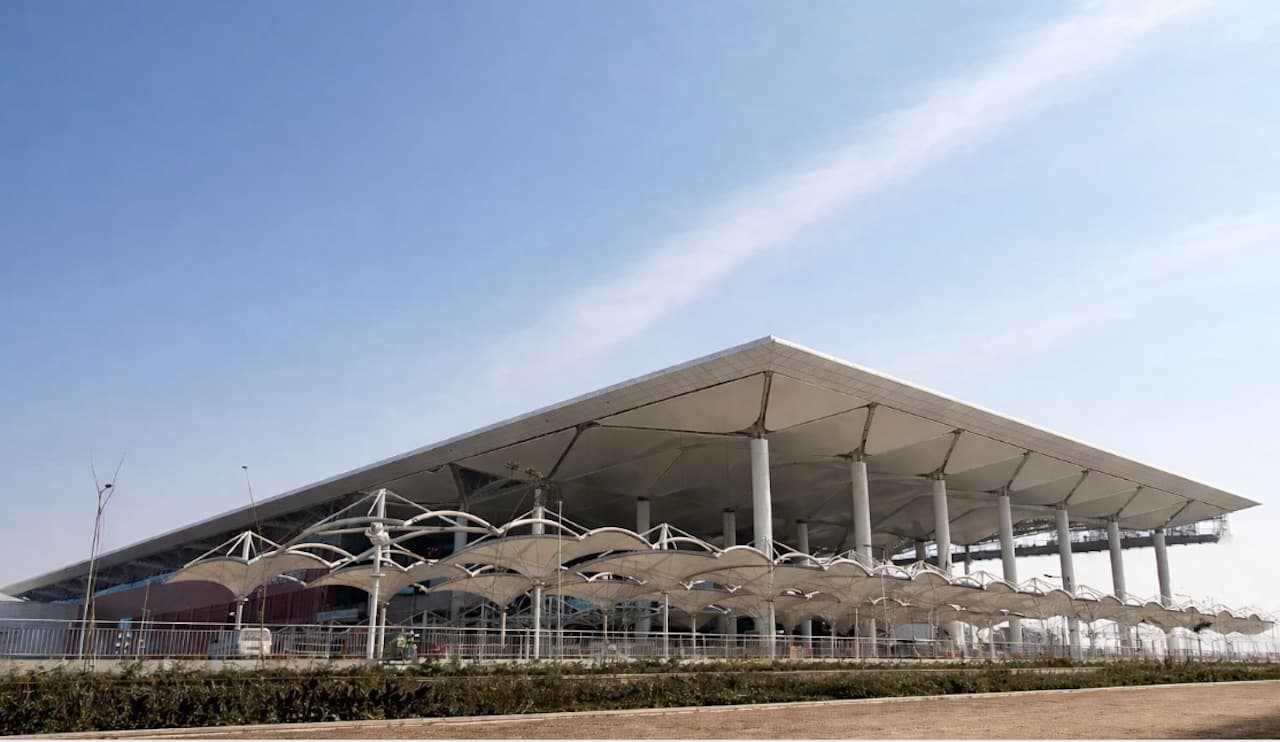
India is on the verge of opening a major new aviation infrastructure to handle its surging air traffic. The Noida International Airport (NIA), also known as Jewar Airport, located about 70 km southeast of Delhi, is set to begin commercial operations on June 15, 2026. This ambitious project, led by Zurich Airport International, aims to relieve the heavily congested Indira Gandhi International Airport (DEL) and support the rapid growth of both domestic and international air travel in the region.
**Phased Launch and Initial Operations**
The airport will start with a single runway and a modern terminal designed for operational efficiency, including reduced walking distances and smooth passenger flows. IndiGo, India's largest domestic carrier, will operate the first commercial flight, followed by Akasa Air and Air India Express. Initial services will focus on domestic routes, leveraging India's dense and expanding domestic network. The airport's initial capacity is set at 12 million passengers per year, with long-term plans to expand to two runways and a capacity of up to 70 million passengers annually, making it one of the most ambitious airport projects in South Asia.
**Strategic Importance for Delhi's Airspace**
Delhi's Indira Gandhi Airport handled over 73 million passengers in 2023, making it one of the world's most congested hubs. The Noida airport is part of a multi-airport strategy for the capital region, similar to London or Paris. By diverting a significant portion of domestic and eventually international traffic, NIA will help reduce delays and improve efficiency in one of the busiest airspaces in Asia. For ATC students, this represents a real-world example of airspace management and slot coordination under high-density conditions.
**A Case Study for Aviation Students**
For ATPL and ATC trainees, the Noida airport project offers valuable lessons in airport planning, capacity management, and the operational challenges of multi-airport systems. The phased expansion model, the integration of low-cost carriers, and the focus on sustainability and efficiency are all topics directly relevant to modern aviation operations. Understanding such developments helps future pilots and controllers anticipate the complexities of working in rapidly growing markets like India.
**Market Context**
India is projected to become the world's third-largest aviation market by the end of this decade, driven by a growing middle class and massive aircraft orders from carriers like IndiGo and Air India. The Noida airport is a critical piece of infrastructure to absorb this demand and maintain service quality. For students, this underscores the importance of infrastructure investment in sustaining aviation growth and the role of airports as strategic assets.