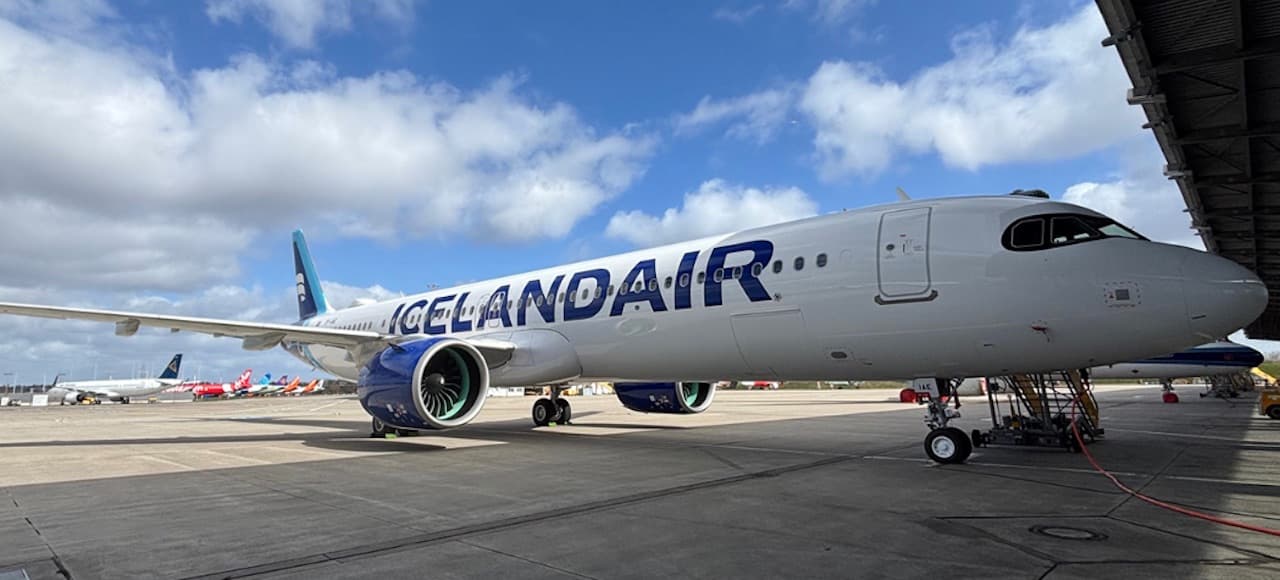
Icelandair has expanded its European network with a new route to Venice Marco Polo Airport, launched on May 22, 2026. The service operates three times weekly (Tuesday, Friday, Sunday) using Boeing 737 MAX 8 aircraft, running through October 18, 2026, covering the full summer season. This is Icelandair's fourth Italian destination, joining Rome, Milan, and Verona, highlighting Italy's growing importance in the carrier's network strategy.
For ATPL and ATC students, this route is a textbook example of hub-and-spoke operations. Icelandair leverages Reykjavik's Keflavik Airport as a mid-Atlantic hub, offering short connection times to North American cities like New York, Boston, Toronto, and Seattle. The airline's commercial director, Tomas Ingason, emphasized that the new link "strengthens our strategy to connect Europe and North America via our Keflavik hub." This model is particularly relevant for students studying airline network planning, as it demonstrates how secondary hubs can compete with major European gateways by exploiting geographic advantages.
The route also showcases the "stopover" program, a key differentiator for Icelandair. Passengers can stay in Iceland for up to seven days at no extra fare before continuing to North America. This concept is a valuable lesson in product differentiation and ancillary revenue generation, topics often covered in ATPL commercial and business studies modules. For ATC trainees, the operation of a seasonal route with specific days and times (Tuesday, Friday, Sunday) provides insight into slot coordination and capacity management at a hub airport.
From an operational perspective, the use of the Boeing 737 MAX 8 on a transatlantic sector is noteworthy. This aircraft type is increasingly used for long, thin routes, and its performance characteristics—range, fuel efficiency, and payload—are critical for flight planning and performance calculations in ATPL training. The Venice route also illustrates how airports like Marco Polo can enhance their indirect transatlantic connectivity without relying solely on direct long-haul flights, a trend that affects airspace design and traffic flow management.
In summary, this development is not just a piece of airline news; it is a practical case study for aviation students. It ties together network strategy, hub operations, aircraft performance, and commercial innovation—all core elements of ATPL and ATC curricula. Understanding such real-world applications helps students bridge theory and practice, preparing them for careers in a dynamic industry.