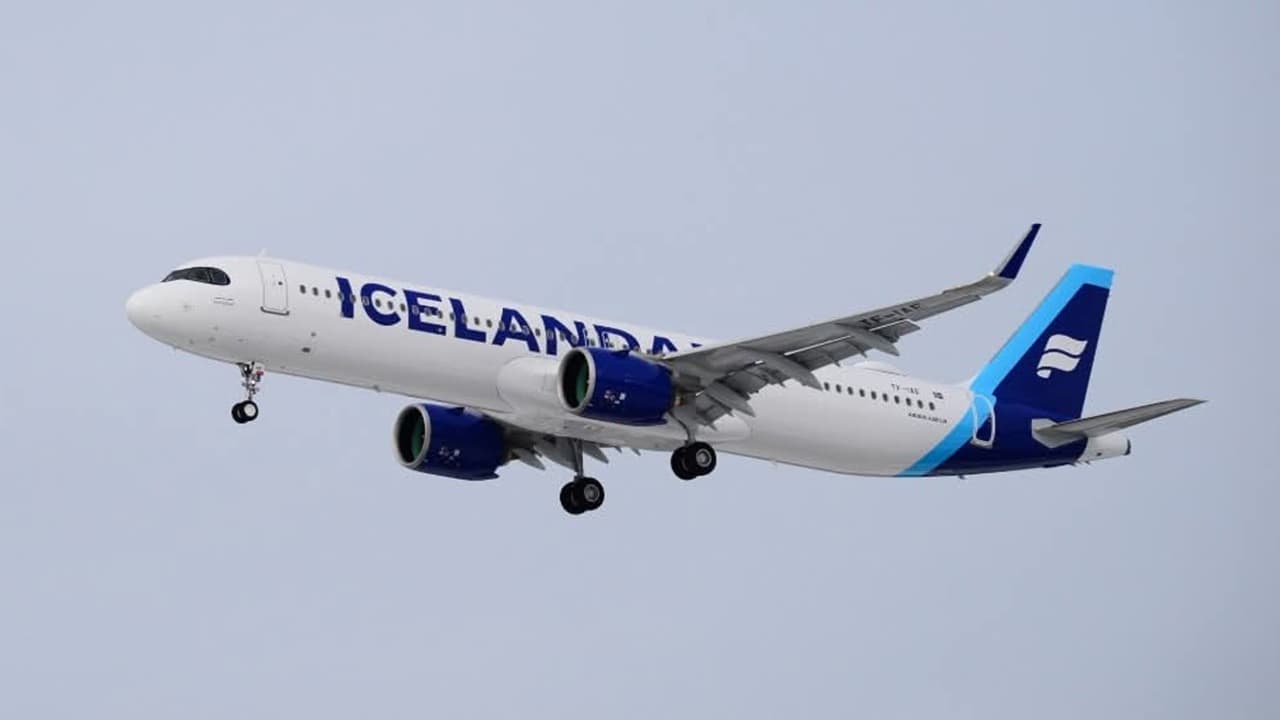
**Icelandair accelerates its fleet modernization with a significant addition of Airbus A320neo aircraft.** The Icelandic carrier has signed lease agreements with Aircastle for six Airbus A320neo, complementing four already secured from AviLease. These ten second-hand narrowbodies, powered by Pratt & Whitney engines (likely PW1100G-JM of the GTF family) and built between 2018 and 2020, will be delivered before summer 2028. This move is part of a broader strategy to phase out the aging Boeing 757 and 767, positioning Icelandair with a modern, fuel-efficient fleet by 2028.
**The strategic shift from Boeing to Airbus is a landmark for Icelandair.** Historically, the airline has relied on Boeing 757s to support its hub-and-spoke model at Keflavík, leveraging Iceland's geographic position between Europe and North America. The introduction of the A321LR and future A321XLR (from 2029) will take over transatlantic routes, offering better environmental and economic performance than the 757. With the arrival of the ten A320neo, Icelandair's Airbus fleet will grow to 20 aircraft by 2028, a clear signal of its commitment to modernizing operations.
**The phase-out of the Boeing 757 and 767 is accelerating.** According to industry analyses, three 767-300ERs will leave the fleet earlier than planned, with widebody passenger operations ending in 2026 instead of 2029. Icelandair plans to cease passenger operations of the 757 and 767 by January 2027, making it an all-new-generation single-aisle airline on its passenger network, with 737 MAX, A320neo, and A321LR. This strategy aligns with other European carriers that have embraced the 'long-haul narrowbody' concept for transatlantic routes.
**The economic and environmental benefits are compelling.** CEO Bogi Nils Bogason emphasizes that the new-generation aircraft consume up to 30% less fuel per seat, reducing operational costs and improving reliability. This fleet simplification also supports Icelandair's ambitions to expand its route network and enhance customer experience. In 2025, Icelandair carried 5.1 million passengers to 64 destinations, employing around 3,500 people and generating approximately $1.5 billion in revenue.
**Leasing partners play a crucial role in this transition.** Aircastle, a global lessor with offices in Stamford, Dublin, and Singapore, and AviLease, a newer player backed by Gulf capital, are central to Icelandair's strategy. This trend highlights the growing importance of leasing in fleet planning for mid-sized airlines, allowing them to adapt quickly to market demands without massive capital expenditure.