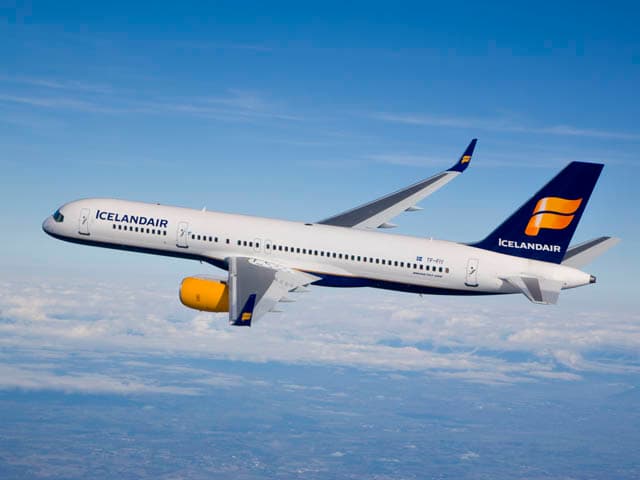
**Icelandair accelerates Boeing 757 retirement: a case study in fleet economics**
Icelandair has announced it will retire its remaining Boeing 757 aircraft by the winter of 2026–2027, nearly a year earlier than previously planned. The decision, driven by soaring fuel costs and rising maintenance expenses, marks the end of an era for an aircraft that has been the backbone of the airline's transatlantic hub model at Keflavik Airport. For ATPL and ATC students, this real-world example offers valuable insights into how airlines balance operational efficiency, route planning, and cost pressures.
**Why the 757 is being retired early**
The Boeing 757, a narrow-body long-haul twinjet, has served Icelandair for over three decades, enabling the airline to connect secondary European and North American cities via its Keflavik hub. However, the aircraft's fuel consumption has become a significant liability in an environment of persistently high jet fuel prices. Snorri Tomasson, Icelandair's director of network planning, confirmed that the 757's variable costs are now too high, making it uneconomical to operate on many routes. Additionally, maintenance costs and parts logistics have become more challenging as the fleet ages. This situation mirrors the broader industry trend where older, less fuel-efficient aircraft are being phased out in favor of next-generation narrow-bodies.
**The new fleet: 737 MAX and A321LR/XLR**
Icelandair is transitioning to a more homogeneous fleet centered on the Boeing 737 MAX and the Airbus A321LR and A321XLR. The airline already operates 21 737 MAX aircraft, which handle medium-haul and some transatlantic routes. The A321LR, with its lower seat-mile costs and sufficient range to reach the U.S. West Coast from Iceland, is taking over many of the 757's long-haul missions. The upcoming A321XLR, expected from 2029, will further extend range and efficiency. This shift demonstrates the growing importance of long-range narrow-bodies in airline strategy — a topic ATPL students should study closely as it affects future aircraft types and route planning.
**Impact on route network and seasonal operations**
The retirement of the 757 will also reshape Icelandair's network. Routes that were previously marginal in winter, such as Portland (PDX), become more viable with the A321LR's lower operating costs. Tomasson noted that the new aircraft will allow the airline to maintain certain routes that might otherwise be dropped during the winter season. This highlights the interplay between aircraft economics and network planning — a key concept for ATC students who must understand traffic flows and seasonal demand patterns.
**Broader industry trends**
Icelandair's move is part of a wider industry shift away from traditional wide-body aircraft on thin long-haul routes, in favor of more flexible and cost-efficient narrow-bodies. The airline is also retiring its Boeing 767 fleet by the end of 2026, further simplifying its operations. For aviation trainees, this case underscores the importance of fuel efficiency, fleet commonality, and lifecycle cost analysis in modern airline management. Understanding these factors is crucial for making informed decisions in flight operations, dispatch, and air traffic management.