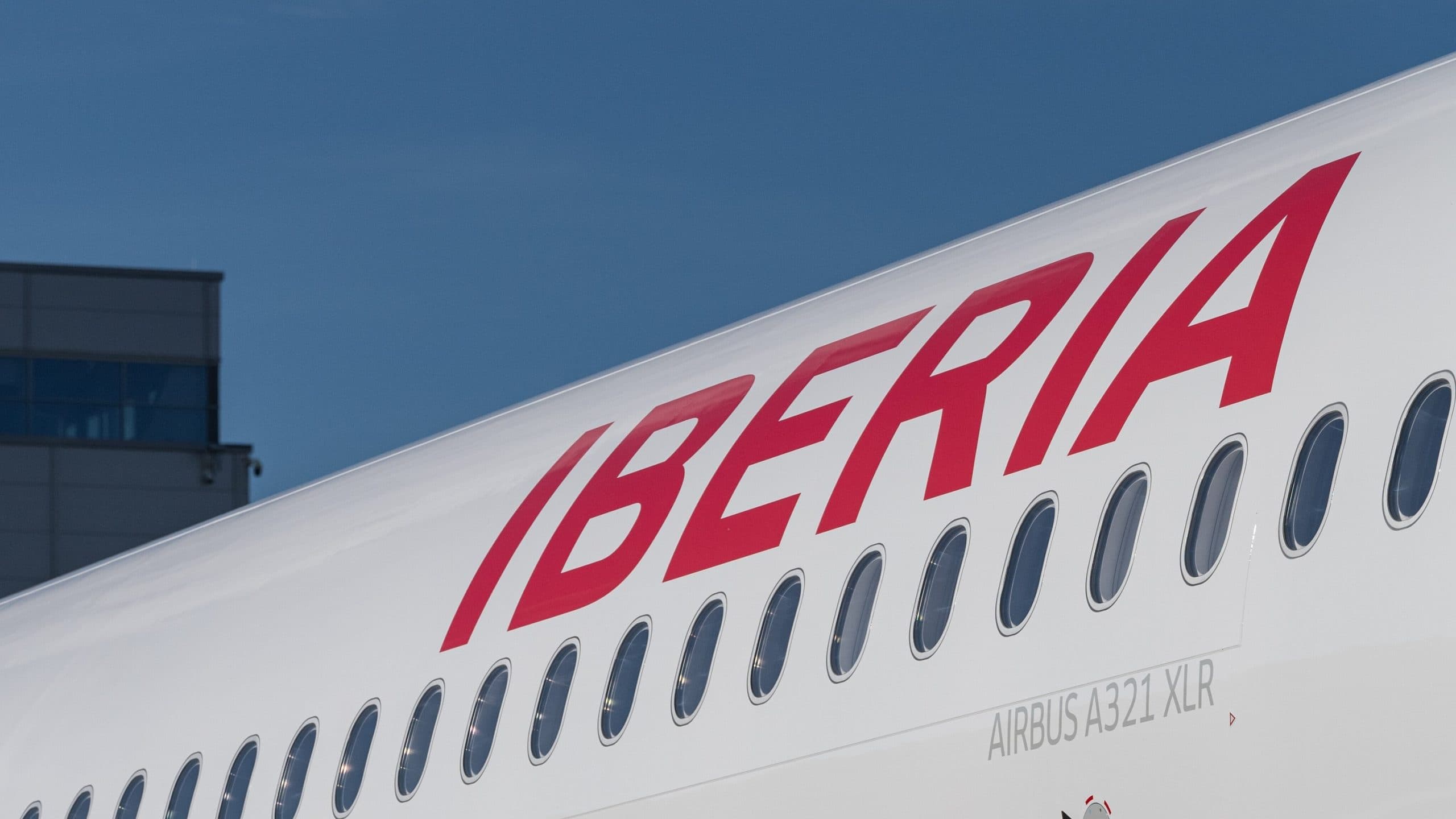
Iberia has launched its new direct service between Madrid-Barajas and Toronto Pearson, operated by the Airbus A321XLR, with the inaugural flight in early June achieving a load factor exceeding 95%. This strong start confirms the airline’s bet on single-aisle long-haul aircraft to expand its transatlantic network. The route will operate up to five weekly frequencies during the summer season, offering over 37,000 seats between the two cities. Beyond point-to-point traffic, Iberia leverages its Madrid hub: connecting passengers can access 46 destinations in Spain and over 60 in Europe. At the inaugural ceremony in Toronto, representatives from Iberia, the Community of Madrid, the Madrid city council, and the airport authority hailed the link as strengthening economic, tourism, and cultural ties between Spain and Canada.
The A321XLR is central to Iberia’s long-haul strategy. This next-generation single-aisle aircraft, which Iberia was the first to operate commercially in November 2024, is configured in two classes (Business and Economy) with 182 seats. It enables service on “long and thin” routes—those with strong potential but insufficient density to justify widebodies like the A330 or A350. According to Airbus, the A321XLR offers up to 30% fuel savings per seat compared to previous generations, making it a key lever for improving profitability and reducing carbon footprint. For ATPL and ATC students, this case study illustrates how fleet planning and route economics are evolving: the ability to open new transatlantic destinations with lower risk and cost, while maintaining operational flexibility.
Toronto was chosen due to growing traffic between Canada and Spain. Madrid tourism authorities report a significant rise in Canadian visitors in recent years. Toronto also serves as a strategic gateway for business and leisure traffic, strengthening Iberia’s position against competitors like Air Canada and other European carriers on the transatlantic market. The route is part of Iberia’s “Flight Plan 2030” strategic program, which includes a €6 billion investment to modernize the fleet, accelerate digitalization, improve customer experience, and expand the long-haul network. The A321XLR plays a central role in enabling more flexible and less risky expansion compared to widebody operations. Iberia also promotes its “Stopover Hola Madrid” program, allowing connecting passengers to stay up to nine nights in Madrid at no extra fare on their long-haul ticket.
For aviation students, this development is a real-world example of how airlines are rethinking network planning and aircraft utilization. The A321XLR’s ability to efficiently serve transatlantic routes from secondary cities or lower-density markets could reshape future route maps, impacting ATC workload, slot coordination, and airport infrastructure planning. Understanding these dynamics is crucial for ATPL candidates preparing for airline operations and for ATC trainees managing traffic flows in a changing network environment.