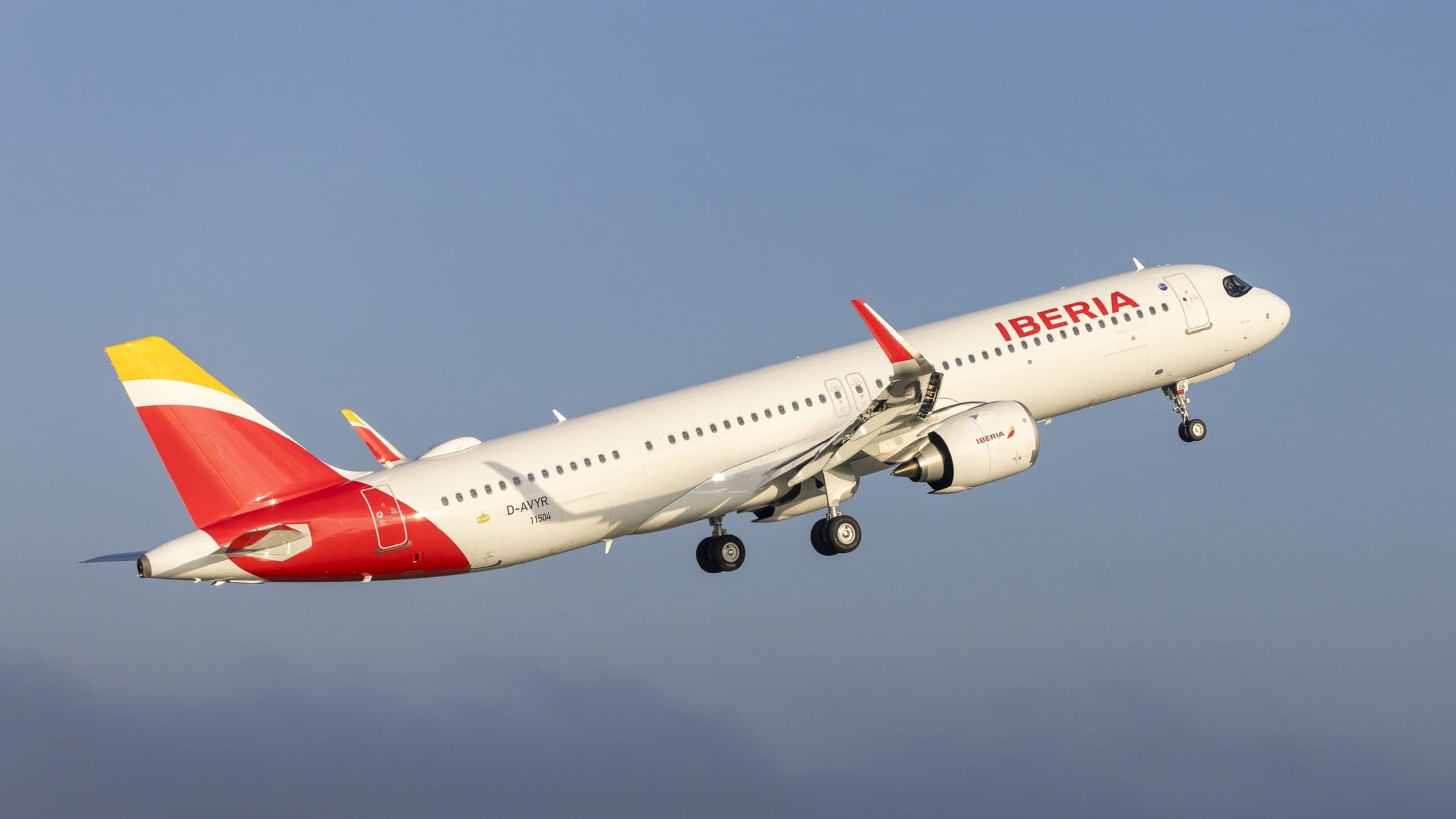
In 2026, Iberia marks 80 years of operations on the Madrid–London route, a connection that began humbly in 1946 with two weekly flights using Douglas DC-3 aircraft from London's Croydon Airport. At that time, London was only the airline's second international destination after Lisbon. Today, the route has grown into one of the most strategically important in Europe, with over 20 daily flights operated by Iberia, Iberia Express, and British Airways. This evolution reflects not only the growth of air travel between Spain and the UK but also the deep economic and social ties that bind the two countries.
For ATPL and ATC students, this route is a textbook example of how airline network planning and hub connectivity work in practice. The cooperation between Iberia and British Airways under the IAG umbrella creates a true "air bridge" between Madrid-Barajas and London-Heathrow, with frequencies that allow for seamless connections. Iberia operates up to eight daily flights to Heathrow, Iberia Express adds two to Gatwick, and British Airways complements the offer from Heathrow and London City. This density of service is not accidental—it is the result of careful scheduling to feed long-haul flights. Heathrow serves as a gateway to North America and Asia via British Airways, while Madrid-Barajas is the primary European entry point to Latin America for Iberia. Understanding such hub dynamics is essential for future pilots and controllers who will operate in these complex, high-traffic environments.
The route also carries significant economic weight. Nearly 200,000 Spaniards live in the UK, and over 400,000 Britons reside in Spain, generating strong demand for both leisure and business travel. With more than 1.1 million seats offered annually on this corridor, mostly on Airbus A320 family aircraft, the Madrid–London link is a vital artery for tourism, investment, and cultural exchange. For aviation trainees, this illustrates how demographic and economic factors directly influence route planning and capacity decisions—a key topic in airline management modules.
Finally, the anniversary event at Heathrow, attended by Iberia executives, the Spanish ambassador, and Heathrow's commercial director, highlights the importance of stakeholder relationships in aviation. For ATC students, this route also presents operational challenges: coordinating multiple airlines, different airports (Heathrow, Gatwick, London City), and varying slot allocations requires precise air traffic management. The Madrid–London corridor is a living case study in how historical routes evolve into modern strategic assets, offering valuable lessons for anyone entering the aviation industry.