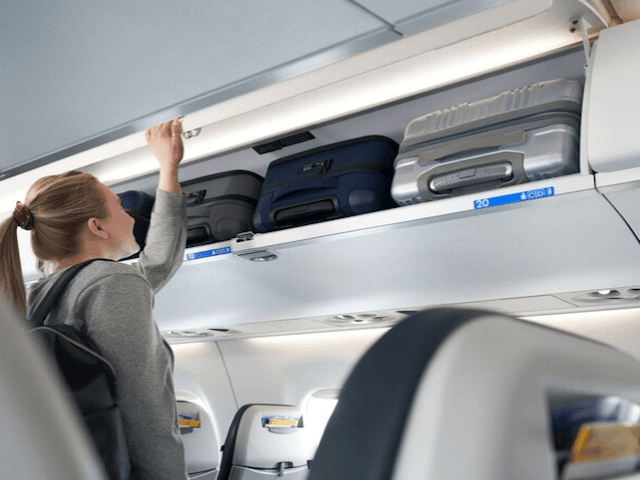
The International Air Transport Association (IATA) has launched a global campaign titled 'Save a Life, Not a Bag' to urge passengers to leave their cabin baggage behind during emergency evacuations. The initiative, unveiled at the IATA Annual General Meeting in Rio de Janeiro, responds to a troubling trend: passengers who stop to retrieve luggage or film the scene instead of evacuating immediately. IATA warns that if behavior does not change, it may consider locking overhead bins during critical phases to prevent access.
**Why This Matters for Aviation Training**
For ATPL and ATC students, this campaign underscores a critical human factors issue. Aircraft certification requires that all passengers can evacuate within 90 seconds—a benchmark that assumes immediate compliance. Yet IATA's study reveals that 40% of passengers would not leave their bags, and only 61% correctly identify that all belongings must be abandoned. This gap between perception and reality directly impacts evacuation timelines, a topic central to ATPL performance and ATC emergency coordination.
**The Human Factors Angle**
The campaign highlights psychological barriers: attachment to personal items, social conformity (others retrieving bags), and distraction from mobile phones. These are classic human factors that ATPL students study under 'threat and error management' and 'situational awareness'. ATC students must understand that delayed evacuations can lead to secondary risks like smoke inhalation or fire spread, complicating their coordination with emergency services.
**Industry Response and Potential Regulations**
IATA's approach is educational first, but punitive measures are on the table. Options include fines for passengers who delay evacuation and rigid locking systems for overhead bins. For ATPL candidates, this signals a shift in cabin safety procedures that may appear in future exam questions or operational manuals. ATC students should note that such changes could affect emergency response protocols, as longer evacuation times may require revised contingency plans.
**Conclusion**
The 'Save a Life, Not a Bag' campaign is more than a passenger awareness drive—it's a wake-up call for the aviation industry. For those training to become pilots or controllers, it reinforces the importance of non-technical skills: leadership, communication, and the ability to manage human behavior under stress. Understanding these dynamics is essential for safe operations and successful certification.