**A world first for hydrogen aviation**
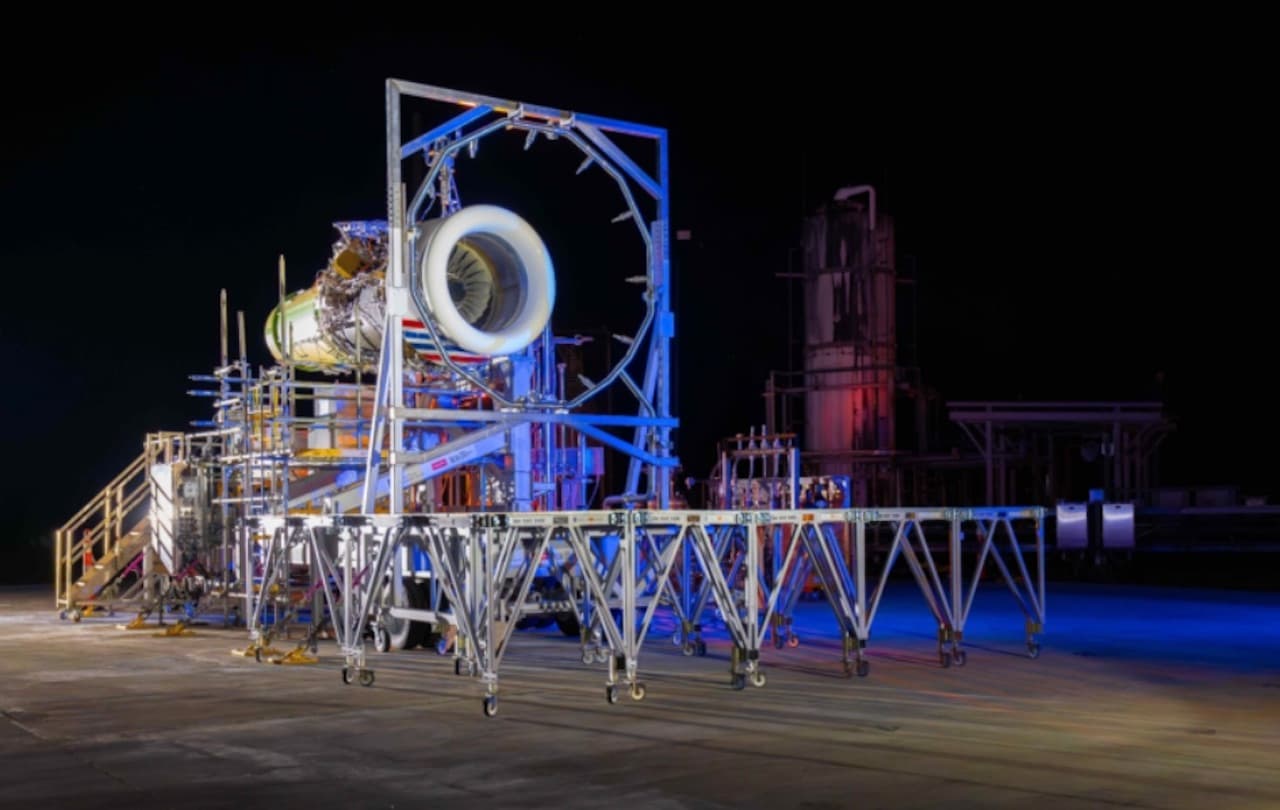
EasyJet and Rolls-Royce have successfully demonstrated that a modern turbofan engine can operate on 100% hydrogen across an entire simulated flight cycle, from start-up to landing. The ground tests took place at NASA's Stennis Space Center in Mississippi, using a modified Pearl 15 engine that reached full take-off thrust without a single drop of kerosene. This marks the first time a complete mission profile has been validated with hydrogen as the sole fuel source, bringing the vision of hydrogen-powered narrowbody aircraft a significant step closer.
**Four years of incremental progress**
The Stennis campaign is the culmination of a four-year research programme that began in 2022 at Boscombe Down, UK, where a converted Rolls-Royce AE2100 engine first ran on green hydrogen supplied by EMEC from Scottish renewable sources. In 2023, tests at the German Aerospace Center (DLR) in Cologne focused on a full annular combustor from the Pearl family, operating at conditions representative of maximum take-off thrust. These component-level validations paved the way for the integrated engine demonstration now completed. The programme also involved developing a full-scale hydrogen test facility at the UK's Health and Safety Executive (HSE) science centre, ensuring safety protocols were rigorously tested before the final engine runs.
**Technical challenges and solutions**
Hydrogen burns hotter and faster than conventional jet fuel, creating risks of flame instability and increased nitrogen oxide (NOx) emissions. Rolls-Royce engineers had to redesign the fuel injection system, combustion chamber, and control laws to manage these characteristics while maintaining safe, stable operation across all flight phases. The Pearl 15 engine, originally designed for business jets like the Bombardier Global 5500/6500, served as the testbed. The lessons learned, many of which are fuel-agnostic, will feed into Rolls-Royce's UltraFan programme, which is being developed to run on sustainable aviation fuels (SAF) and, eventually, hydrogen.
**Industry context and timeline**
EasyJet, which operates an all-Airbus A320-family fleet, sees hydrogen combustion as a key pillar of its net-zero 2050 strategy, alongside SAF and operational efficiencies. The partners aim to have hydrogen-powered narrowbody aircraft in service by the mid-2030s, aligning with Airbus's own hydrogen roadmap. However, significant systemic challenges remain: hydrogen production at scale, airport infrastructure for storage and refuelling, certification of new propulsion systems, and the fact that hydrogen combustion still produces NOx and water vapour, which have their own climate impacts.
**What this means for ATPL and ATC students**
For future pilots and controllers, hydrogen propulsion will introduce new operational procedures: different fuel handling, revised performance calculations (hydrogen has a lower energy density by volume, requiring larger tanks), and potential changes to climb and descent profiles due to altered engine response. ATC may need to manage new noise or emissions constraints around airports, and emergency response protocols for hydrogen-related incidents will differ from those for kerosene. Understanding these technologies now will be essential for the next generation of aviation professionals.