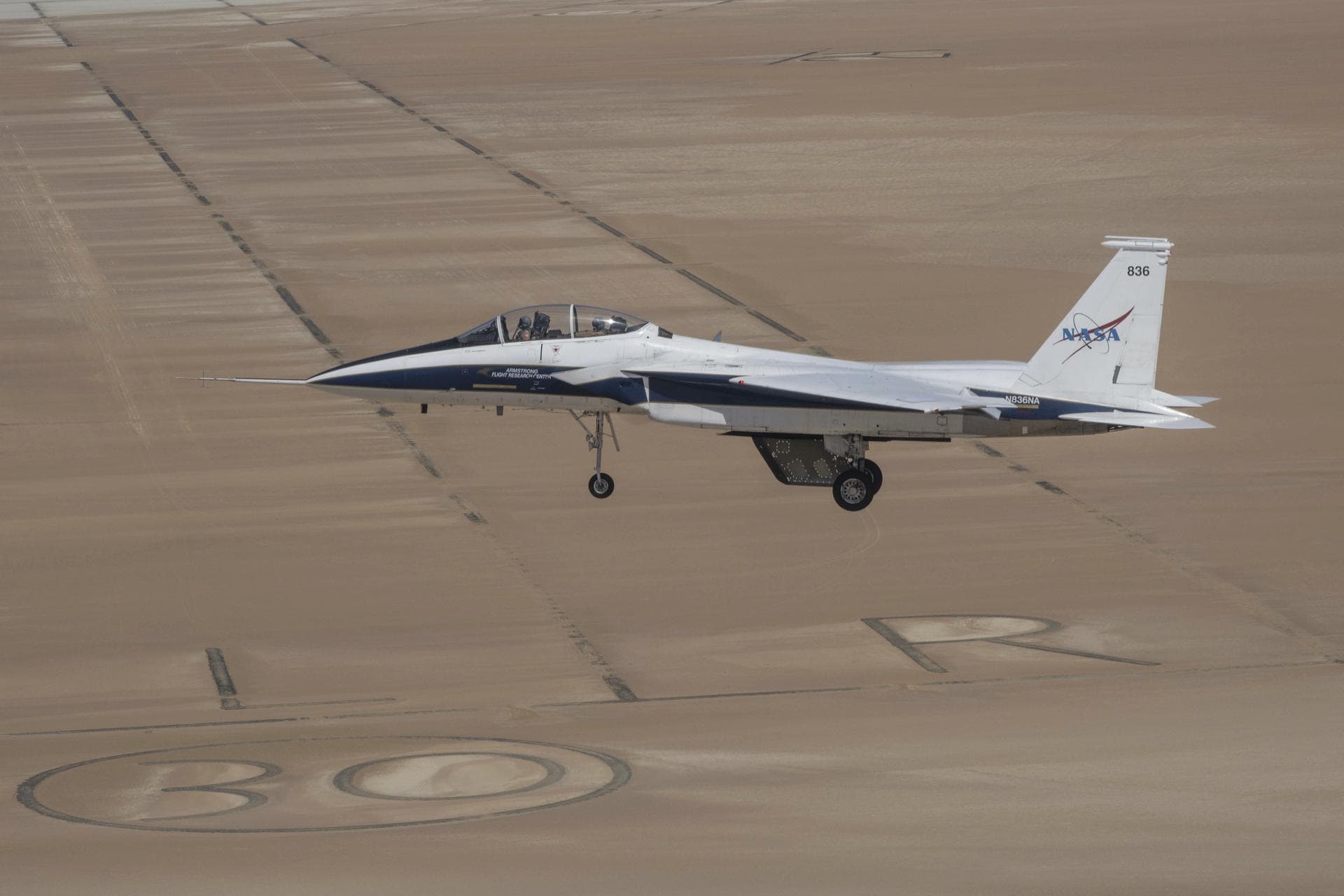
NASA's flight test operations at Armstrong Flight Research Center are not just about pushing the boundaries of aerospace—they offer a masterclass in the rigorous process that underpins every certification and safety standard that ATPL and ATC students must master. The recent article highlights how NASA uses flight tests to validate new technologies, such as the Crossflow Attenuated Natural Laminar Flow (CATNLF) project, which aims to reduce drag and fuel consumption on future commercial aircraft. For students training to become pilots or air traffic controllers, understanding this process is crucial because it directly impacts the aircraft they will fly and the procedures they will manage.
Flight testing is the bridge between theoretical design and operational reality. As NASA's chief pilot Wayne Ringelberg explains, new technologies may work in a lab or wind tunnel, but only flight tests reveal their true performance. This mirrors the ATPL curriculum, where students learn that aircraft systems must be validated under real-world conditions. The CATNLF project, for instance, uses a scale-model wing attached to an F-15 to collect data on laminar flow—smooth airflow that reduces drag. This data will help manufacturers design more efficient wings, directly affecting fuel planning and performance calculations that pilots must perform.
For ATC students, the flight test process underscores the importance of coordination and safety protocols. Every test flight involves a team of engineers, pilots, maintenance crew, and control room operators working together. This teamwork is analogous to the collaboration between pilots and controllers in daily operations. Moreover, the rigorous preflight checks—computer analysis, simulations, wind tunnel tests, and ground tests—mirror the systematic approach ATC students learn for managing airspace and ensuring separation.
The article also emphasizes that NASA's innovations are aboard every U.S. commercial aircraft and in every control tower. This means that the technologies validated through flight tests eventually become part of the systems ATPL and ATC students study, from navigation aids to communication equipment. Understanding how these technologies are proven can give students a deeper appreciation for the reliability and safety of the tools they will use.
Finally, the CATNLF project's focus on fuel efficiency is directly relevant to ATPL students who must calculate fuel consumption and plan for reserves. By learning about laminar flow and drag reduction, students can better grasp the aerodynamic principles that affect aircraft performance. For ATC students, this knowledge helps in understanding why certain aircraft have different performance characteristics, which is essential for efficient traffic management. NASA's flight test methodology is a real-world example of the iterative, safety-first approach that defines aviation—a lesson every future professional should internalize.