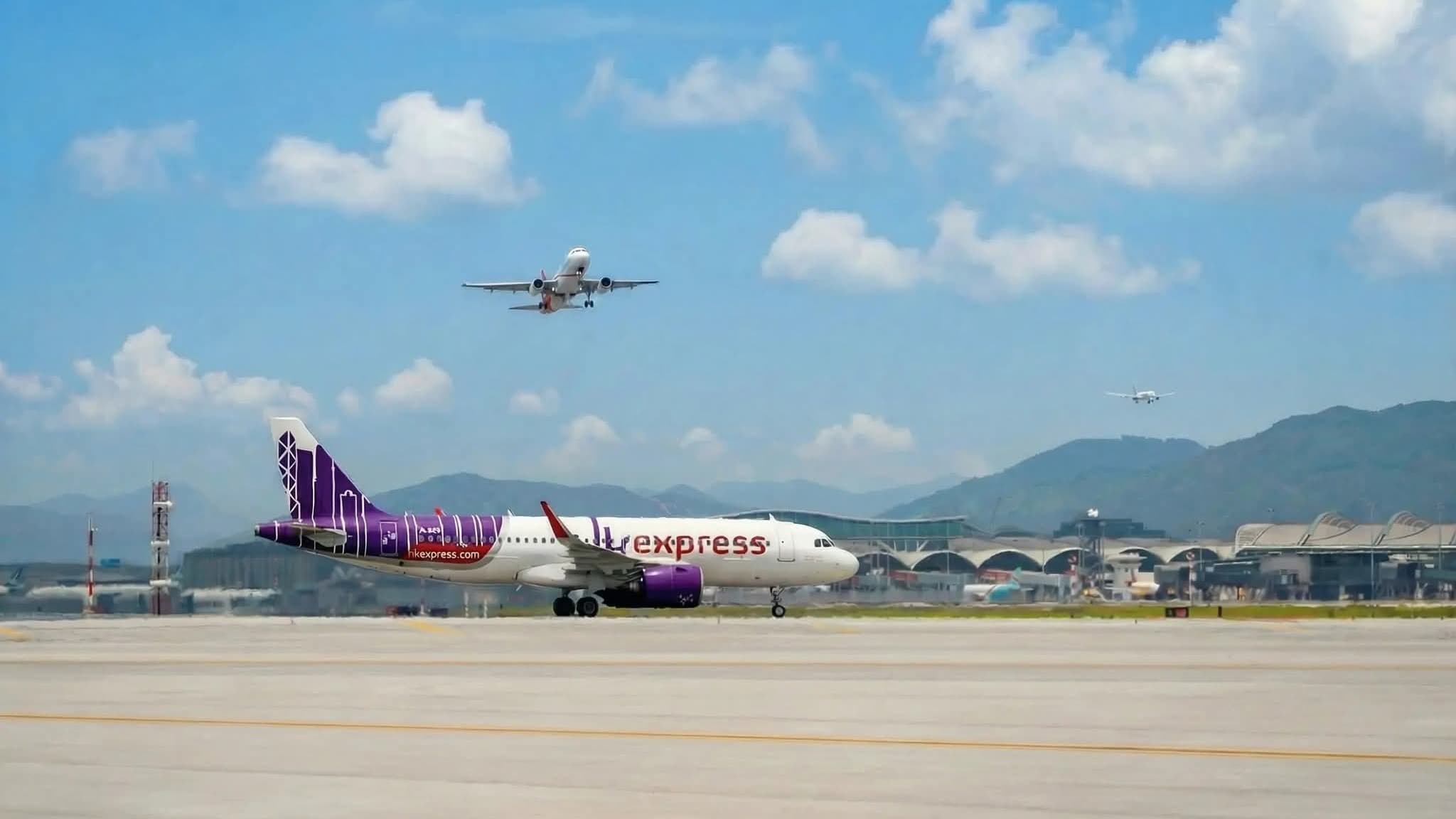
**Hong Kong International Airport (HKIA) has confirmed its strong recovery in 2026, reporting 5.34 million passengers in May, a 10.2% year-on-year increase. Aircraft movements reached 33,655 (+3.6%), and cargo throughput hit 435,000 tonnes (+3.0%), according to the Airport Authority Hong Kong.**
**The growth is largely driven by transit and transfer traffic, a cornerstone of Hong Kong's hub model, along with a notable rise in international visitors. The peak came during China's Golden Week in early May, with up to 204,000 daily passengers. The most dynamic markets are mainland China, Japan, and Southeast Asia, confirming a shift toward intra-Asian flows as the main driver of regional recovery.**
**On the cargo side, HKIA—historically the world's top air freight hub—saw a 23.2% jump in transshipment, reflecting the revival of Asian logistics chains. Another positive sign is the resumption of cargo flows between Hong Kong and the Middle East, after months of disruption due to geopolitical tensions. Imports also grew, albeit more modestly.**
**HKIA is also strengthening its international network. Delta Air Lines has resumed its Hong Kong–Los Angeles route, and new services have been launched to Phu Quoc (Vietnam) and Lanzhou (China). These additions aim to reinforce Hong Kong's intercontinental hub status, amid competition from Singapore, Seoul-Incheon, and Guangzhou.**
**In the first five months of 2026, HKIA handled 27.7 million passengers (+12.5%), 168,745 aircraft movements (+4.8%), and 2.06 million tonnes of cargo (+3.6%). While pre-pandemic levels have not yet been fully regained, especially on long-haul routes, the trajectory is solid. The completion of the three-runway system—now gradually entering service—will boost capacity and strengthen HKIA's role as a key gateway between Asia, Europe, and North America.**
**For ATPL and ATC students, this news illustrates real-world hub dynamics: how transit traffic shapes slot coordination, how cargo flows affect airspace demand, and how geopolitical factors influence route planning. Understanding these patterns is essential for future pilots and controllers operating in or managing busy international hubs.**