**Heathrow's June 2026 traffic figures reveal a tale of two markets: booming North American demand driven by the FIFA World Cup, and a steep slump in Middle Eastern routes. For ATPL and ATC students, this case study illustrates how geopolitical events, major sporting tournaments, and regional instability can dramatically reshape airline network planning and airport operations.**
**World Cup boost to North Atlantic**
London Heathrow recorded 1.97 million passengers on North American routes in June 2026, a 1.2% year-on-year increase and the second consecutive month of growth on that market. The airport attributes this directly to football fans travelling to host cities in the United States, Canada, and Mexico for the 2026 FIFA World Cup. The tournament coincided with the peak summer departure season, and Heathrow highlighted its readiness to handle last-minute bookings thanks to its dense US network and hub connectivity. Transfer traffic rose by over 3% in June, reinforcing Heathrow's role as a global redistribution platform for long-haul flows between Europe, North America, and the rest of the world. The airport also noted that new CT security scanners, now operational across all terminals, kept average security wait times under five minutes—a critical service quality factor during peak season.
**Cargo strength and Asia-Pacific dynamism**
Beyond passenger traffic, Heathrow handled nearly 135,000 tonnes of cargo in June, up about 3.8% year-on-year. North American cargo volumes rose 6%, reflecting a rebound in transatlantic trade, particularly in pharmaceuticals and high-tech goods that rely heavily on air freight. Asia-Pacific emerged as the most dynamic major market, with passenger volumes up 2.5% and cargo surging 11.7%. This recovery signals a normalisation of capacity and demand on Asian routes after years of pandemic-related restrictions, a key trend for airlines and ATC managing long-haul schedules.
**Overall decline driven by Middle East weakness**
Despite these positive signals, Heathrow's total passenger traffic in June 2026 stood at 7.2 million, down 1.8% compared to June 2025. The contraction is almost entirely due to a 26.2% plunge in Middle Eastern traffic, attributed to ongoing geopolitical tensions and capacity reductions on certain routes. Over the first half of 2026, Heathrow welcomed 40 million passengers, a marginal 0.2% increase year-on-year. Aircraft movements in H1 fell 1.8%, indicating airlines are optimising load factors and using larger aircraft rather than adding frequencies.
**CEO pushes for expansion**
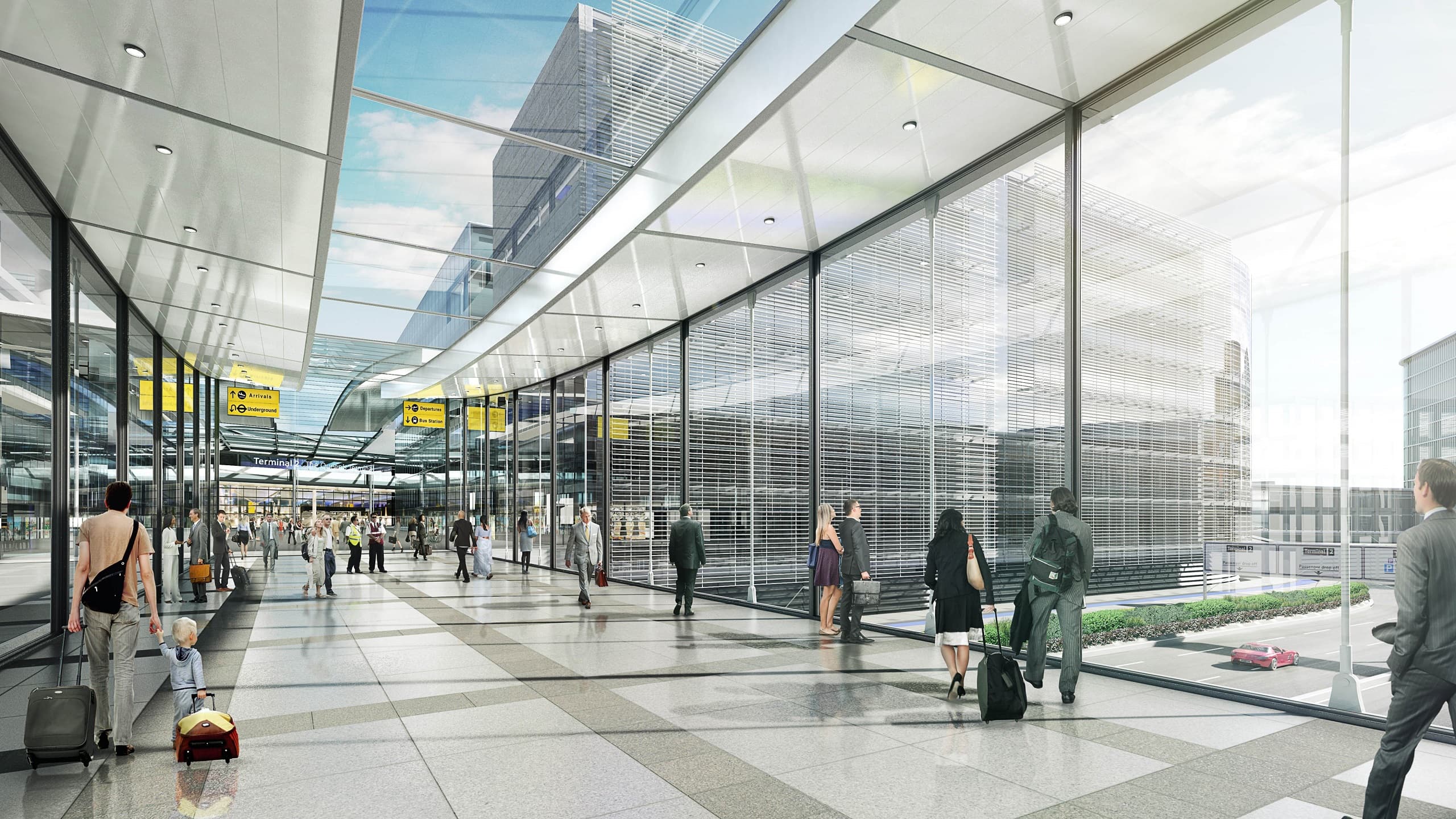
CEO Thomas Woldbye described the figures as evidence of "sustained demand for global connectivity despite geopolitical challenges." He reiterated calls for approval of privately funded expansion projects, including a third runway and expansion of Terminals 2 and 5. "A third runway would open new routes, strengthen trade, and support economic growth across the UK, provided strict noise, air quality, and carbon targets are met," he said, aligning with previous statements on compatibility with climate commitments.
**What this means for ATPL/ATC students**
This real-world example shows how external events like a World Cup can temporarily shift traffic flows, while geopolitical risks can cause sudden route suspensions. Understanding these dynamics is essential for flight planning, fuel management, and airspace capacity management. The data also highlights the importance of cargo operations as a revenue stabiliser for hub airports.