**Heathrow at 80: A Hub Under Pressure**
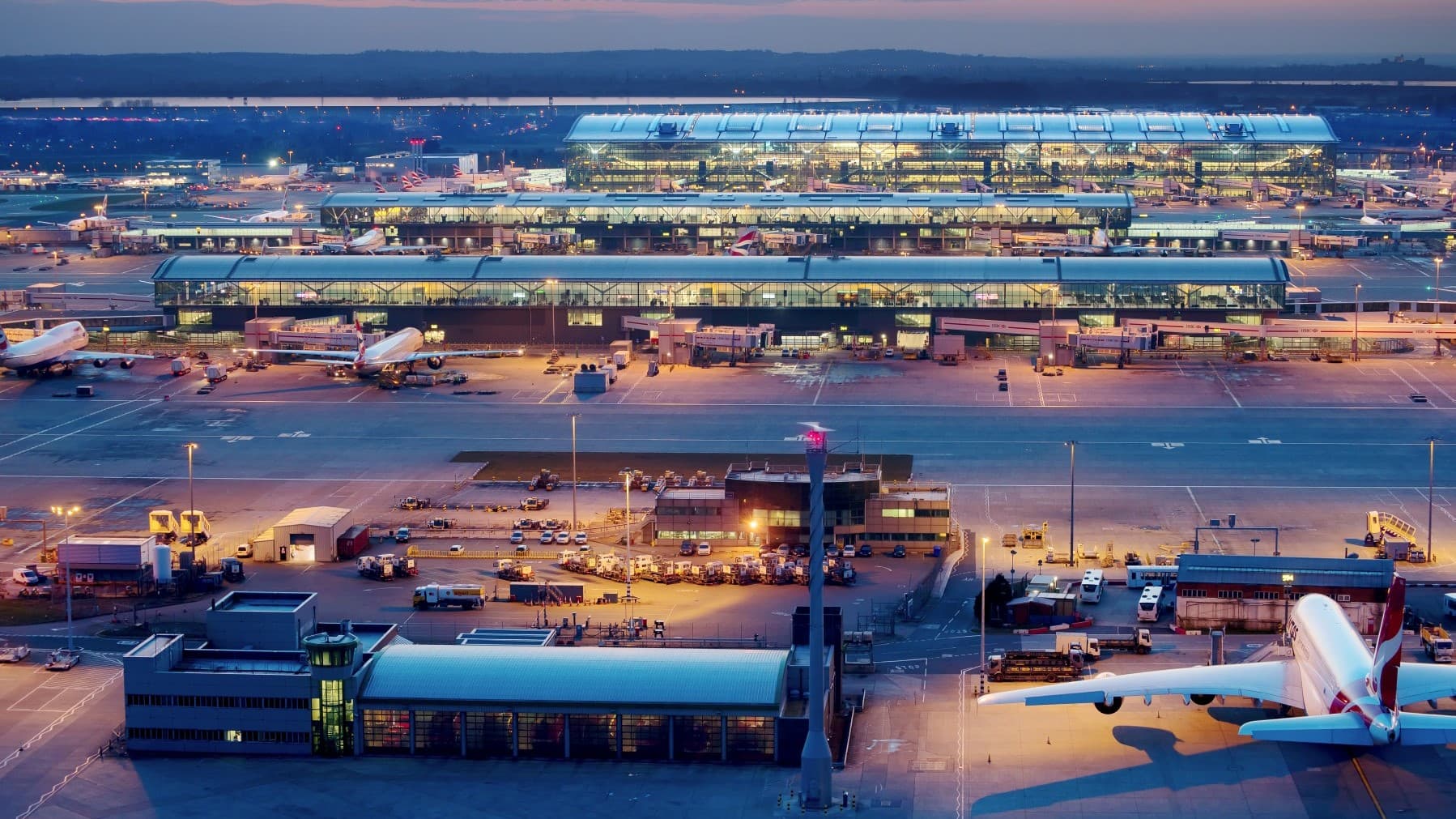
London-Heathrow marked its 80th anniversary in May 2026, having handled nearly 3 billion passengers over 22 million flights since its first commercial service in 1946. But the celebration came with a stark warning: the airport is running at full capacity. CEO Thomas Woldbye stated that Heathrow is "operating at full capacity," highlighting the operational strain from the global air traffic recovery. For ATPL and ATC students, this is a textbook case of airport capacity management—a topic that directly affects flight planning, slot allocation, and delay propagation.
**Record Traffic Despite a Slight Dip**
In May 2026, Heathrow saw 7.1 million passengers, a 1% year-on-year decline that is minor given post-pandemic volatility. More notably, May 22 set a new daily record for the month with 262,000 passengers. This demand is driven by long-haul routes to North America and Asia, which are key markets for future airline pilots and ATC specialists. Understanding such traffic patterns is essential for predicting peak periods and managing airspace congestion.
**Operational Investments and Accessibility**
Heathrow is investing in terminal upgrades: modernizing check-in areas in Terminal 4, improving assistance for passengers with reduced mobility in Terminal 2, and trialing autonomous wheelchairs in Terminal 3—a UK first. These projects aim to enhance passenger flow and service quality. For ATC students, these changes influence ground movement and apron management, while pilots benefit from smoother turnarounds.
**The Capacity Debate: Third Runway and Regulation**
The core issue remains capacity. Heathrow, limited to two runways, has been near saturation for years. The third runway project, approved in 2018 but stalled by legal and environmental challenges, is uncertain. The airport operator is calling for a regulatory framework that supports investment, criticizing the UK Civil Aviation Authority (CAA) for potentially restricting investment plans. Woldbye warned that "growth at the UK's main hub is threatened if necessary investments are delayed." This debate is critical for aviation students: it illustrates the tension between environmental goals, economic demands, and operational limits—a recurring theme in ATPL and ATC exams.
**Global Competition**
While Heathrow struggles with capacity, rivals like Istanbul, Dubai, Doha, and Paris-CDG are expanding or optimizing. For future aviation professionals, this highlights the strategic importance of hub connectivity and the need for efficient slot coordination. The outcome will shape route networks and career opportunities for years to come.