**A major upgrade for a strategic gateway**
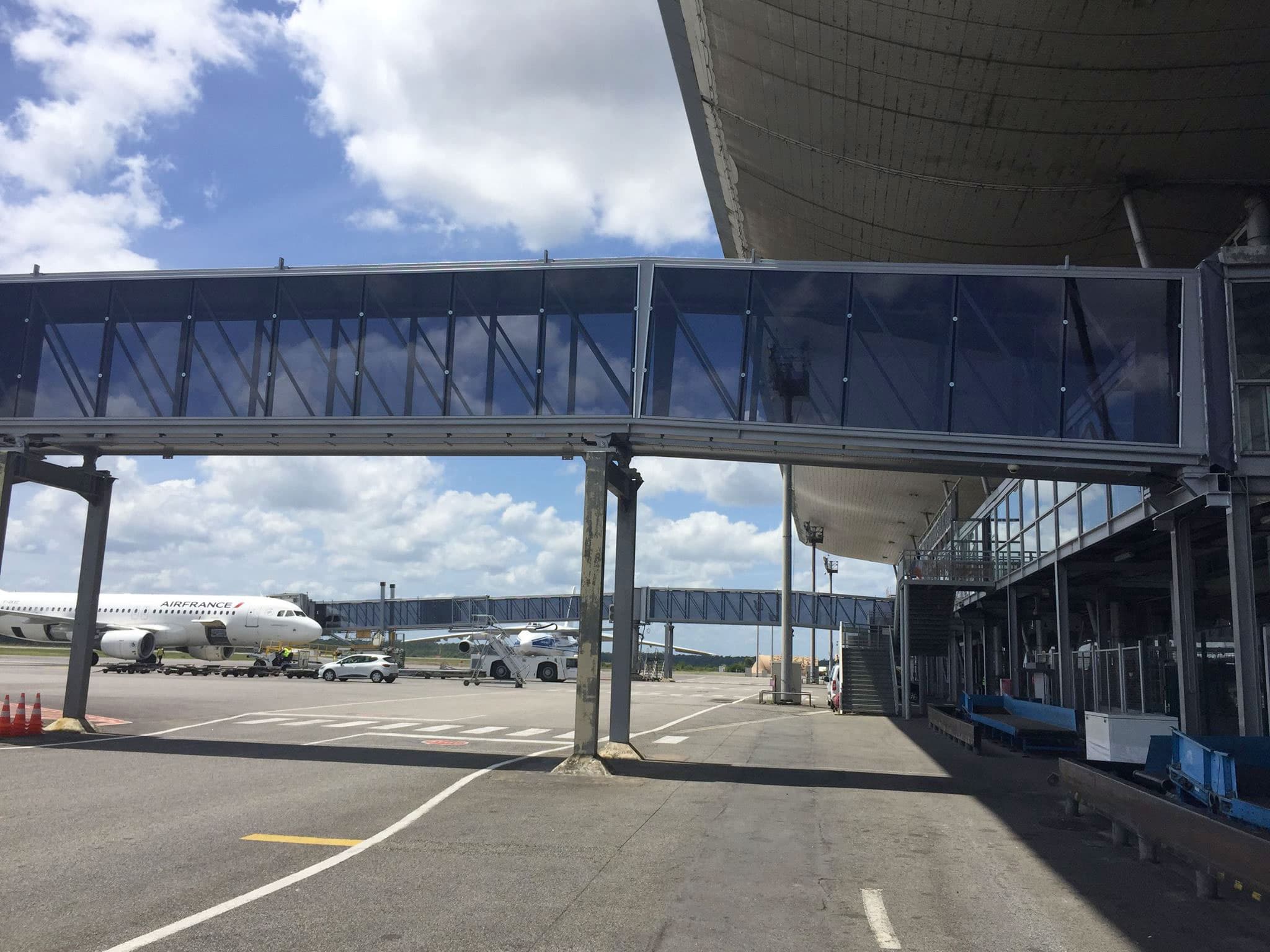
Félix-Éboué International Airport, the main aerial gateway to French Guiana, has officially begun a €85 million modernisation programme that will run for over three years. The Société Concessionnaire de l'Aéroport de Cayenne (SCAC), which holds a 30-year concession, is fully funding the project. The work is scheduled for completion by March 2029, with the airport remaining operational throughout the construction period — a classic 'live site' challenge that aviation professionals must manage regularly.
**What the project includes**
The plan covers a 1,000 m² expansion of the terminal, a complete redesign of passenger flows, and an increase in annual capacity from around 500,000 passengers (2024 figure) to 600,000. Key elements include enlarging and refurbishing passenger halls, creating new retail spaces, reorganising arrival and departure routes, modernising baggage handling, and upgrading aircraft parking areas. On the tarmac, a new heavy-haul parking position will be built to support operations linked to the Guiana Space Centre (CSG), and traffic separation between commercial flights and CSG movements will be improved.
**Why this matters for ATPL and ATC students**
For ATPL candidates, this project illustrates how airport infrastructure evolves to meet growing demand and operational complexity. Understanding terminal capacity, passenger flow design, and the integration of specialised traffic (such as space centre support flights) is directly relevant to airport planning and performance-based navigation concepts covered in the syllabus. For ATC trainees, the separation of commercial and CSG traffic flows is a concrete example of airside management and safety zone design — topics that appear in both aerodrome control and airspace management modules.
**A live-site challenge**
As is common in airport environments, the work will be carried out while the airport remains fully operational. The first phase involves relocating administrative offices to a new building outside the terminal, freeing up space for passenger circuit restructuring. Subsequent phases will renovate check-in areas, security screening zones, border police facilities, and boarding gates, doubling the surface area available to passengers in those critical zones. This 'live site' approach demands meticulous coordination between construction teams, airport operators, and air traffic services — a real-world scenario that future aviation professionals should be aware of.
**Broader context**
This investment reflects the growing importance of French Guiana as a hub for both regional travel and space industry logistics. For students studying airport management or air transport geography, the Félix-Éboué modernisation is a textbook example of how a mid-sized airport adapts to dual-use traffic (commercial + specialised) while improving passenger experience and operational efficiency.