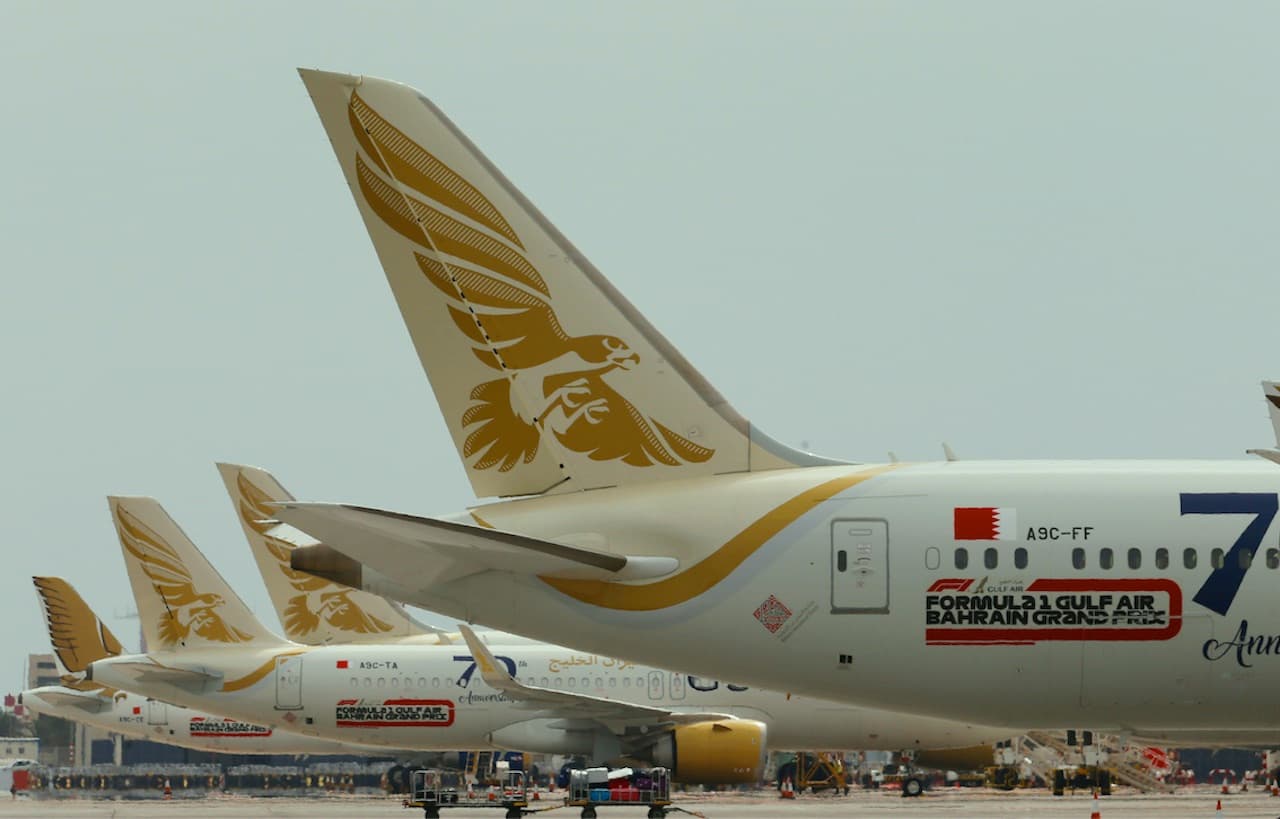
**Industry Context: A Strategic Comeback in the Gulf Aviation Landscape**
Gulf Air, the flag carrier of the Kingdom of Bahrain, has announced the restoration of 75% of its global network, now serving 40 destinations across 24 countries. The airline aims to return to a full flight schedule by June 1, 2026. This phased recovery is a critical milestone for Bahrain International Airport and the repositioning of the Manama hub in a region dominated by giants like Qatar Airways, Emirates, and the emerging Riyadh Air.
For ATPL and ATC students, this development offers a real-world case study in network planning and hub competitiveness. The gradual restoration—covering the Middle East, Europe, the Indian subcontinent, and Africa—demonstrates how airlines balance demand, operational constraints, and regulatory approvals. The strategic focus on connecting Asia, Africa, and Europe via Bahrain highlights the importance of hub-and-spoke models, a core concept in airline management and air traffic flow.
**MyATPS Angle: Practical Lessons for Aviation Trainees**
From an ATPL perspective, understanding Gulf Air's route recovery provides insight into fleet utilization, crew scheduling, and the operational challenges of rebuilding a network post-disruption. ATC students can analyze the implications for airspace capacity and slot coordination at Bahrain International Airport, especially as frequencies increase on key routes. The airline's commitment to modernizing its fleet with new Boeing and Airbus aircraft, plus the introduction of Starlink Wi-Fi by mid-2026, underscores the importance of technological upgrades in enhancing passenger experience and operational efficiency.
**Analysis: The Competitive Dynamics of Gulf Hubs**
Gulf Air's recovery is not just about restoring services; it's a strategic move to maintain relevance in a fiercely competitive market. With Qatar Airways and Emirates expanding capacities and Riyadh Air entering the scene, Bahrain's hub must offer unique connectivity to survive. The airline's flexible commercial policies—free date changes until June 30, 2026, and extended FalconFlyer loyalty program benefits—aim to rebuild passenger confidence. For trainees, this illustrates how airlines use customer retention strategies alongside operational recovery.
**Conclusion: A Blueprint for Post-Disruption Recovery**
Gulf Air's structured, phased approach to network restoration serves as a textbook example for aviation professionals. It highlights the interplay between commercial, operational, and strategic decisions in a competitive environment. As the airline targets full recovery by June 1, 2026, students can follow this case to understand the complexities of hub management, route planning, and the role of technology in modern aviation.