**Gulf Air's Strategic Pivot: The A321LR as a Growth Catalyst**
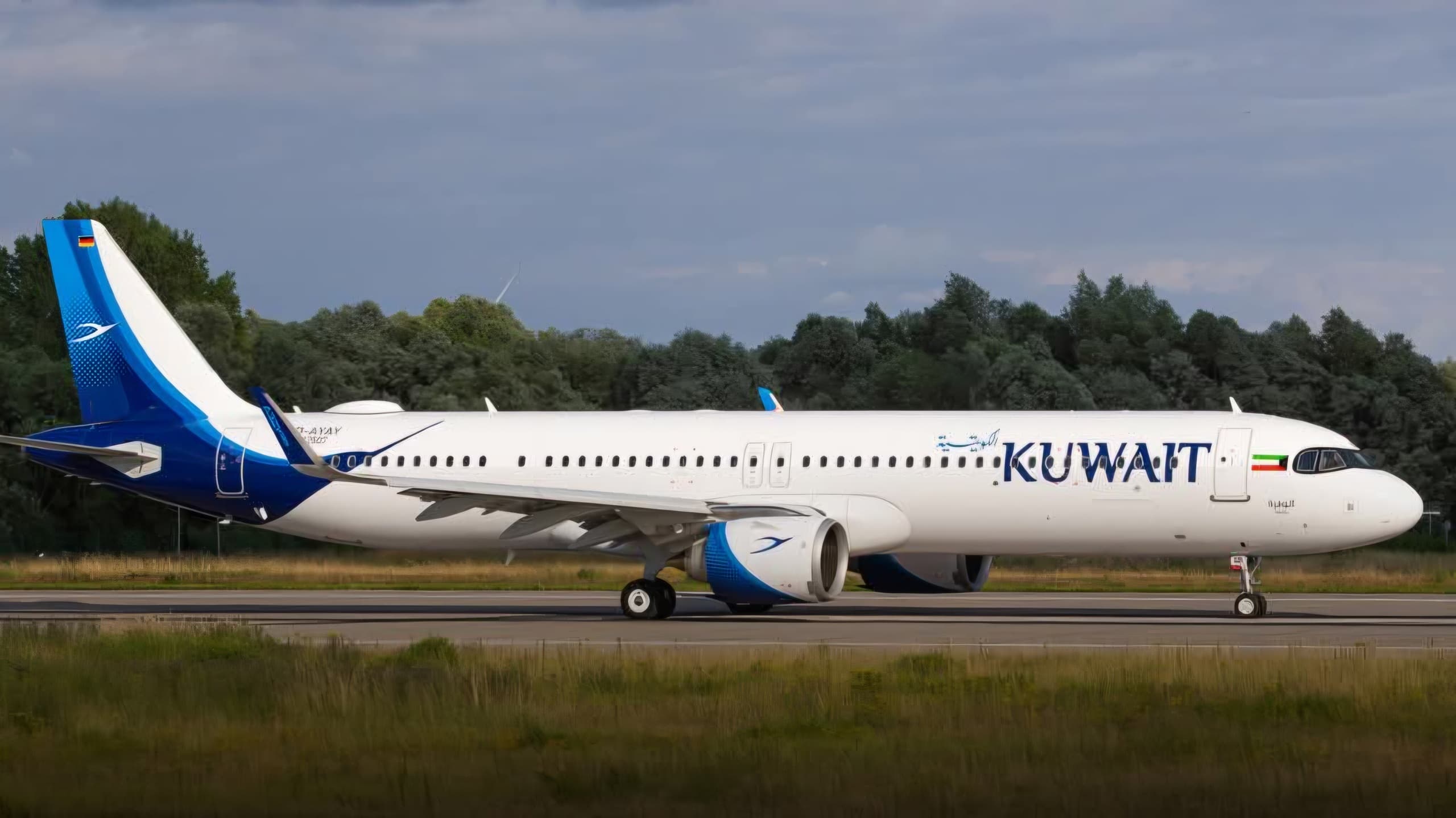
Bahrain's flag carrier, Gulf Air, has confirmed its interest in the Airbus A321LR as part of a broader strategy to enhance international connectivity and modernize its fleet. In an interview with Aero Telegraph, CEO Martin Gauss outlined the airline's ambitions, stating that the A321LR—with a range of approximately 7,400 km—would enable new routes to Europe, Central Asia, and Africa at lower operating costs. This mirrors a regional trend: Etihad Airways already uses the A321LR to serve secondary markets and increase frequencies with optimal capacity. Gulf Air aims to replicate this model to gain flexibility and compete more effectively against the dominant hubs of Dubai, Doha, and Abu Dhabi.
**Beyond the LR: Evaluating the A321XLR and Boeing Options**
Gulf Air is also studying the Airbus A321XLR, which offers an extended range of about 8,700 km. However, Gauss noted that the LR version might suffice for most current needs, though network teams continue their analysis. The goal is to strike the right balance between capacity, range, and profitability on niche markets. On the long-haul front, Gulf Air remains committed to its Boeing 787-9 fleet (10 aircraft currently), with the 787-10 under consideration for high-demand routes. The 787-8 and Airbus A350 are not in the cards due to operational coherence and cost reasons. The Boeing 777X is also being evaluated, though its entry-into-service timeline remains uncertain.
**Regional Jets and Fleet Rationalization**
To improve regional connectivity and feed traffic into its Bahrain hub, Gulf Air is exploring smaller aircraft like the Embraer E195-E2 and Airbus A220. These would complement the mainline fleet on routes where demand does not justify larger narrowbodies, such as secondary European destinations or the UK. Royal Jordanian's use of the E195-E2 serves as a reference. The airline's current fleet of 45 aircraft includes 8 A320-200s, 9 A320neos, 4 A321-200s, 14 A321neos (8 of which are LR variants), and 11 Boeing 787-9s. This structure underscores a clear strategy: modern narrowbodies for regional and medium-haul routes, with the Dreamliner handling long-haul.
**Post-Crisis Recovery and Ambition Beyond Regional Carrier Status**
This strategic review comes after a major disruption: Gulf Air suspended operations for 40 days due to regional tensions with Iran, temporarily relocating to Dammam, Saudi Arabia, before returning to full capacity on June 1, 2026. "We are now back to normal operations," Gauss confirmed. The airline aims to shed its historical role as a niche regional carrier and expand its network, with destinations like Zurich under study. The challenge is to strengthen Bahrain's connectivity while competing with the mega-hubs of Dubai, Doha, and Abu Dhabi. This fleet modernization plan is central to that ambition.
**What This Means for ATPL and ATC Students**
For ATPL students, this case illustrates how airlines balance aircraft performance, range, and operating costs to design networks—a key topic in flight planning and airline management modules. ATC students can analyze how fleet changes impact airspace demand, slot coordination, and hub operations in a congested Gulf region.