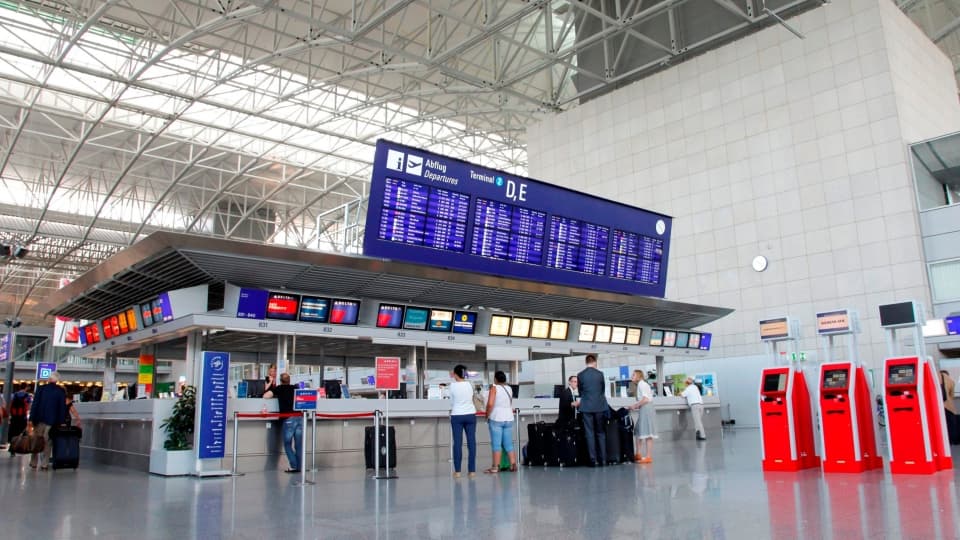
**A looming crisis for German aviation**
German airports are sounding the alarm: up to 20 million passengers could face flight cancellations this summer as jet fuel prices skyrocket due to geopolitical tensions in the Middle East. Ralph Beisel, managing director of the German Airports Association (ADV), warned in an interview with *Welt am Sonntag* that in the worst-case scenario, some airports could see a 10% drop in capacity. "Applied to all airports, that would affect 20 million passengers," he said. This situation is particularly worrying for low-cost carriers, whose thin profit margins make them highly vulnerable to fuel price spikes.
**Lufthansa's drastic measures**
Lufthansa has already taken decisive action. The German flag carrier announced the elimination of 20,000 short-haul flights by October, including the closure of its regional subsidiary CityLine. These cancellations are expected to save approximately 40,000 tonnes of jet fuel. "Even if kerosene remains available, airlines will not be able to operate many flights profitably at current price levels," Beisel explained. The cuts primarily affect secondary and tourist destinations, which are often less prioritized during peak summer season.
**European response and passenger impact**
In Brussels, the European Union stated that there is no immediate physical shortage of jet fuel, but it is preparing for all scenarios. The European Union Aviation Safety Agency (EASA) has authorized the use of Jet A, a US-produced fuel, as a backup solution. However, experts emphasize that the main issue is profitability rather than availability. Passengers can expect higher ticket prices on remaining flights, as well as potential last-minute cancellations and delays. German airports are urging travelers to check their flight status regularly and consider appropriate travel insurance.
**What this means for ATPL and ATC students**
For future pilots and air traffic controllers, this crisis highlights the critical link between global economics, geopolitics, and daily aviation operations. Understanding fuel pricing mechanisms and their impact on route profitability is essential for airline management and flight planning. ATC students should note that capacity reductions and cancellations can lead to irregular operations, requiring flexible rerouting and coordination. This real-world example underscores the importance of cost awareness and operational resilience in aviation careers.