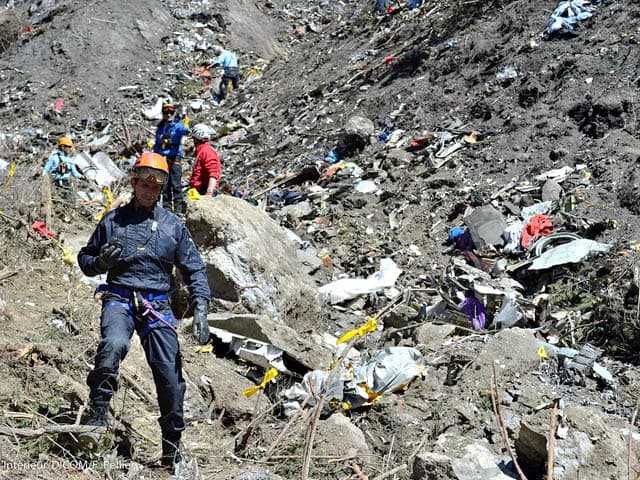
Eleven years after the deliberate crash of Germanwings flight 4U9525 in the French Alps, a group of about thirty relatives of the victims has filed a civil action against the German state, holding it responsible for a failure to supervise the medical fitness of co-pilot Andreas Lubitz. The lawsuit, which will be examined by the regional court of Brunswick at the end of August, targets the Federal Aviation Office (Luftfahrt-Bundesamt) and is based on paragraph 839 of the German Civil Code, which governs state liability for breaches of official duty. The plaintiffs argue that the authorities did not sufficiently monitor Lubitz's fitness to fly and failed to properly apply regulations on the medical follow-up of pilots. They are seeking compensation ranging from 110,000 to 500,000 euros per family, depending on the case.
The crash occurred on March 24, 2015, when the Airbus A320, en route from Barcelona to Düsseldorf, was deliberately flown into a mountainside by the co-pilot after locking the cockpit door while the captain was outside. The disaster killed 150 people, including 144 passengers and six crew members, among them 16 German high school students on a school trip. The investigation concluded that the crash was the result of the deliberate and planned action of Lubitz, a 27-year-old suffering from depressive disorders and psychotic episodes. He had hidden his condition from Lufthansa, Germanwings' parent company, for fear of losing his pilot's license, while being treated outside the aviation medical system.
At the heart of the debate is the medical surveillance of pilots. The families contend that the German state failed in its mission of aviation safety supervision, particularly regarding the psycho-medical dimension. They believe that Lubitz's psychological state was not sufficiently taken into account during mandatory aeromedical examinations, which are conducted by approved doctors who must report any unfitness to fly. The plaintiffs assert that existing regulations for monitoring pilots' fitness were not correctly implemented and that the tragedy could have been avoided if authorities had better supervised medical checks, especially in cases of severe psychiatric history.
This new legal action follows a previous setback for the families. In 2020, relatives lost a similar case against Lufthansa before the regional court of Essen, which ruled that medical oversight of pilots was a sovereign state duty rather than the airline's responsibility. That decision led to the rejection of additional compensation claims. The families consider the amounts paid by Lufthansa after the crash—totaling about 11.2 million euros in direct compensation—as insufficient, which is why they are now directly targeting the German state.
Since 2015, victims' relatives have pursued multiple legal actions in Germany, Spain, and the United States, successively targeting Lufthansa, Germanwings, the flight school where Lubitz was trained, and now the German state itself. They denounce what they see as inadequate compensation, refuse to consider the case closed, and seek to establish a chain of responsibilities beyond the co-pilot's sole act. In German law, compensation for dependents focuses mainly on material loss, which limits amounts awarded for moral suffering. This legal framework partly explains the lawyers' efforts to explore other jurisdictions, such as the United States, or to broaden the targets of complaints, hoping for wider recognition of the systemic failures that preceded the catastrophe.