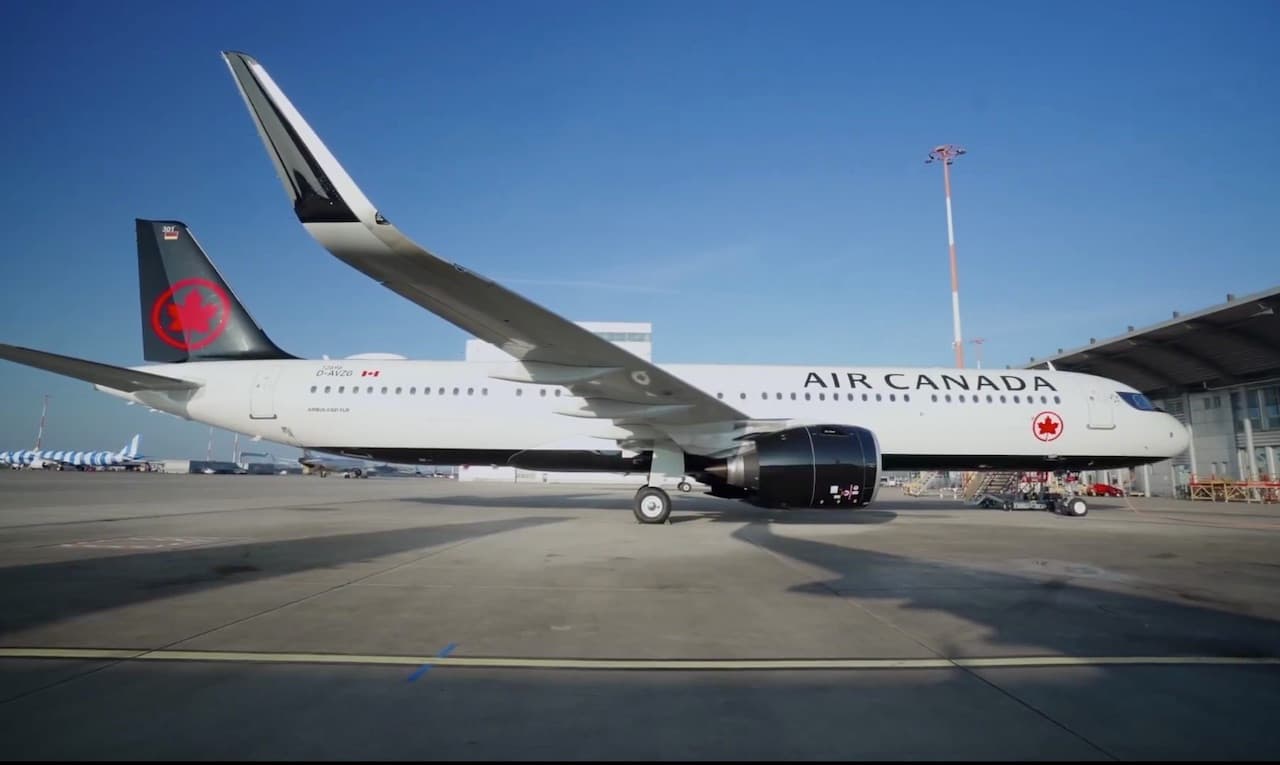
Air Canada has announced a significant network adjustment in response to soaring fuel costs, suspending all flights between Toronto-Pearson (YYZ), Montreal-Trudeau (YUL) and New York-John F. Kennedy International Airport (JFK) from June 1, 2025, through October 25, 2026. This decision affects one daily round-trip from Montreal and up to three from Toronto, with service resuming at the start of the IATA winter season. The airline attributes this move to jet fuel prices nearly doubling since the onset of the Iran conflict, which has rendered certain routes economically unviable. For ATPL students, this illustrates how external geopolitical events can directly impact airline operations and route planning, emphasizing the importance of understanding fuel economics in airline management.
Fuel now represents approximately 36% of Air Canada's operating costs, up from 26% a year ago, forcing a thorough review of transborder and international route profitability. The suspension of JFK services is part of a broader strategy to reconfigure the network, with other marginal routes like Salt Lake City–Toronto also being cut until 2027. From an aviation training perspective, this highlights the critical role of cost-benefit analysis in airline scheduling. Students should recognize how airlines prioritize capacity on high-yield markets while reducing exposure to cost-sensitive routes, a key concept in airline economics that affects everything from fleet deployment to crew scheduling.
For passengers, Air Canada offers alternative arrangements, rerouting JFK-bound travelers to other New York-area airports, primarily LaGuardia (LGA) and Newark (EWR), or onto codeshare flights with United Airlines. The airline will maintain 34 daily flights between Canada and the New York region via LGA and EWR from six Canadian cities. This operational shift demonstrates how airlines adapt to economic pressures without sacrificing market presence. ATPL and ATC students can learn from this case study in network management: JFK is a highly competitive airport with expensive slots and strong pricing pressure, making it less attractive under high fuel costs. By redirecting traffic to LGA (ideal for business travel between city centers) and EWR (a United hub enabling extensive U.S. connections via codesharing), Air Canada preserves connectivity while controlling costs.
This development underscores the aviation industry's vulnerability to fuel price volatility and geopolitical tensions. For those in training, it reinforces the need to monitor fuel trends and understand their implications for airline strategy, airport operations, and air traffic management. As future professionals, ATPL pilots and ATCs must appreciate how such economic factors influence flight schedules, airport congestion, and even career opportunities, making this a valuable real-world lesson in aviation resilience and adaptability.