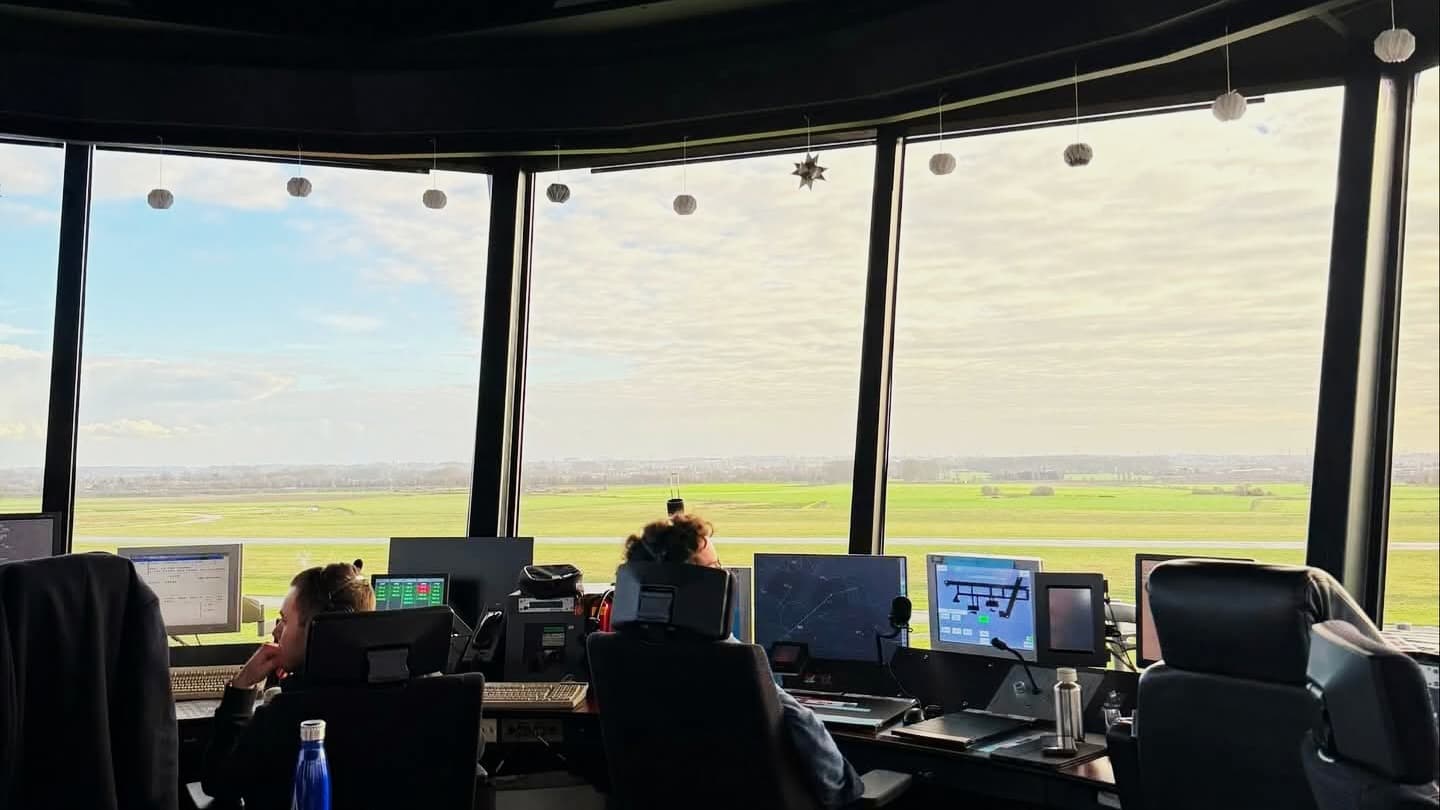
The French Court of Auditors has released a damning report on the human resources management of the Direction Générale de l'Aviation Civile (DGAC), the agency responsible for air traffic control in France. The report highlights a sharp increase in delays, working hours for controllers that are significantly below industry standards, and a social protocol that is both expensive and ineffective. With traffic back to pre-COVID levels, France has become one of the worst performers in European air traffic management, a situation that directly impacts pilots and air traffic controllers in training.
**Delays and European Pressure**
According to the Court, the DGAC's ability to handle traffic without delays or cancellations has deteriorated since the end of the pandemic. Last summer, a record average delay of 3 minutes 30 seconds per flight attributable to air traffic control was recorded, placing France among the "bad students" of European skies. Eurocontrol had already identified the airspace managed by the DSNA (Direction des Services de la Navigation Aérienne), the operational branch of the DGAC, as one of the continent's hot spots, with over 3 minutes of en-route delay per flight. This performance is below the European average and far from 2019 levels. The Court warns of a "European problem" and a risk of sanctions for France.
**Working Hours, Salaries, and the End of "Clairances"**
The report scrutinizes the work organization of 3,800 air traffic controllers, who work until age 59. It notes an annual working volume of about 1,420 hours, compared to 1,607 hours on average for other sector employees. This gap corresponds to a rhythm equivalent to "three days of work per week," including regulatory breaks and sometimes non-transparent recovery time. The Court praises the near-disappearance of "clairances," informal and illegal authorizations that allowed controllers to leave their posts early when traffic was low. It also welcomes the deployment of biometric time clocks in towers and control centers, already 80% implemented, to accurately track presence and working time, especially after the serious incident at Bordeaux-Mérignac where the absence of scheduled personnel was implicated.
**A Costly Social Protocol**
At the heart of the criticism is the 2023-2027 social protocol, signed in 2024, which introduced productivity and flexibility countermeasures in exchange for substantial salary increases. The DGAC committed to a total cost of €95 million by 2027, a 7.2% increase in payroll over three years, with 77% benefiting controllers, who represent only one-third of the workforce. Controller salaries have increased by an average of about 16%, or nearly €1,500 gross per month. However, the Court finds that the new work organization, while more flexible on paper, remains "still very rigid" relative to traffic evolution and continues to impose traffic restrictions during peak periods to match traffic to available staff.
**Strikes and Minimum Service**
The report emphasizes the traditional "conflictuality" of French air traffic control, with a high number of strike days despite structured social dialogue. In 2025, the strike level was above the average of recent years, despite the new social protocol. The Court notes the impact of social movements on traffic, with up to 50% of flights cancelled in the Southeast and 25% at Paris airports during some notices. It points to the lowering of the minimum service level since 2025, which reduces the number of flights ensured during strikes. The Court recommends readjusting this minimum service to guarantee at least 65% of planned traffic, as in previous years, and protecting periods of major departures.
**Retirement Wave and Potential Status Change**
The DGAC faces a major challenge in renewing its operational staff: controllers, electronic engineers, and technicians represent 66% of the 10,320 agents, and 30% will retire within ten years. Without more rigorous workforce planning, this wave of departures risks worsening delays and capacity to handle high traffic. Faced with the DGAC's debt, equipment modernization delays, and cost overruns on the protocol, the Court recommends a strict action plan to avoid increases in fees or debt. It also deems it "desirable" to study transforming the DGAC's status, or at least that of its air traffic control division, into a public establishment, while ensuring sovereignty, safety, and security issues.