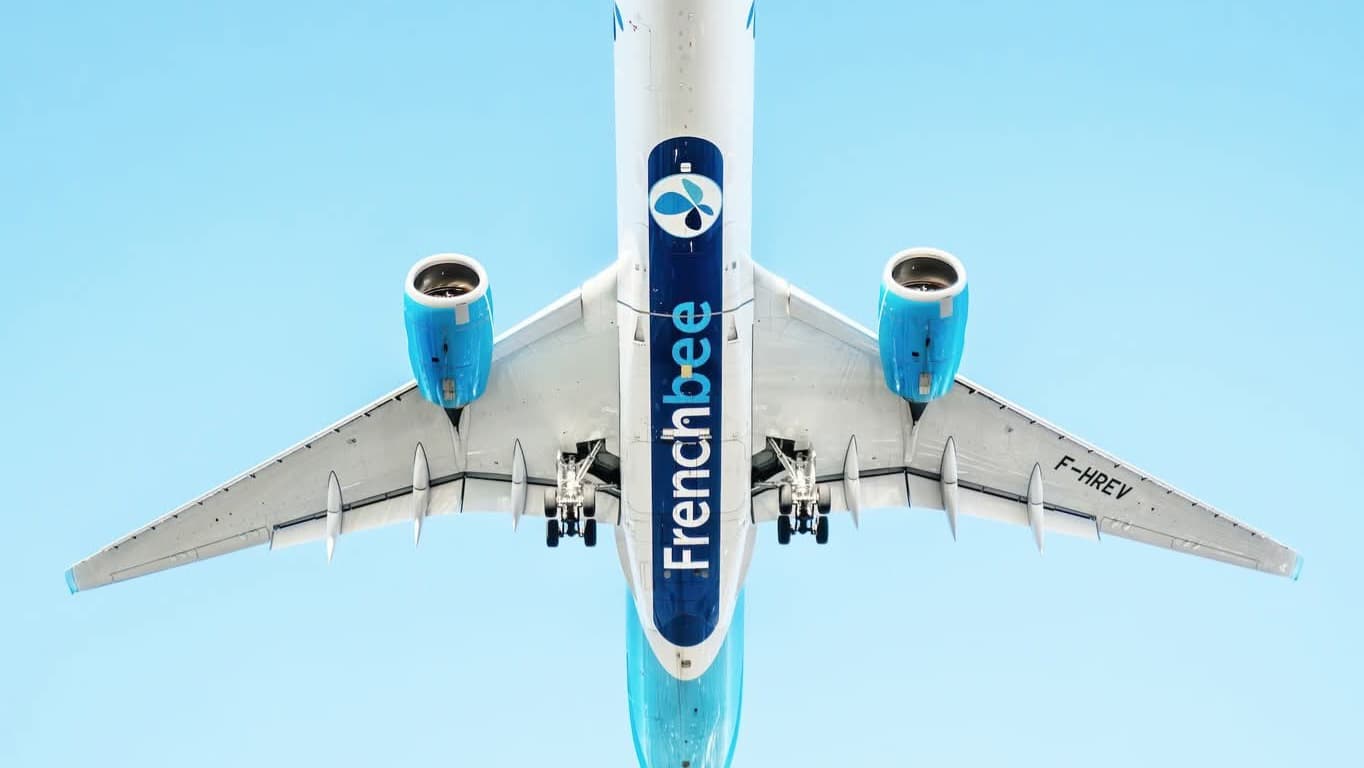
French Bee, the low-cost long-haul subsidiary of the Dubreuil Group, has announced a significant capacity increase for summer 2026, with a 17% rise in seats to Réunion Island and additional frequencies on its recently launched Montreal route. The airline, which operates an all-Airbus A350 fleet of four A350-900s and two A350-1000s, is a textbook example of how a lean, modern fleet can enable aggressive network growth while keeping unit costs low — a key concept in ATPL and ATC training.
**Montreal: a confirmed success**
Launched on 30 April 2025, the Paris-Orly to Montreal (YUL) service has quickly become one of French Bee's strongest performers. For summer 2026, the airline is adding over 9,000 extra seats in May and June, bringing frequencies up to seven weekly flights. This rapid ramp-up demonstrates the demand for affordable transatlantic travel and the airline's ability to respond quickly to market signals — a dynamic that ATPL students studying airline economics and ATC trainees analyzing traffic flows will find instructive.
**Réunion and Tahiti: strategic pillars**
The Indian Ocean remains a cornerstone of French Bee's network. To Réunion (RUN), the carrier will operate up to 13 weekly flights this summer, a 17% increase representing more than 13,500 additional seats compared to 2025. This growth is driven by sustained demand from French travelers. For Tahiti (PPT), the airline is increasing from three to four weekly flights, adding over 7,500 seats. The Tahiti service, operated via San Francisco, benefits from increased competition on the Polynesian market, which has pushed fares downward against Air France and Air Tahiti Nui. For ATC students, these route developments illustrate how slot coordination and seasonal capacity adjustments work in practice.
**North Atlantic: a steady presence**
French Bee maintains a solid footprint on its major US destinations. New York (Newark) remains at up to seven weekly flights, San Francisco at six, and Los Angeles and Miami at three each. Fares remain competitive, with one-way tickets to New York from Paris-Orly starting at €249 inclusive of taxes. The airline also continues to serve Punta Cana in the Dominican Republic, broadening its Caribbean offering. This balanced network — with a mix of high-frequency trunk routes and lower-frequency leisure destinations — is a classic example of the hub-and-spoke versus point-to-point trade-offs that ATPL students study in airline management modules.
**A performing low-cost long-haul model**
Founded in 2016, French Bee operates a pure low-cost long-haul model, offering two cabins — Eco Blue and Premium Blue — with a la carte pricing for bags, seats, meals, and services. The all-A350 fleet is a key enabler of this model, providing excellent fuel efficiency and passenger comfort while keeping maintenance and training costs standardized. For ATPL candidates, this fleet commonality is a major topic in aircraft performance and operational planning. For ATC trainees, the airline's growing presence at Paris-Orly and its use of slots at congested airports like Newark and San Francisco offer real-world examples of airspace and airport capacity management.
**What this means for aviation students**
French Bee's summer 2026 expansion is more than a business update — it is a live case study in network planning, fleet economics, and capacity management. ATPL students can analyze how a low-cost carrier balances demand, frequency, and aircraft utilization. ATC students can observe how seasonal capacity changes affect traffic flows and slot coordination at major airports. Understanding these dynamics is essential for anyone preparing for a career in airline operations or air traffic management.