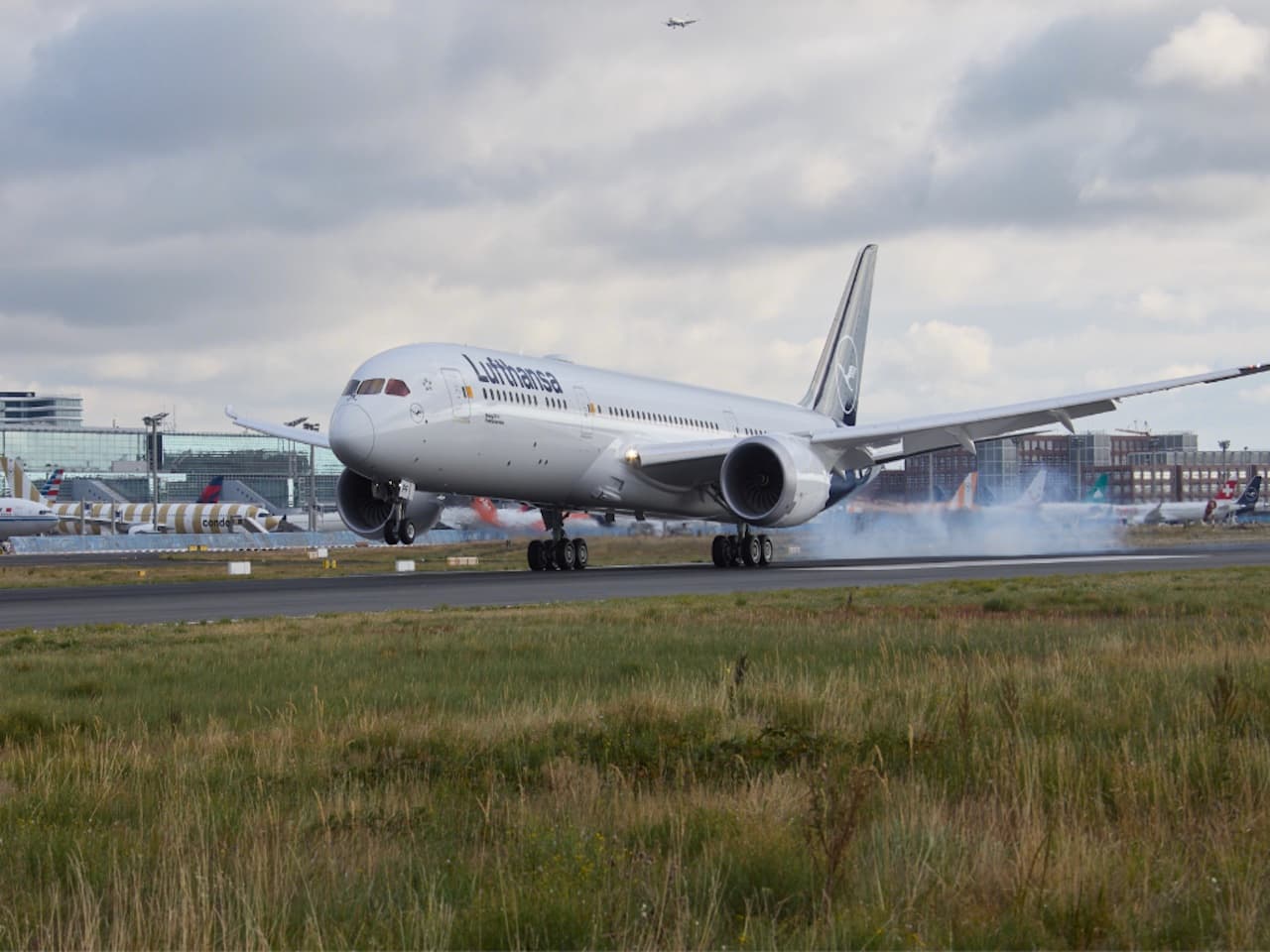
**Frankfurt Airport’s passenger recovery continues, but operational indicators tell a different story.**
In May 2026, Frankfurt Airport, Germany’s largest hub, handled approximately 5.7 million passengers, a 2.7% increase year-on-year, according to operator Fraport. The growth was largely fuelled by school holidays and public holidays, which boosted demand for leisure travel, particularly to Southern European destinations such as Spain, Greece, Italy, and Portugal. Long-haul traffic also showed steady improvement, with rising passenger numbers on routes to Asia, Africa, and Latin America, though recovery remains uneven due to capacity constraints on some Asian routes.
**Cargo and aircraft movements decline, signalling operational shifts.**
Despite the passenger uptick, cargo and mail volume at Frankfurt fell 1.3% to 176,725 tonnes, reflecting a broader European air cargo slowdown as demand normalises post-pandemic amid economic uncertainty. Aircraft movements dropped 2.1% to 41,377 take-offs and landings, while maximum take-off weight (MTOW) decreased 1.9% to about 2.5 million tonnes. These trends indicate that airlines are optimising capacity by using larger, fuller aircraft rather than increasing flight frequency.
**Fraport’s global network shows mixed performance.**
Outside Germany, most Fraport-operated airports posted stronger growth. Ljubljana (Slovenia) saw traffic rise 11.2% to 168,820 passengers. In Brazil, Fortaleza and Porto Alegre together handled 1.2 million passengers (+5.7%), while Lima’s Jorge Chávez Airport reached 2.2 million (+1.3%). The 14 regional airports in Greece, buoyed by strong tourism demand, welcomed about 4 million passengers (+6%). Bulgarian airports Burgas and Varna surged 13.3% to 252,375 passengers. However, Antalya Airport in Turkey, a major Mediterranean leisure hub, saw traffic drop 5% to 3.7 million passengers. Overall, Fraport’s actively managed airports handled about 17.1 million passengers in May 2026, up 1.9% year-on-year.
**What this means for ATPL and ATC students:**
This data illustrates how seasonal demand, route network adjustments, and cargo trends directly affect airport operations, slot coordination, and air traffic flow management. Understanding these dynamics is crucial for flight planning, load factor optimisation, and anticipating ATC workload peaks during holiday periods.