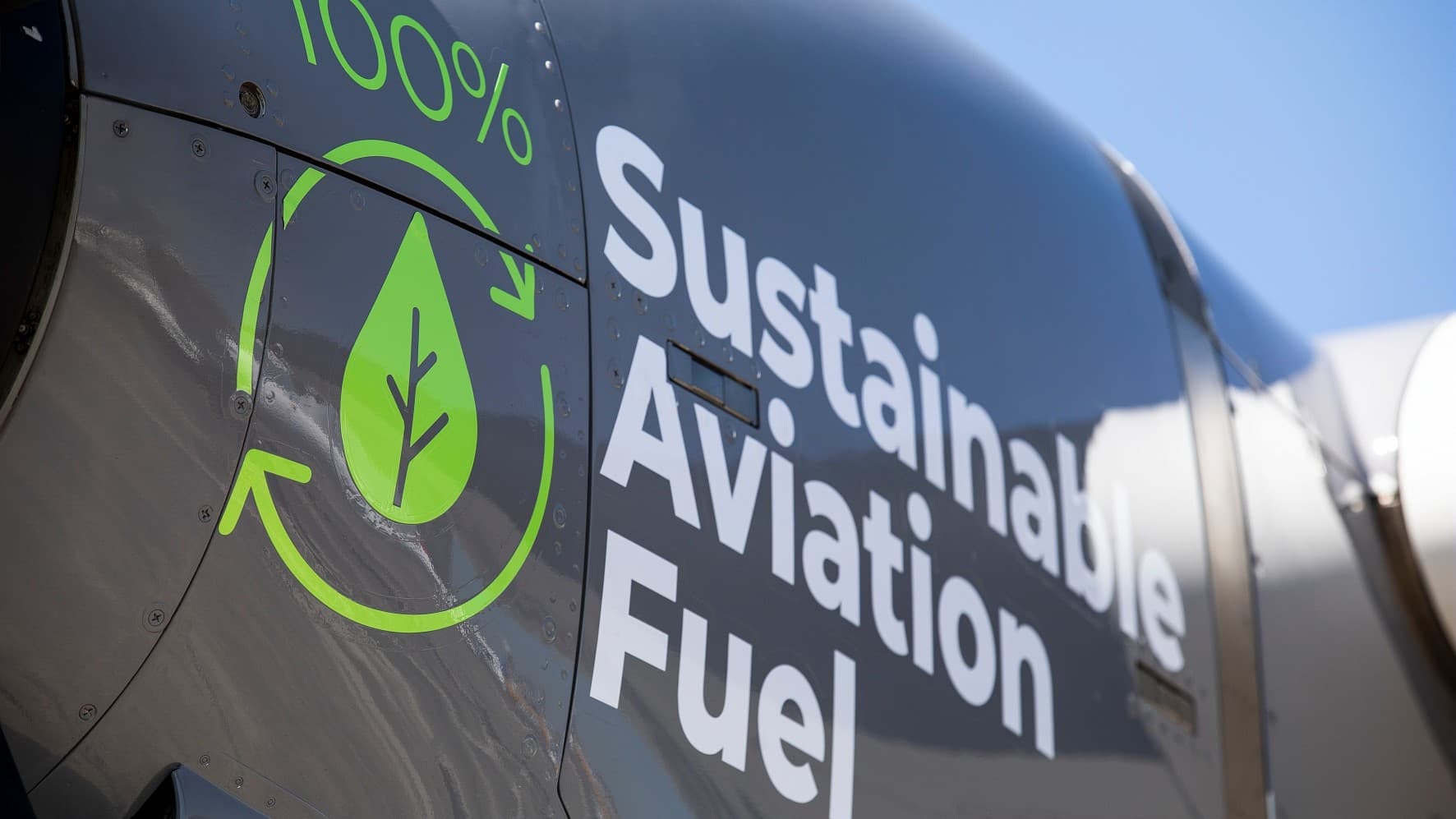
**A Strategic Move for French SAF Production**
On June 9, 2026, Technip Energies, Airbus, Safran, and the cooperative group Tereos announced the creation of Rebound, a joint venture dedicated to developing a large-scale sustainable aviation fuel (SAF) production unit at the port of Dunkirk in northern France. The facility will use Alcohol-to-Jet (AtJ) technology to convert advanced ethanol derived from agricultural and forestry residues into SAF, targeting an annual capacity of approximately 160,000 tonnes. This positions Rebound as one of Europe's largest AtJ plants, addressing the growing demand for SAF driven by regulatory mandates.
**Alcohol-to-Jet Technology and Its Advantages**
The Alcohol-to-Jet process involves converting ethanol or isobutanol into hydrocarbons suitable for aviation through dehydration, oligomerization, hydrogenation, and fractionation. The resulting fuel meets ASTM D7566 standards and can be blended with conventional kerosene for use in existing aircraft and engines. Crucially, the feedstock—agricultural and forestry residues—avoids competition with food crops and minimizes land-use change impacts, aligning with European renewable energy directives. For ATPL and ATC students, understanding AtJ is essential as it represents a scalable, cost-competitive pathway to meet ReFuelEU Aviation targets.
**Regulatory Context: ReFuelEU Aviation**
Rebound directly supports the European Union's ReFuelEU Aviation regulation, which mandates increasing SAF blending percentages: 2% by 2025, 6% by 2030, and up to 70% by 2050. Market analyses estimate SAF demand in Europe at 1.2 million tonnes per year in 2025, rising to 4 million tonnes by 2030 and over 40 million tonnes by 2050. While Rebound's 160,000-tonne capacity is significant, it represents only a fraction of the required volumes, highlighting the need for multiple large-scale projects. This regulatory framework will reshape fuel supply chains, airport operations, and flight planning, making it critical knowledge for future aviation professionals.
**Industrial and Logistical Advantages**
The Dunkirk site offers strategic logistical benefits, including direct maritime access for importing feedstocks and exporting SAF, as well as strong connections to European transport networks. Technip Energies has already secured an industrial plot at the port, which will be transferred to Rebound once the joint venture is finalized. The project aims to build a fully European value chain from biomass to airline fuel, reinforcing France's industrial leadership in aviation decarbonization. For students, this illustrates how infrastructure and collaboration between energy, aerospace, and agricultural sectors are key to achieving sustainability goals.
**Implications for Aviation Training**
As SAF becomes a standard component of aviation fuel, ATPL and ATC students must grasp its production pathways, regulatory requirements, and operational impacts. Rebound exemplifies the type of industrial initiative that will supply the fuel powering future flights. Understanding SAF properties, blending limits, and supply chain logistics will be essential for flight planning, fuel management, and environmental compliance. This project also underscores the growing importance of cross-sector partnerships in aviation's energy transition.