**A Long-Awaited Certification**
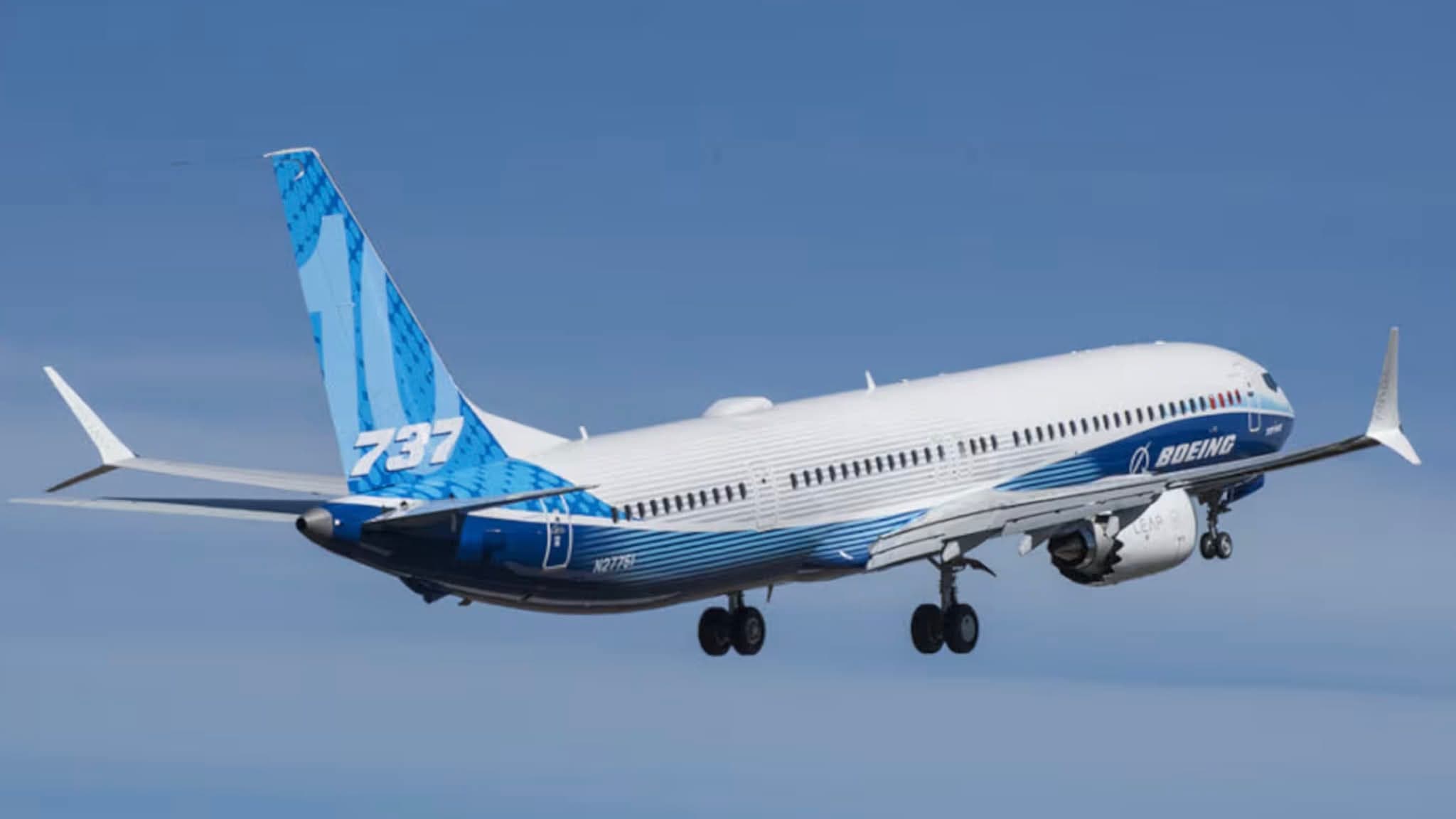
According to the Wall Street Journal and other industry sources, the U.S. Federal Aviation Administration (FAA) is poised to certify the Boeing 737 MAX 7 later this month, marking a significant—if overdue—step for the manufacturer. The MAX 7, the smallest variant in the 737 MAX family, has been held up primarily by an engine anti-ice issue identified by the FAA, which could cause overheating of the engine nacelle's inner inlet. Boeing had to redesign and test a modified anti-ice system across the entire MAX family, with certification flight tests resuming in spring 2026. The certification comes nearly 13 years after the program's launch and over seven years after the initial MAX family certification.
**Why This Matters for ATPL and ATC Students**
For ATPL candidates, this news is a real-world case study in aircraft certification—a topic covered in the Air Law and Aircraft General Knowledge syllabi. Understanding how the FAA and EASA handle type certification, especially after major accidents, is crucial. The MAX 7's delay highlights the importance of system safety assessments, particularly for critical systems like engine anti-ice. ATC students should note that the introduction of a new aircraft variant can affect traffic patterns, as airlines may adjust fleet composition and route networks. The MAX 7 is designed for regional markets with lower capacity needs, which could influence airport slot allocation and airspace demand.
**Regulatory Context and Industry Impact**
Since the two fatal MAX crashes in 2018 and 2019, the FAA has overhauled its certification methods. Administrator Bryan Bedford stated in May that he expected MAX 7 certification "this summer," while the larger MAX 10 remains on track for year-end. The European Union Aviation Safety Agency (EASA) is expected to validate the certification shortly after the FAA. For Boeing, certifying the MAX 7 and then the MAX 10 is essential to normalizing its narrowbody offering against the Airbus A320neo family. Airlines like Southwest Airlines, which have heavily bet on the MAX 7, will finally be able to deploy the aircraft on regional routes, potentially altering capacity and frequency plans that ATC must accommodate.
**Production Ramp-Up and Quality Oversight**
Boeing has been authorized to increase 737 production to 42 aircraft per month and plans to open a fourth assembly line in Everett. However, this ramp-up occurs under heightened scrutiny following quality issues on the 737 and 787 programs. For students, this illustrates the balance between production rate and quality assurance—a topic often discussed in aviation management modules. The MAX 7 certification is a reminder that even mature programs face technical hurdles that require rigorous testing and regulatory cooperation.
**Conclusion**
The MAX 7's certification is more than a corporate milestone; it is a teaching moment for future aviation professionals. It demonstrates how certification delays ripple through airline operations, maintenance planning, and air traffic management. As Boeing moves toward normalizing its MAX family, ATPL and ATC students should follow these developments closely—they are the real-world application of the principles studied in the classroom.