FAA reviews 737 MAX VNAV disengagement issue during go-around
The FAA is evaluating a software anomaly in the 737 MAX Flight Management System that can disconnect vertical navigation during a go-around, putting the certification of the MAX 10 on hold.
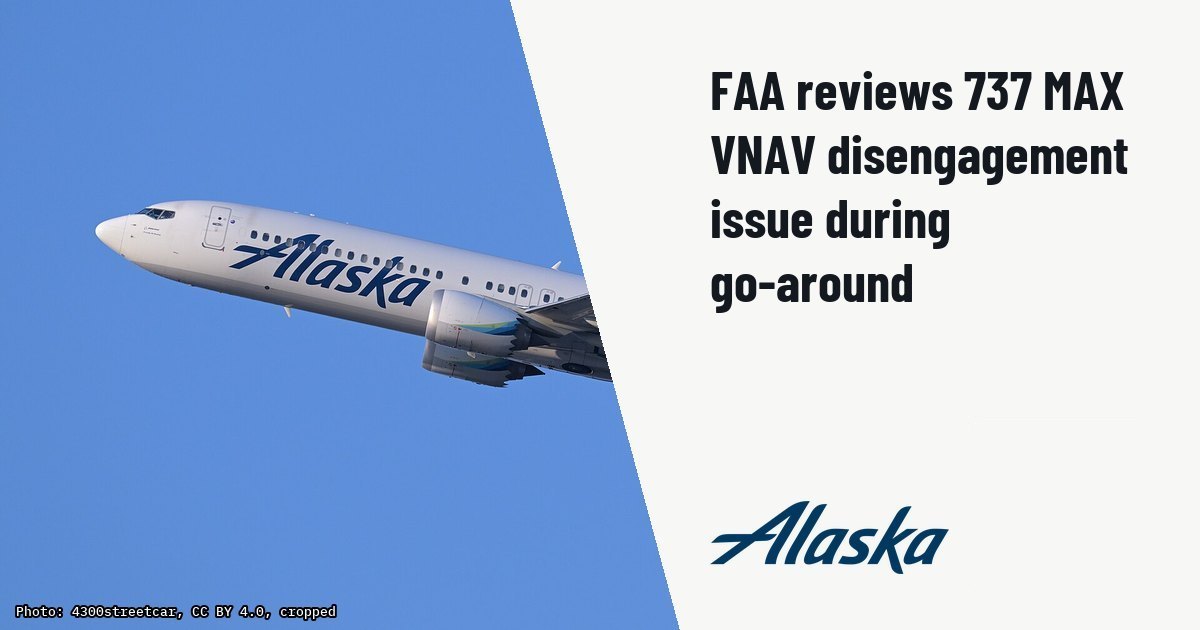
The FAA is preparing a formal safety review to assess whether an anomaly in Boeing's Flight Management System Update 14 represents an unsafe condition. The agency may convene a Corrective Action Review Board to evaluate the issue and determine if regulatory actions are required.
The glitch occurs in specific scenarios during a go-around: vertical navigation (VNAV) can disengage after the flight crew alters a previously programmed procedure. While the aircraft remains controllable, manual pilot intervention is required to maintain the desired vertical path and target altitude.
Boeing was initially notified by an operator in November 2024 and concluded in February 2025 that no formal safety review was necessary. Subsequent operator reports prompted a reassessment, leading to customer notifications in August 2026 and a formal safety analysis in September.
FAA Administrator Bryan Bedford confirmed that the certification of the 737 MAX 10 remains deferred until the software issue is resolved. The MAX 7, certified in August with Update 14, could also face entry-into-service delays, notably for Southwest Airlines. Alaska Airlines, American Airlines, Southwest Airlines, and United Airlines confirmed their operating fleets do not run the affected software, while WestJet reported no incidents. Deliveries continue with an earlier software version as Boeing accelerates a permanent fix initially scheduled for 2028.
Why it matters for your training
This issue directly highlights the critical need for crew monitoring of FMA modes and vertical guidance during missed approach procedures when modifying flight plans. It also impacts type certification timelines and line fleet software configurations.
Sources
Article rewritten with the help of AI from the cited sources.