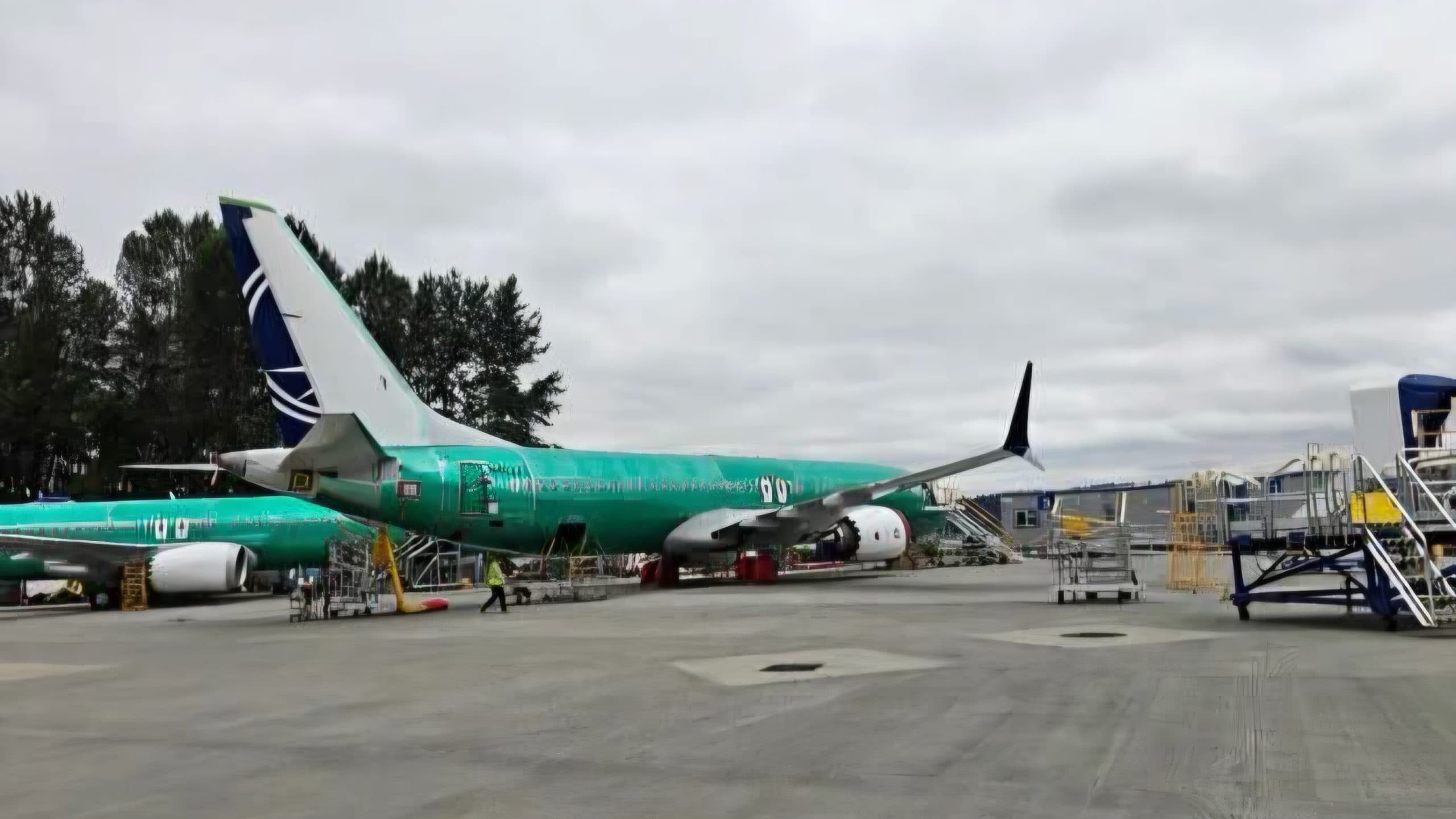
The U.S. Federal Aviation Administration (FAA) has issued a new airworthiness directive (AD) mandating structural inspections on certain Boeing 737 MAX aircraft, following the discovery of cracks on older-generation 737s. The directive, effective September 10, applies to 471 aircraft on the U.S. registry and 1,429 worldwide, covering the 737 MAX 8, MAX 9, and the 737-8200 (the high-density MAX 8-200). The inspections target a specific area on the right side of the fuselage, around the forward service door and galley, focusing on the 'bear strap'—a structural reinforcement strap installed around fuselage openings such as doors and emergency exits. These areas experience repeated mechanical stress from pressurization cycles and flight phases. The FAA warns that an undetected crack in this region could compromise the aircraft's structural integrity over time. Operators must conduct the checks according to a schedule based on each aircraft's usage and repair any anomalies before the aircraft returns to service.
Crucially, no cracks have been found on any 737 MAX in service to date. The cracks that triggered the directive were discovered on older Boeing 737 Next Generation (NG) models, particularly around this fuselage reinforcement. However, Boeing proactively extended inspections to the MAX fleet in 2024, citing similar design and manufacturing processes between the two families. The manufacturer continues to analyze the root cause and is developing modifications for future aircraft. The FAA has not ordered an immediate fleet grounding, reasoning that the prescribed inspection intervals provide multiple opportunities to detect any crack initiation before it compromises structural strength. The initial checks involve visual inspections of the fuselage skin to identify any prior repairs in the area. Depending on findings, operators may need to perform more detailed inspections, including eddy current testing, around fasteners, door corners, and the reinforcement beneath the skin.
This campaign echoes a 2019 episode when the FAA mandated inspections on 737-700, -800, and -900 aircraft after cracks were found in structural elements linking the fuselage and wings. The current case is different—it does not involve the wing-fuselage attachment or a failure on the MAX fleet—but it underscores the heightened vigilance applied to aging or high-cycle structures, even on relatively new but heavily used aircraft. United Airlines, a major 737 MAX operator, does not anticipate short-term operational disruptions, planning to perform the checks during heavy maintenance visits and noting that its oldest aircraft have not yet reached the cycle thresholds that make some inspections mandatory.
This directive arrives amid intensified scrutiny of Boeing, following the January 5, 2024, in-flight blowout of a door plug on an Alaska Airlines 737 MAX 9, which caused rapid decompression at about 16,000 feet. The NTSB's 2025 findings criticized Boeing's training, oversight, and procedural compliance, as well as the FAA's ineffective oversight. In late July, the FAA proposed another directive affecting 453 737 MAX aircraft in the U.S. related to a potential misinstallation of certain seat assemblies. While technically distinct, these issues collectively keep regulators and airlines focused on production quality, maintenance traceability, and the overall integrity of the 737 MAX family.