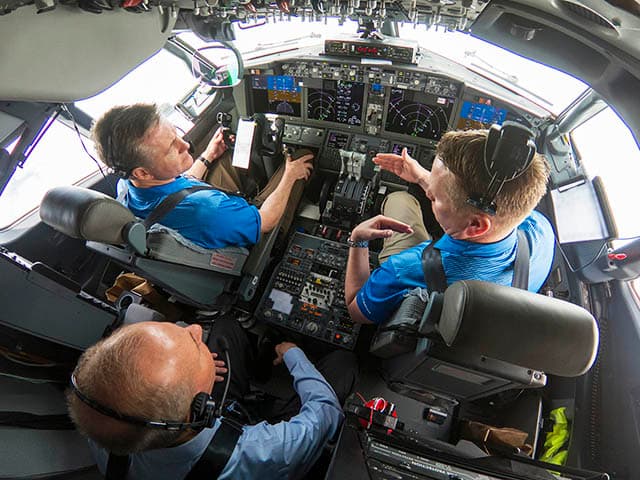
The Federal Aviation Administration (FAA) has published a new airworthiness directive (AD) for the entire Boeing 737 MAX family, following reports of two in-flight events where cabin and cockpit temperatures became uncontrollable. The directive, effective July 16, applies to all 825 aircraft in service, including the 737-8, 737-8-200 (high-density 8200 configuration), and 737-9. The FAA deemed the risk urgent enough to bypass the usual comment period, highlighting the seriousness of the hazard.
This AD builds on a February 2026 directive that addressed a similar overheating scenario linked to a circuit breaker in the Standby Power Control Unit (SPCU). When that breaker trips, it sends a false ground signal to the air inlet door actuators, causing them to close. This prevents outside air from reaching the heat exchangers in the air conditioning system, leading to hot bleed air from the engines being directed into the cabin and cockpit without adequate cooling. The new directive targets a related failure path: circuit breakers in the Environmental Control System (ECS) downstream of the SPCU can also trip, producing the same dangerous outcome.
The FAA warns that excessive cabin temperatures could cause injuries or incapacitation of crew and passengers, potentially compromising flight safety. However, no fleet grounding or cycle limits have been imposed; instead, the agency requires rapid updates to flight manuals and non-normal checklists. Boeing has developed new operational procedures to help crews manage the scenario, while a hardware fix is being prepared for future incorporation on delivered aircraft and for the MAX 7 and MAX 10 variants still in certification.
For ATPL and ATC students, this case is a textbook example of how airworthiness directives evolve in response to real-world events. It underscores the importance of understanding electrical system architecture (SPCU, ECS) and the logic behind non-normal checklists. ATC trainees should note that such events may require priority handling or diversion if crew incapacitation is a concern. The directive also illustrates the balance between immediate procedural fixes and long-term hardware modifications—a key theme in aviation safety management.