**Industry Context and MyATPS Angle**
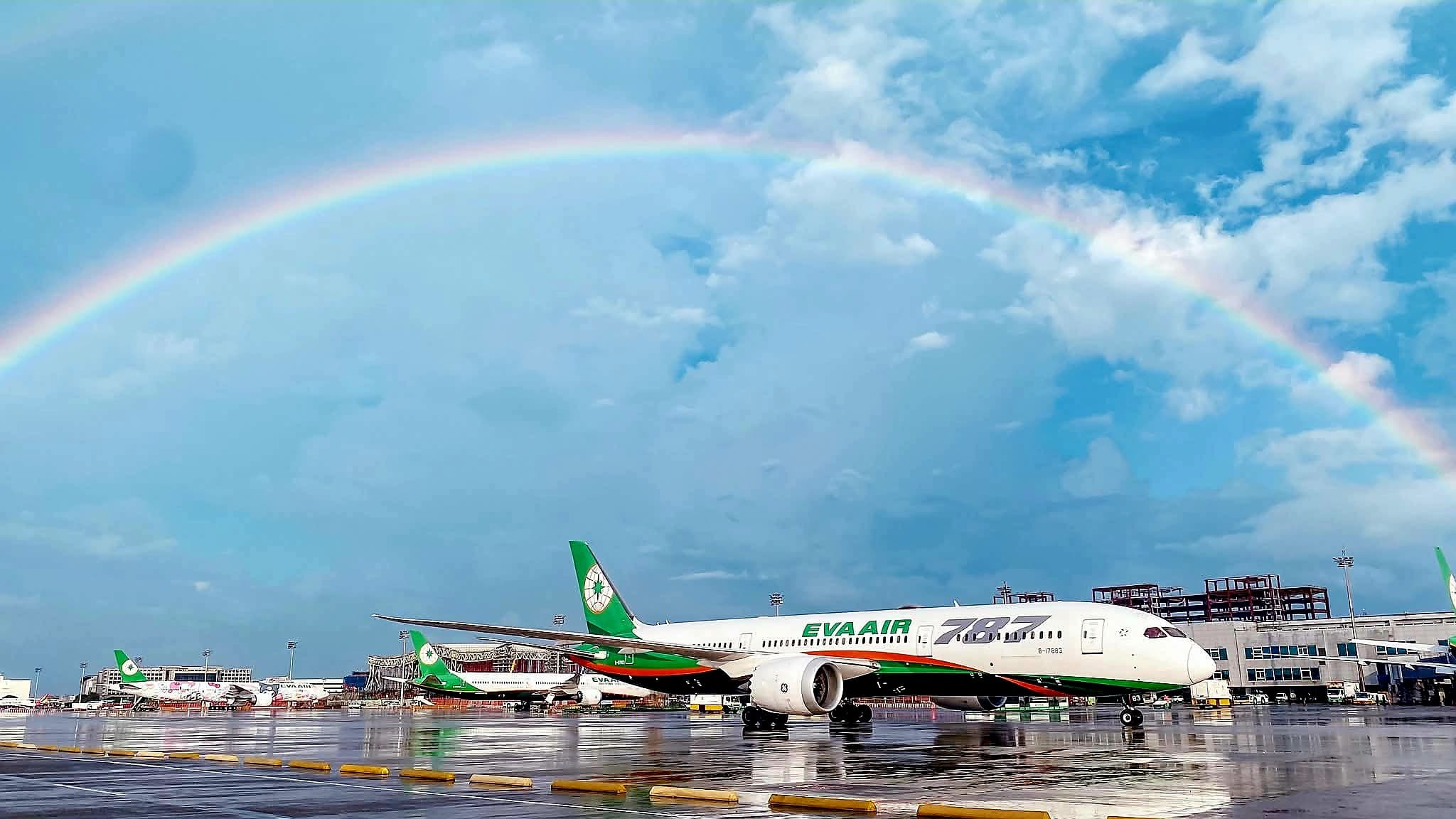
On Friday, Taiwanese carrier EVA Air launched a new long-haul service between Taipei-Taoyuan and Washington Dulles International Airport, operated four times per week with a Boeing 787-9. This route becomes the only nonstop connection between the U.S. capital and Taiwan, a milestone that carries significant implications for aviation training. For ATPL and ATC students, this development is not just a piece of airline news—it is a live case study in strategic network planning, aircraft performance, and airspace management.
**Why This Matters for ATPL/ATC Students**
The Boeing 787-9 is a modern long-range twinjet that ATPL candidates study in depth for its composite structure, fly-by-wire systems, and fuel efficiency. EVA Air's choice of this aircraft for a 13,000+ km route (Taipei to Washington Dulles) demonstrates real-world operational planning: range, payload, and ETOPS considerations. ATC students, meanwhile, can analyze the impact of a new transpacific arrival into Washington Dulles, a busy hub with complex airspace shared with Reagan National and Baltimore-Washington airports. The route also highlights the growing importance of Asia-U.S. East Coast connections, a trend that will shape future traffic flows and sector demand.
**Geopolitical and Commercial Factors**
EVA Air now serves ten North American destinations, including New York, Los Angeles, San Francisco, Seattle, Chicago, Houston, Dallas, Toronto, and Vancouver. The addition of Washington Dulles reflects strengthened U.S.-Taiwan ties, particularly in semiconductors and advanced technology, driving premium business and institutional travel. For students, this illustrates how geopolitical shifts influence route development—a key topic in aviation management modules. The "water cannon salute" greeting the inaugural flight is a standard aviation tradition, but it also underscores the ceremonial and operational significance of new long-haul services.
**Operational and Training Takeaways**
The 787-9's "Royal Laurel" business class is a benchmark in premium cabin design, relevant for cabin crew training and customer service studies. Additionally, the route avoids traditional Asian hubs like Tokyo or Seoul, offering a direct alternative that reduces travel time—a concept ATPL students encounter in flight planning and fuel optimization exercises. For ATC trainees, the coordination required for a new international arrival at Dulles, including slot allocation and customs procedures, provides a practical example of airport operations.
**Conclusion**
EVA Air's Taipei-Washington Dulles service is more than a route launch; it is a teaching tool for the next generation of aviation professionals. By examining this case, students can connect theoretical knowledge with real-world airline strategy, aircraft technology, and air traffic management.