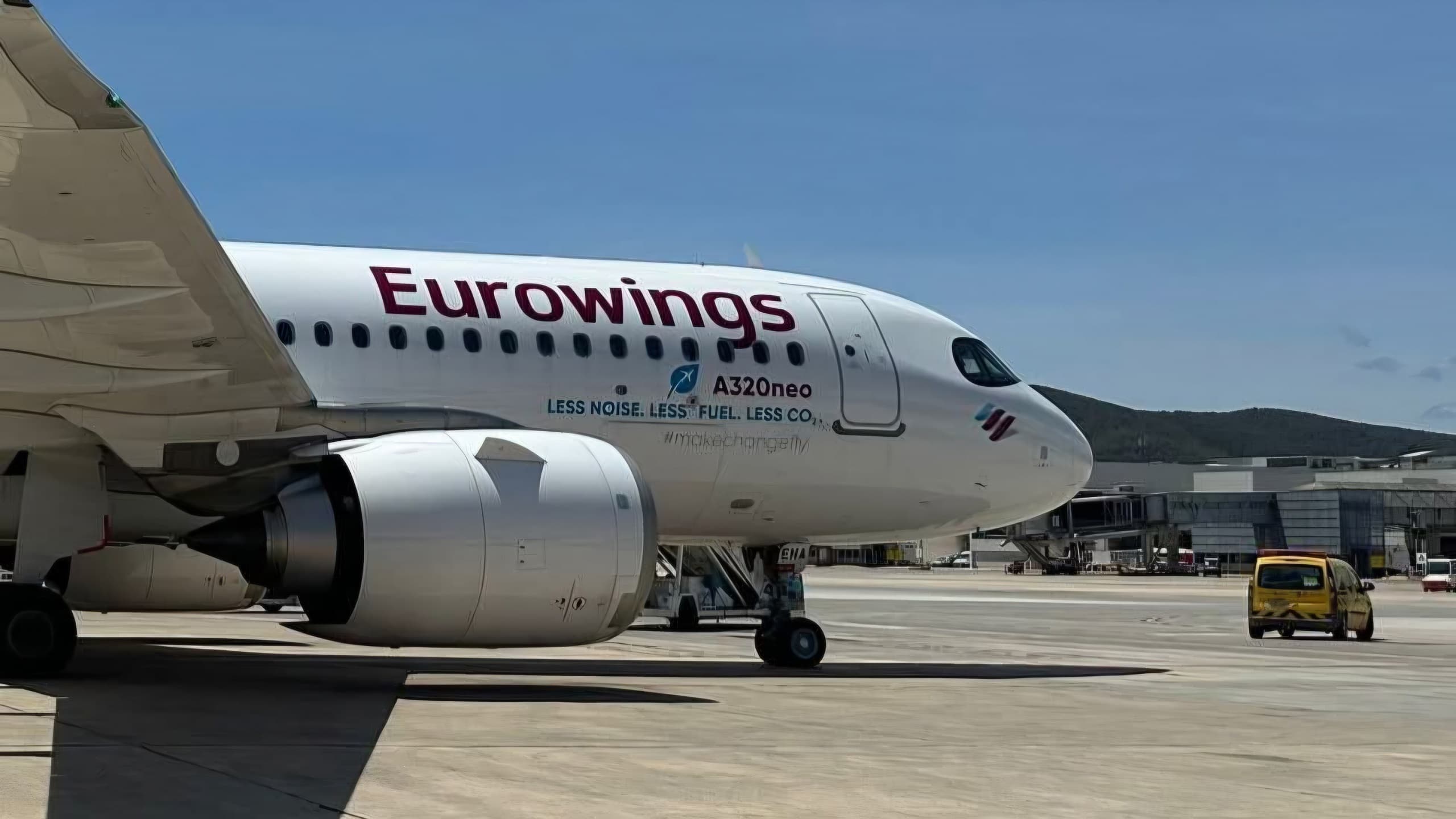
**Eurowings Launches First Direct Tallinn–Düsseldorf Route: A Boost for Baltic Connectivity**
On 1 May 2026, Eurowings inaugurated the first-ever direct scheduled flight between Tallinn Lennart-Meri Airport and Düsseldorf Airport. The service operates twice weekly (Mondays and Fridays) with Airbus A320-family aircraft, covering the approximately 2-hour 30-minute journey. This route fills a gap in the market, as no other carrier had previously offered a non-stop connection between the Estonian capital and one of Germany's key economic hubs.
**Strategic Importance for Estonia and the Region**
For Tallinn Airport, this new link is a significant step in its network development. Eero Pärgmäe, a member of the airport's board, highlighted that the route strengthens business and cultural ties between western Germany and Estonia. The airport expects overall capacity to grow by about 18% this summer compared to last year, thanks to new services from Eurowings, airBaltic, Wizz Air, and Finnair. Düsseldorf, located in the Rhine-Ruhr region—home to nearly 10 million people and a dense concentration of corporate headquarters and industrial firms—offers Estonian businesses and tourists direct access to a major European market.
**Eurowings' Strategy and Market Positioning**
Eurowings, a Lufthansa Group subsidiary positioned between low-cost and full-service carriers, already serves Tallinn with flights to Prague (launched in 2024). The addition of Düsseldorf reflects the airline's strategy to expand point-to-point connections from its main base in North Rhine-Westphalia, targeting both business and leisure travellers. Reinald Frankewitz, Head of Network Relations at Eurowings, noted that the route opens new opportunities for Estonian passengers to explore the Rhine-Ruhr area's economic and cultural offerings, while also making it easier for German tourists to discover Estonia.
**Implications for ATPL and ATC Students**
For ATPL students, this development illustrates how airlines assess market demand, fleet utilisation, and network economics when launching new routes. Understanding the factors behind route selection—such as catchment area, business traffic potential, and seasonal capacity adjustments—is essential for future airline managers and dispatchers. ATC trainees can note the operational aspects: two weekly frequencies on a 2.5-hour sector require careful slot coordination at both airports, especially during peak summer schedules. The 18% capacity increase at Tallinn also means more traffic for approach and tower controllers to handle, highlighting the importance of airspace planning and flow management in a growing regional airport environment.