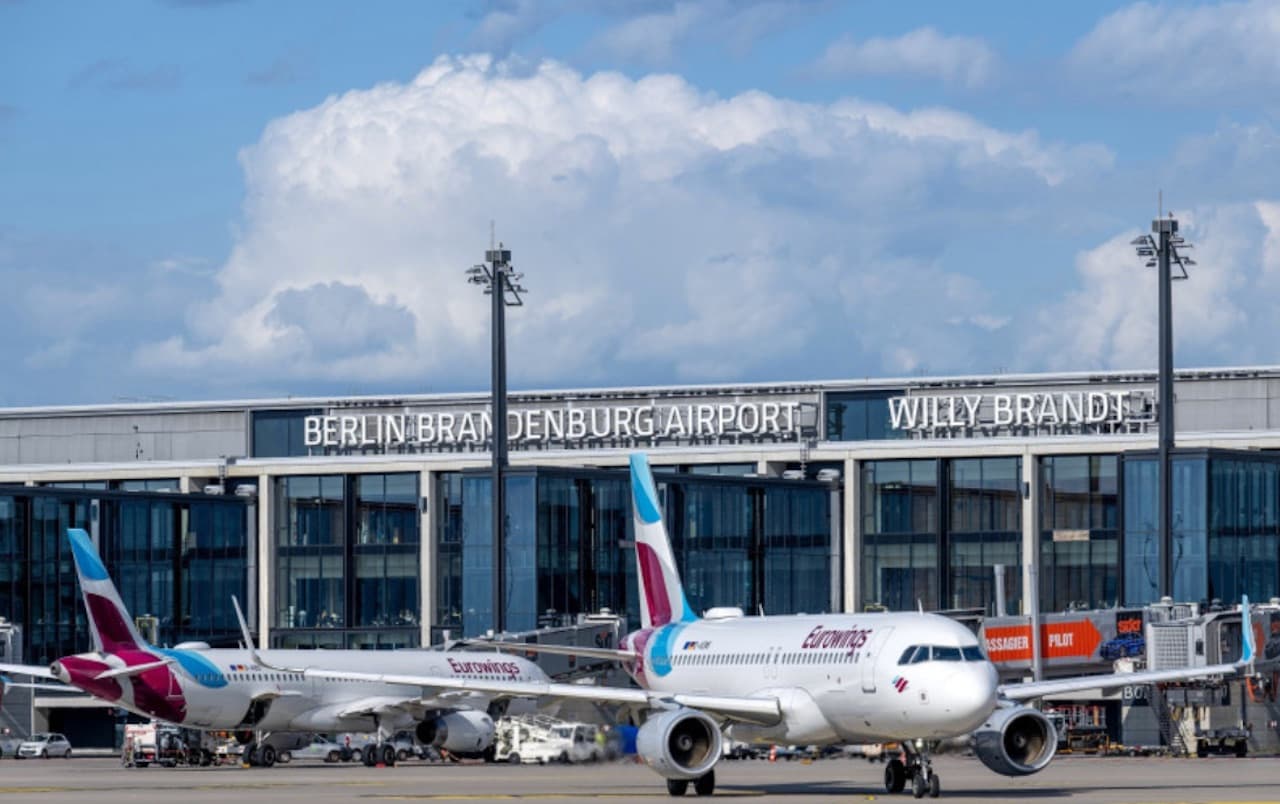
**Eurowings strengthens its Berlin base to become number one at BER**
Eurowings has announced it will increase its fleet based at Berlin Brandenburg Airport (BER) to eleven aircraft this winter, deploying more than 300 flight and ground crew. The Lufthansa Group low-cost subsidiary is expanding its network with new routes and higher frequencies, aiming to become the leading carrier at the German capital's airport. This push comes as Ryanair reduces its presence at BER, citing higher fees and taxes, and as Germany raises aviation taxes, creating a shifting competitive landscape.
**Network expansion and new routes**
Among the new services, Eurowings will launch a direct Berlin–Bologna route, the first non-stop connection between the two cities operated by the airline, with fares starting at €49.99 in Basic class. The route targets both leisure travelers—city breaks and Italian gastronomy—and business traffic to the industrial Emilia-Romagna region. The winter schedule also sees increased frequencies to the Canary Islands (Fuerteventura, Gran Canaria, Lanzarote, and Tenerife), reinforcing Eurowings' position as Germany's largest leisure carrier. With nearly 50 destinations served from BER, the airline is building a dense point-to-point network that complements Lufthansa Group's hub operations.
**Strategic context and competitive dynamics**
Eurowings' expansion is part of a broader Lufthansa Group strategy at BER, where the group (including Lufthansa, Swiss, Austrian, Brussels Airlines, and SunExpress) already accounts for about 30% of flights. According to 2024 data, the group ended the year as BER's top operator, with nearly one-third of movements, far ahead of its nearest competitor at around 17%. Ryanair's decision to drastically reduce its Berlin base—blaming higher costs and airport charges—creates a window of opportunity for Eurowings to capture slots and routes. Eurowings CEO Max Kownatzki called Berlin a "strategic growth market" but warned that rising taxes, airport charges, fuel costs, and European regulatory burdens threaten Germany's competitiveness and future investments.
**What this means for ATPL and ATC students**
For ATPL students, this case illustrates how network planning decisions are driven by competitive positioning, cost structures, and regulatory environments. ATC students can observe how base expansions and slot reallocations affect traffic flows and airport capacity management. The interplay between low-cost carriers, legacy groups, and external factors like taxation provides a practical example of the strategic thinking that shapes the aviation industry.