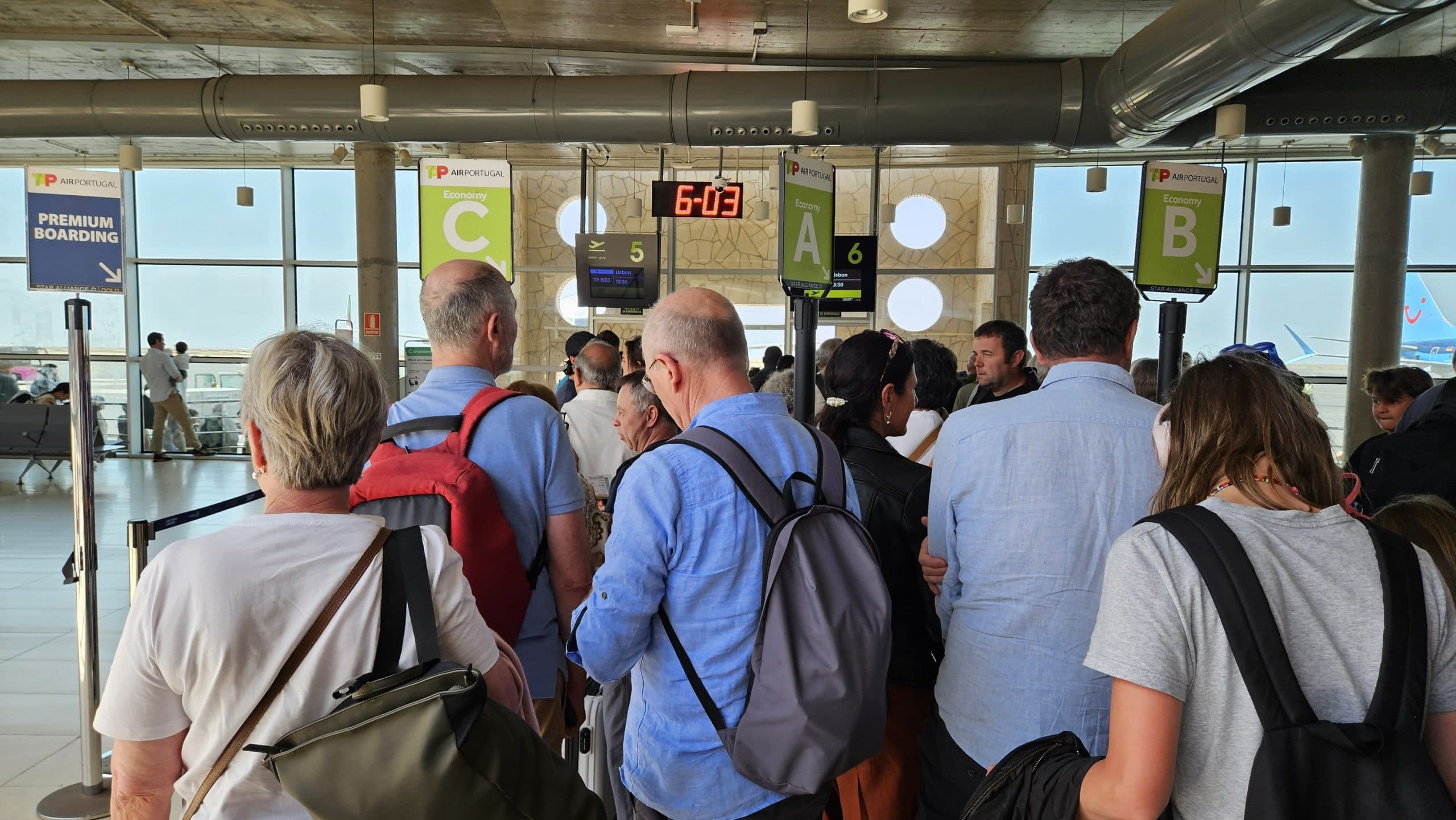
The European Union is entering a decisive phase in the revision of Regulation (EC) No 261/2004, the cornerstone of air passenger rights for the past two decades. At the heart of the negotiations in Brussels are several contentious issues: the delay threshold that triggers compensation, the amount of compensation paid, the mandatory inclusion of a free cabin bag, and the protection of families traveling with children. The European Parliament wants to maintain the current level of protection, while several member states—backed by airlines—are pushing for a relaxation they deem necessary to reduce what the European Commission estimates as an annual cost of €8.1 billion for carriers.
**What the Institutions Want**
The Parliament adopted a clear position in January: keep the three-hour delay threshold for compensation, maintain current compensation amounts, and add new rights such as a free personal item and a small cabin bag. It also wants to ban airlines from charging parents to sit next to their children under 14, and to ensure free seating for companions of passengers with reduced mobility. The Council, representing member states, approved a compromise in 2025 that raises the threshold to four hours on some flights and six hours on flights over 3,500 km, while reducing compensation caps to €300 or €500 depending on distance. This friction point is central because it determines both the level of passenger protection and the financial exposure of airlines.
**Cabin Baggage and Family Seating**
Beyond compensation, the reform touches very concrete issues for travelers. The Parliament wants to impose, without extra charge, a personal item and a small cabin bag weighing up to 7 kg, with total dimensions not exceeding 100 cm. It also seeks to prohibit airlines from charging parents to sit next to their children under 14, as well as companions of passengers with reduced mobility. These demands clash head-on with airlines, which see them as new operational and commercial burdens. They argue that, to date, free standard cabin baggage is not uniformly imposed across the EU, even though political debates have hardened on this point in 2025 and 2026. The issue has become symbolic: behind the cabin bag lies the battle for fare transparency for passengers.
**Flightright Warns of a Step Backward**
In its statement, Flightright estimates that the proposals currently under discussion could deprive up to 60% of currently eligible passengers of compensation and reduce the amounts paid by about 25%. The platform argues that thresholds of four to six hours would exclude a large number of travelers from the system, while the Parliament wants to keep the three-hour bar. Flightright also claims that an independent study shows a roughly 70% drop in delays of more than three hours on flights subject to current EU regulation. This assertion should be read as a advocacy argument, not a conclusion unanimously shared by the institutions. The Council, on the other hand, recalls that the European legal framework is complex and that the revision's goal is also to improve the practical application of rights, which are often poorly understood or misused by passengers.
**An Uncertain Compromise**
The balance remains difficult to find. The Parliament has already rejected the relaxation defended by member states, deeming it unacceptable to raise thresholds while reducing amounts. On the other side, the Council believes a simpler and more proportionate system is necessary to preserve European connectivity and avoid excessive costs for carriers, especially on secondary airports and long-haul routes. In practice, negotiators are still trying to reconcile two contradictory objectives: effectively protecting passengers and maintaining a sustainable economic model for airlines. If no agreement is reached, the current rules will remain in force. This is precisely the scenario that supporters of reform fear, but that some passenger advocates paradoxically consider preferable to a text they deem too unfavorable to travelers.
**What to Watch For**
The next steps depend on the ability of the Council, Parliament, and Commission to agree on three major points: the delay threshold triggering compensation, the amount of compensation, and the definition of extraordinary circumstances. Added to this are the ancillary but politically visible issues: free cabin baggage, family seating, and simplification of reimbursement procedures. For ATPL and ATC students, understanding these regulatory dynamics is crucial because they directly affect airline operational planning, passenger handling procedures, and the legal environment in which future aviation professionals will work.