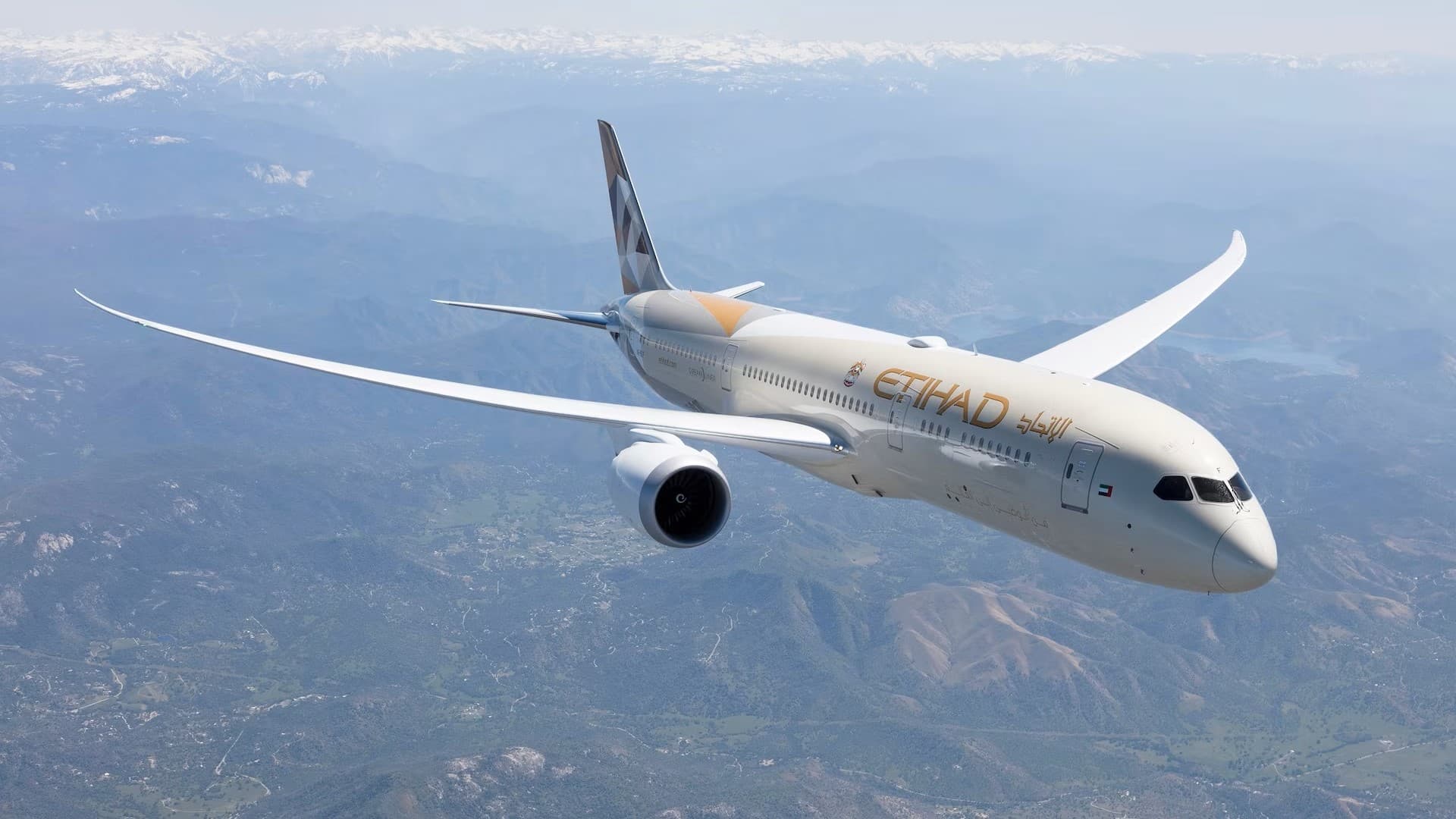
Etihad Airways is reportedly on the verge of finalizing an order for approximately ten Boeing 787 Dreamliners, with a possible announcement at the Farnborough Airshow in July 2026. While sources caution that the deal is not yet guaranteed, the news underscores the carrier's ambitious growth strategy and the intense competition for widebody production slots. For ATPL and ATC students, this development offers a real-world case study in fleet planning, route network expansion, and the operational considerations that shape airline decisions.
**Fleet Growth and Strategic Context**
Etihad has been steadily expanding its fleet, ending 2025 with 127 aircraft compared to 101 a year earlier, and serving 110 destinations. The airline aims to reach 200–220 aircraft by 2030, with around 20 deliveries per year, to carry up to 40 million passengers annually. The potential order for ten 787s fits into this gradual ramp-up rather than a mega-deal. For students, this highlights the importance of incremental fleet growth and the role of long-haul aircraft like the 787 in connecting markets across Europe, Asia, and North America. Routes such as Luxembourg and Calgary (served by the 787-9 from November 2026) demonstrate how airlines use specific aircraft types to optimize range and capacity.
**The Boeing 787 as a Fleet Pillar**
The 787 Dreamliner is already the backbone of Etihad's long-haul operations, with 37 787-9s and 10 787-10s in service. Adding ten more would enhance fleet homogeneity, simplifying training, maintenance, and operational costs. For ATPL students, this is a practical lesson in fleet commonality: airlines often standardize on a single type to reduce complexity and improve efficiency. ATC students can note how such fleet decisions affect traffic patterns, as more 787s on long-haul routes may increase demand for oceanic clearances and arrival slots at major hubs.
**Farnborough as a Strategic Venue**
The Farnborough Airshow, held from July 20–24, 2026, is a key platform for major aircraft orders. In a market where production slots are scarce, securing an order at Farnborough signals a carrier's ability to lock in deliveries for the late 2020s and early 2030s. Reports suggest Etihad is also discussing advanced delivery slots, possibly from Air India's positions. This illustrates the competitive dynamics of aircraft procurement, a topic relevant to aviation management courses and for students understanding supply chain constraints.
**Implications for ATPL and ATC Students**
For ATPL candidates, this news reinforces the importance of understanding fleet planning and aircraft performance characteristics. The 787's fuel efficiency and range capabilities are central to modern airline strategies. For ATC trainees, the expansion of long-haul networks means more complex traffic management, especially in oceanic airspace and at congested airports. Observing how airlines like Etihad grow their fleets provides practical insight into the operational realities they will face in their careers.