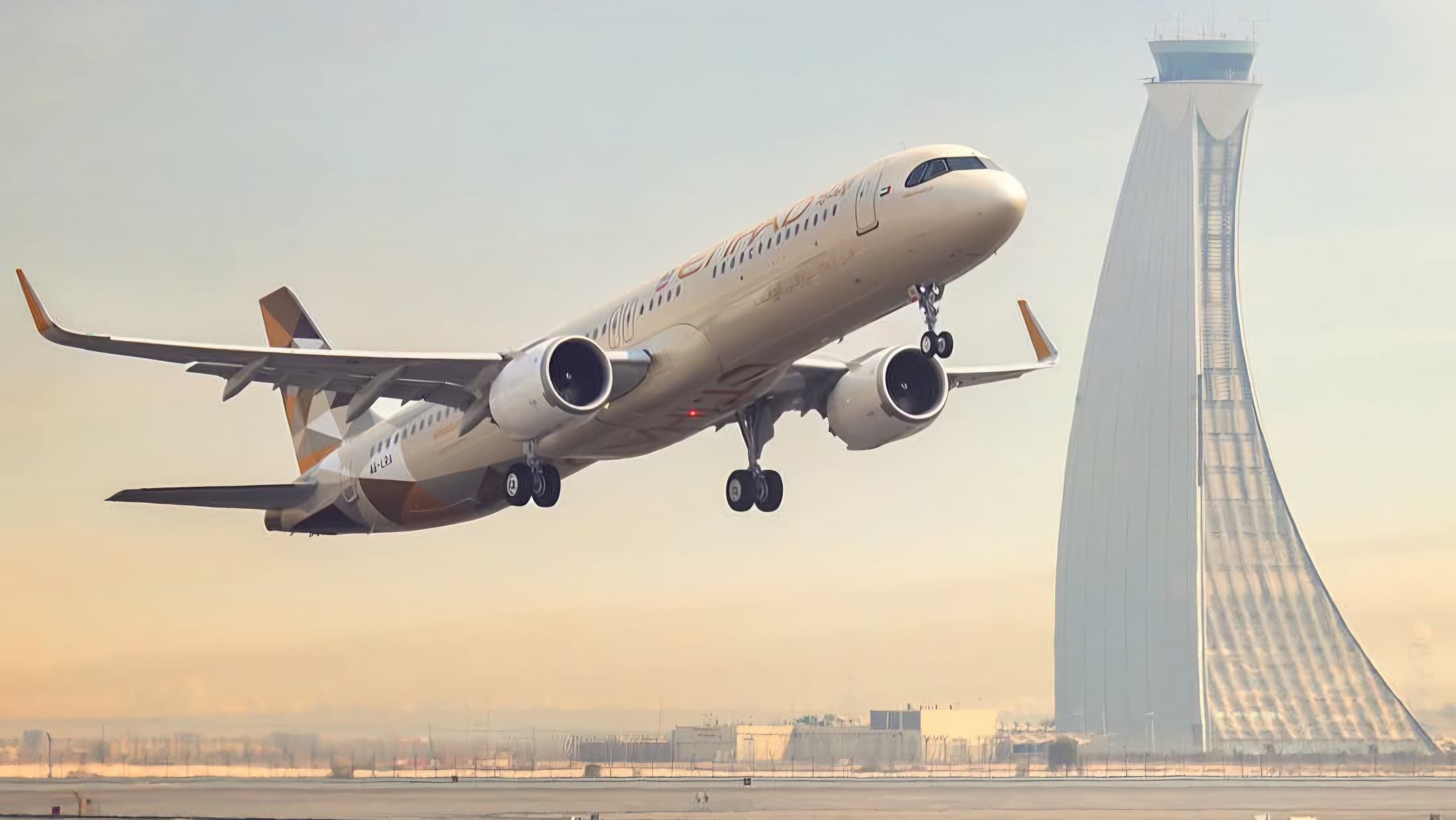
**Etihad Airways is expanding its European network with a new seasonal route to Sweden.** Starting 17 December 2026, the carrier will operate four weekly flights between Abu Dhabi and Gothenburg-Landvetter, running until 21 March 2027. This service will be the first nonstop connection between the UAE and Sweden's second-largest city, a significant development for both business and leisure travel.
**For Gothenburg, the route is a gateway to the Middle East and beyond.** Swedavia, the Swedish airport operator, highlights that this is the first direct link from Gothenburg to the Middle East and Asia. Passengers can connect through Etihad's hub at Zayed International Airport to destinations such as Bangkok, Phuket, Singapore, Hanoi, Denpasar-Bali, Shanghai, Taipei, Bengaluru, and Colombo. The route is expected to boost business exchanges between western Sweden and Asia, as well as serve travelers visiting relatives in the Middle East, India, and Southeast Asia.
**The aircraft chosen for this mission is the Airbus A321LR**, a long-range variant of the A320neo family. Etihad's configuration features 160 seats in three classes: two First Class suites, 14 Business Class seats, and 144 Economy seats. First and Business seats convert to fully flat beds with direct aisle access, while Economy offers 13.3-inch 4K touchscreens. High-speed Wi-Fi is available throughout, and the aircraft includes XL overhead bins and wireless charging. The A321LR, which Etihad began receiving in July 2025, can fly up to 4,000 nautical miles (about 6,300 km), making it ideal for this route.
**This announcement is part of Etihad's broader strategy to strengthen its European presence.** The airline has been progressively adding secondary cities to its network, leveraging the efficiency of the A321LR to serve routes that do not justify a widebody aircraft. For aviation professionals, this move underscores the growing importance of long-range narrowbody aircraft in opening new point-to-point markets while maintaining hub connectivity.
**For ATPL and ATC students, this news offers a practical example of network planning and seasonal operations.** It illustrates how airlines balance demand fluctuations with fleet allocation, and how hubs like Abu Dhabi serve as critical connection points for long-haul travel. Understanding such route development helps future pilots and controllers appreciate the operational decisions behind flight schedules and airport coordination.