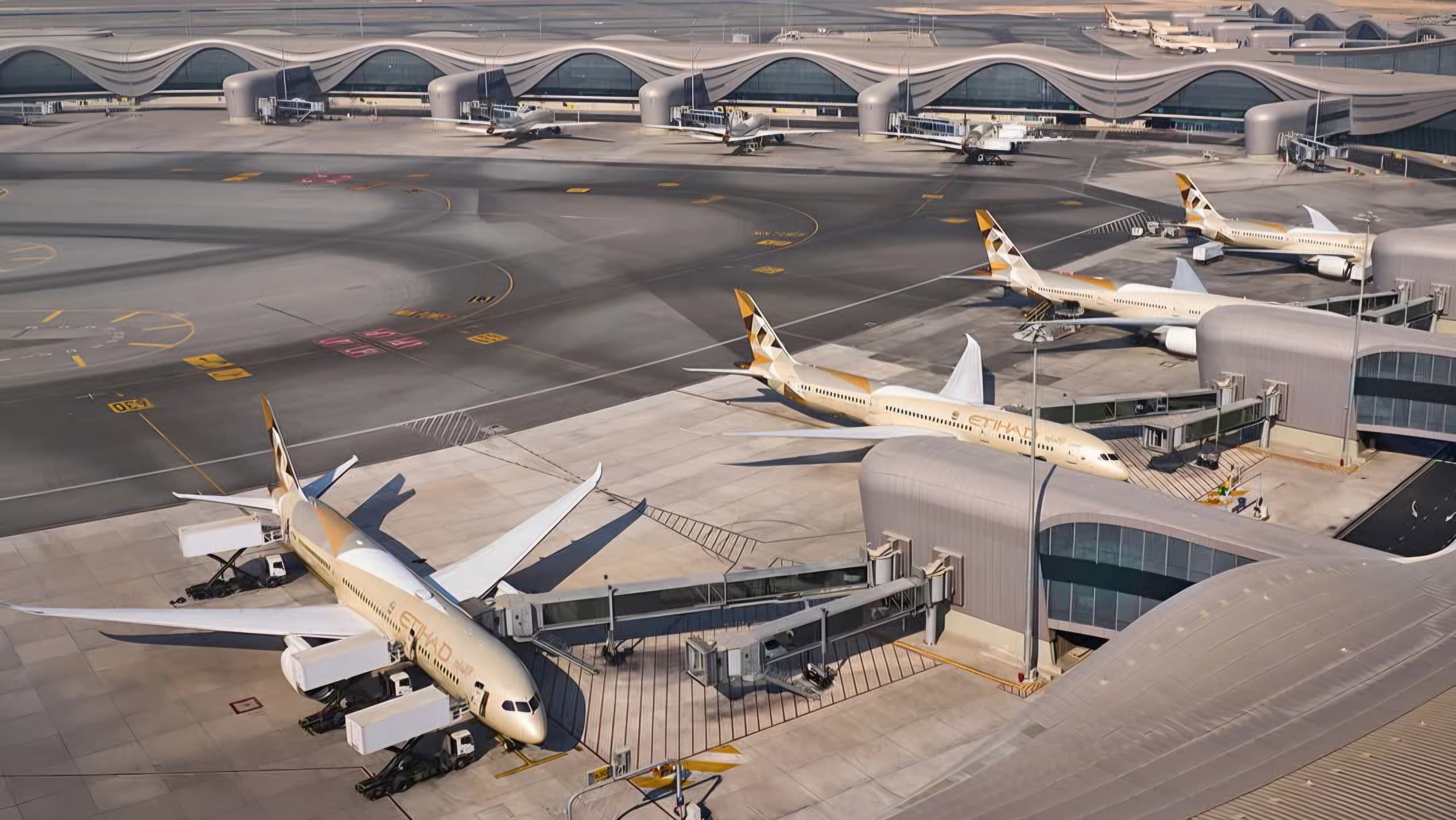
**Etihad Airways: 20 Years of Success in France and Sustained Growth Despite the Middle East Crisis**
Twenty years after launching its Abu Dhabi–Paris route in June 2006, Etihad Airways is celebrating a symbolic milestone on the French market, operating up to three daily flights to Paris-Charles de Gaulle and a new seasonal service to Nice. When Etihad first connected Abu Dhabi and Paris on June 1, 2006, the airline was less than three years old, served around 34 destinations, and had only 17 aircraft. The French capital route began with six weekly flights, positioning Paris as one of the first major European gateways for the young Abu Dhabi carrier. Two decades later, Etihad links Abu Dhabi and Paris with up to three daily flights, strengthening its presence on a strategic corridor for both point-to-point traffic and connecting passengers. The airline's French network has expanded to a second city with the addition of seasonal flights to Nice on the Côte d'Azur in 2026, highlighting the growing importance of the premium leisure market between the UAE and southern France.
This French anniversary comes as Etihad Airways experiences a new commercial momentum, with capacity up compared to last year and sustained global network expansion. The Abu Dhabi carrier opened 16 new routes in 2025, growing its network to 110 destinations by year-end, and continued adding routes in 2026 to reach 118 destinations served by a fleet of 124 aircraft—all despite the security crisis in the Middle East. During a visit to Paris for the event, Antonio Panariello, Director of Sales for Europe & UK, gave an interview to Air Journal. He explained that operational capacity for the summer is about 10% higher than last year, a strong signal given the disruptions in March. "Despite some operational difficulties in early March, Etihad was one of the first Middle Eastern airlines to gradually restore flights on several routes, week after week," Panariello said.
**Safety First and Crisis Management**
Throughout the crisis, the airline's priority was clear: safety first. "The safety of passengers, crews, and all people working for Etihad guided our decisions," Panariello emphasized, justifying the many flight cancellations that left thousands of vacationers stranded in Asia. "We restored and then added routes based on demand and security conditions, and today we have higher capacity than last year." For ATPL and ATC students, this is a textbook example of how a hub carrier manages operational risk while maintaining network integrity. The decision to prioritize safety over short-term revenue, even at the cost of customer inconvenience, reflects the aviation industry's core principle that safety is non-negotiable.
**Network Strategy and Market Focus**
On the French market, Etihad operates one daily A380 flight and one daily Boeing 777 flight from Paris, plus seasonal Nice service. "These capacities serve both point-to-point traffic to Abu Dhabi and a wide connecting network," Panariello noted. From Abu Dhabi, French passengers connect to Phuket, Bangkok, Malé, the Seychelles, Australia, many Indian cities, Kuala Lumpur, Singapore, and Colombo, among other leisure destinations. India remains a strategic focus, but Southeast Asia has grown significantly, with new destinations like Krabi, Chiang Mai, Hanoi, Phnom Penh, Taiwan, and Hong Kong, plus strengthened frequencies to Phuket and Bangkok. New routes to China are also planned, making Asia a major development axis. Tokyo is now served with an A380, catering to both leisure and business travelers.
**Resilience of the Hub Model**
Panariello rejected any notion of abandoning the hub model. "Etihad is not giving up on the international hub model. Despite a two-month interruption, passengers continued to connect via Abu Dhabi," he said. The last four months have shown that the airline emerges stronger from the crisis, with new destinations, increased capacity, and demonstrated resilience. For ATPL students studying airline economics and network planning, this case illustrates how a hub-and-spoke carrier can weather geopolitical shocks by diversifying its network and maintaining strong relationships with connecting partners. ATC students can learn about the operational challenges of managing increased traffic through a hub during recovery phases, including slot coordination and airspace management.
**What This Means for ATPL/ATC Students**
This article provides a real-world example of how airlines balance safety, capacity, and network growth amid geopolitical uncertainty. ATPL students can analyze the strategic decisions behind route expansion and fleet allocation, while ATC students can consider the implications of increased traffic at a major hub like Abu Dhabi during crisis recovery.