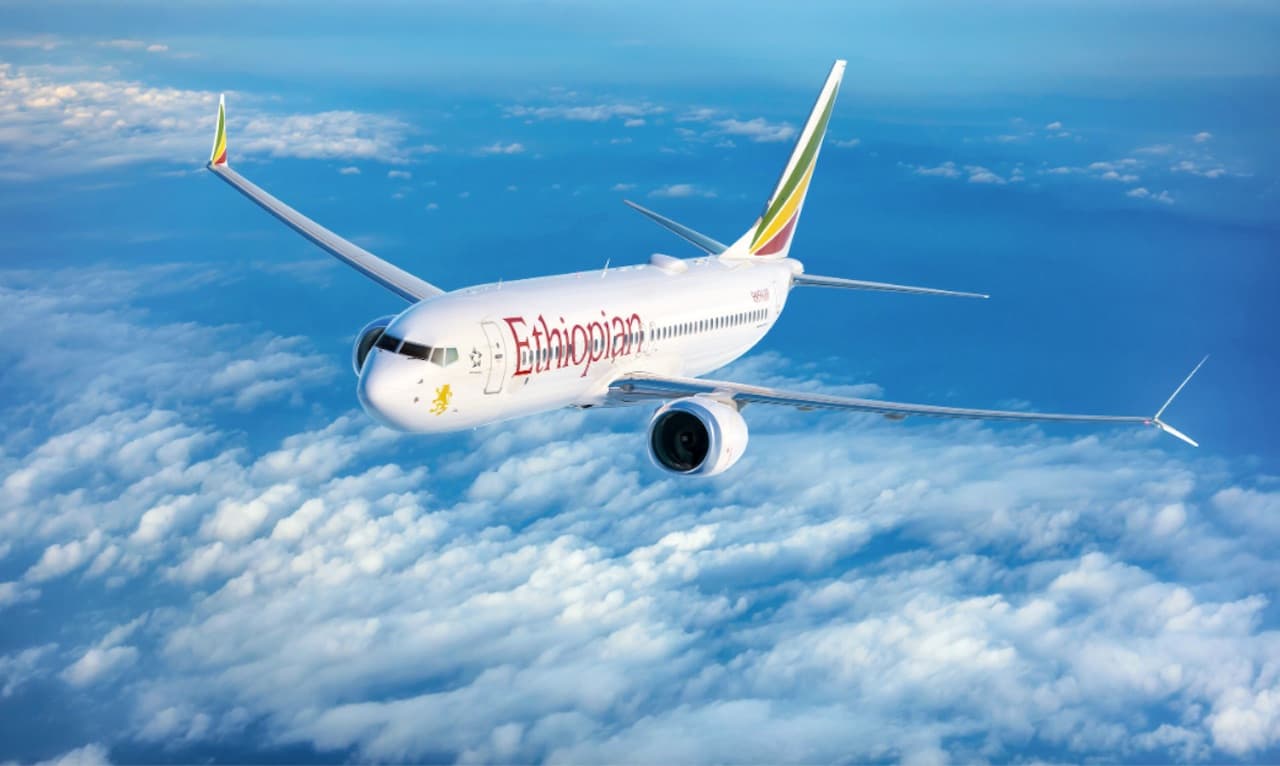
**Ethiopian Airlines is on the verge of a significant fleet decision**, with a competitive tender for approximately 25 single-aisle aircraft, plus options for ten additional units. The carrier is evaluating the Airbus A220, the Boeing 737 MAX (specifically the 737-7 or 737-8), and the Embraer E2 family (E190-E2 and E195-E2). The airline's Chief Commercial Officer, Lemma Yadecha, confirmed that a decision could be announced "in the coming weeks," possibly at the Farnborough Airshow if negotiations conclude in time.
**For ATPL and ATC students, this competition highlights key operational and strategic considerations.** The A220 offers a 100–150 seat capacity with lower fuel burn and a wider cabin, making it ideal for thinner African routes. The 737 MAX, already in Ethiopian's fleet, provides commonality with existing Boeing aircraft, reducing training and maintenance costs. The Embraer E2 targets a slightly smaller niche, potentially offering flexibility for intermediate-density markets. Understanding these trade-offs is crucial for future pilots and controllers who will operate or manage such diverse fleets.
**Ethiopian Airlines' hub strategy is central to this decision.** The carrier aims to become one of the top 20 global airline groups by 2035, with over 145 international destinations. This order complements its long-haul fleet, which includes Boeing 787-9s, Airbus A350s, and 777-9s. The choice of single-aisle aircraft will affect network planning, crew scheduling, and maintenance logistics across its African hub in Addis Ababa. A new $12.5 billion airport in Bishoftu, with four runways, is also under construction to support this growth.
**The cargo dimension adds another layer.** Ethiopian is also nearing a decision on 16 additional cargo aircraft, with options for eight more, including potential 777-8 Freighters. This dual focus on passenger and cargo operations underscores the airline's ambition to dominate African aviation. For ATC students, this means increased traffic complexity at Addis Ababa, with a mix of passenger and freighter movements requiring precise sequencing.
**In summary, this order is not just about aircraft selection—it reflects broader industry trends.** The competition between Airbus, Boeing, and Embraer demonstrates the evolving needs of African carriers, balancing cost efficiency, network flexibility, and fleet commonality. For aviation trainees, following this story provides real-world insight into airline strategy, fleet planning, and the operational impact of aircraft choices.