**Industry context: Why this matters for aviation training**
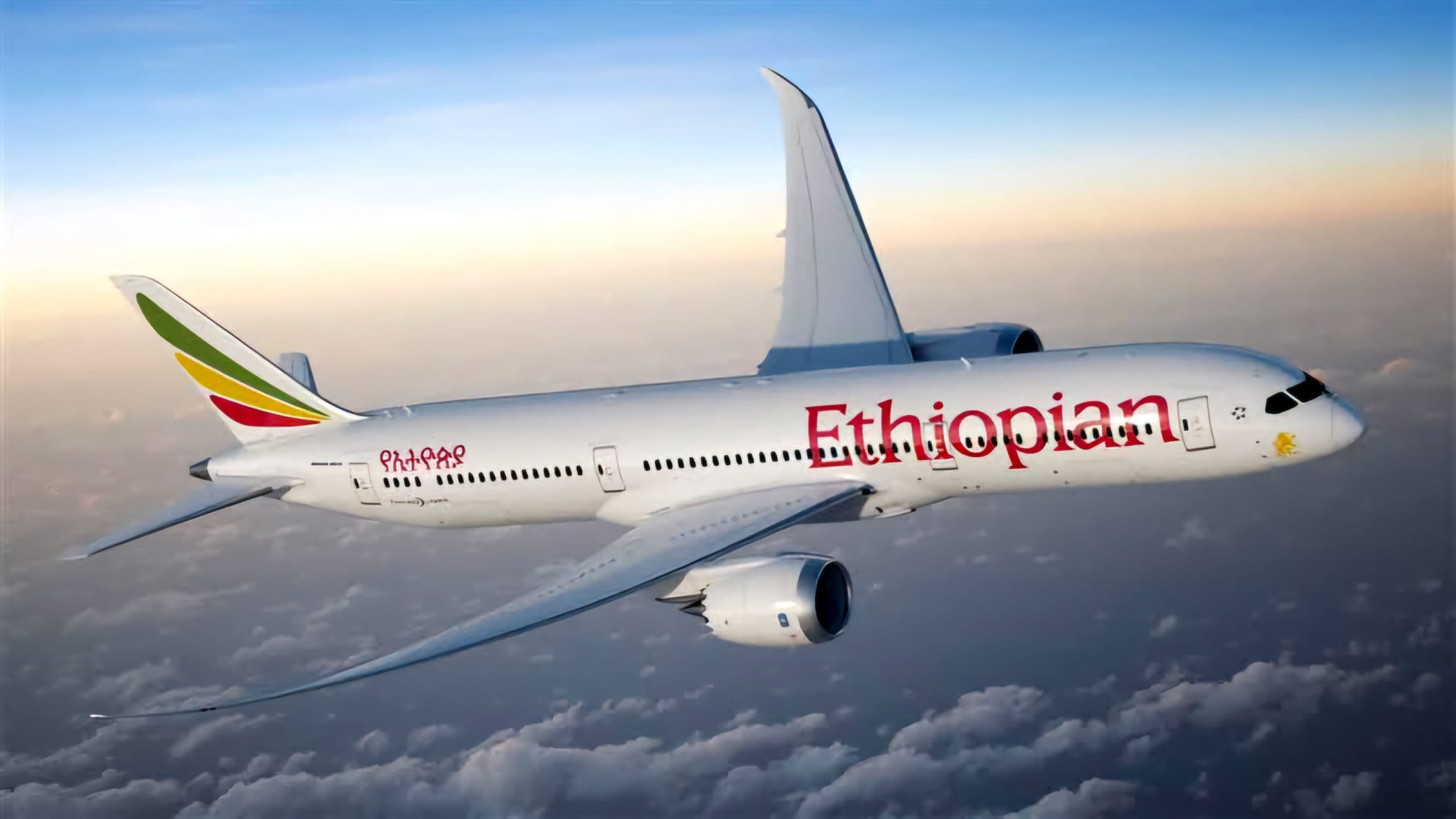
On July 12, 2026, Ethiopian Airlines launched a new direct service between Addis Ababa (ADD) and Port Louis (MRU), Mauritius, operating three times per week on Wednesdays, Fridays, and Sundays. The flights are scheduled as ET887 (Addis Ababa–Mauritius, departing 08:50, arriving 15:20) and ET886 (Mauritius–Addis Ababa, departing 16:15, arriving 20:45), with a block time of approximately 5 hours 30 minutes each way. The route is operated with the Boeing 737 MAX 8 (737-8), a next-generation narrowbody aircraft that Ethiopian Airlines has already widely integrated into its fleet.
**MyATPS angle: Concrete impact for ATPL/ATC students**
For ATPL students, this route is a textbook example of hub-and-spoke network expansion. Ethiopian Airlines uses its Addis Ababa hub to funnel traffic from across Africa and beyond into a single point, then redistributes it to secondary destinations like Mauritius. Understanding how airlines select new routes—based on demand, aircraft range, slot availability, and competitive positioning—is a core part of airline management modules in ATPL ground school. The choice of the 737 MAX 8, with its improved fuel efficiency and range, also illustrates how fleet planning affects route economics.
For ATC trainees, this new service adds to the traffic flow at Addis Ababa Bole International Airport (HAAB), one of Africa's busiest hubs. The addition of three weekly flights to Mauritius increases the complexity of slot coordination, ground handling, and airspace management. ATC students should note that Ethiopian Airlines' expansion often requires coordination with multiple ANSPs (Air Navigation Service Providers) along the route, including those in Sudan, Egypt, and the Indian Ocean region. The flight plan for ET887/ET886 crosses several FIRs (Flight Information Regions), each with its own procedures and languages.
**Brief analysis**
Before this direct service, Mauritius was served by Ethiopian Airlines through interline and codeshare agreements via hubs like Johannesburg, Nairobi, or Antananarivo. The switch to a direct flight reduces travel time for passengers and increases Ethiopian's market share on the route. This move aligns with the airline's pan-African strategy, as articulated by CEO Mesfin Tasew, who emphasized Mauritius's economic importance and cultural richness. For students, this is a case study in how airlines evolve from indirect to direct services as traffic volumes grow.
The Boeing 737 MAX 8 is a key asset here: its range of about 3,500 nautical miles allows it to cover the 2,400 nm Addis–Mauritius sector efficiently, while its fuel economy keeps operating costs competitive. ATPL students studying aircraft performance should note that the 737 MAX 8's maximum takeoff weight (MTOW) and payload-range capabilities are critical for such medium-haul routes. ATC students, meanwhile, should be aware that the 737 MAX 8's climb and descent profiles differ from earlier 737 variants, affecting separation standards and noise abatement procedures.
In summary, this route opening is not just a piece of airline news—it is a practical illustration of network planning, fleet management, and operational coordination that ATPL and ATC students can analyze to deepen their understanding of real-world aviation.