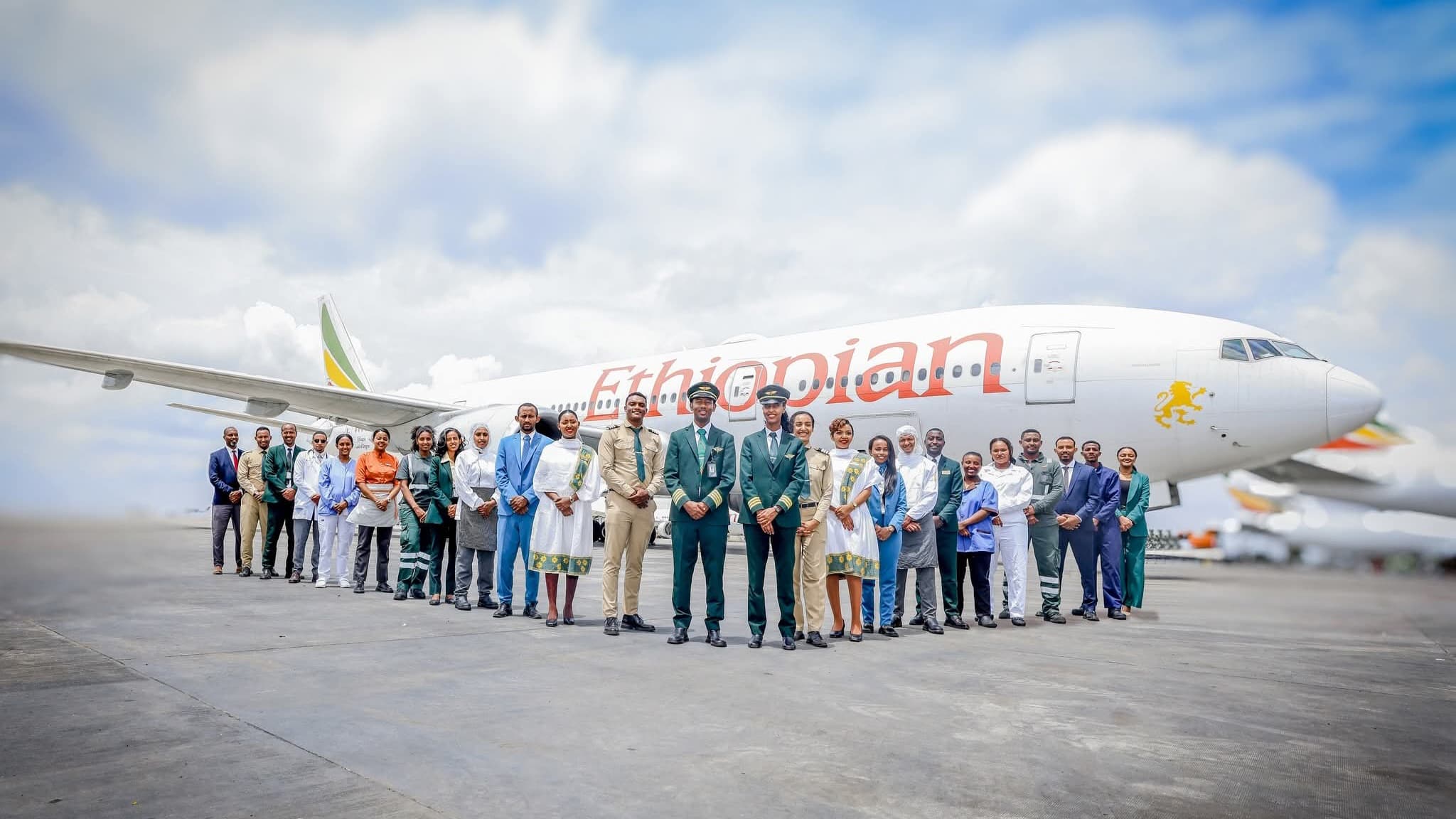
Ethiopian Airlines, Africa's largest carrier, is in preliminary discussions with Airbus to acquire approximately six A350 widebodies and twenty A220 regional jets, according to Bloomberg. If finalized, this would be the airline's first order for the A220, a significant diversification of its fleet. The carrier already operates 26 A350s (22 A350-900s and four A350-1000s) with 17 more on order, having placed its first A350 order in 2009 and subsequent ones in 2017, 2022, and 2023. At the Dubai Airshow in November 2025, Ethiopian Airlines had already ordered six additional A350-900s.
This potential order aligns with Ethiopian Airlines' Vision 2040 strategy, which aims to transform it into one of the world's most competitive carriers. The plan includes expanding the network from 145 to 243 destinations, increasing the fleet from over 150 to 350 aircraft, and boosting annual passenger traffic from 20 million to 60 million. The cornerstone of this vision is the new Bishoftu International Airport, designed by Zaha Hadid Architects, located 45 km southeast of Addis Ababa. The $12.5 billion project, launched on January 10, 2026, will feature four parallel runways, parking for about 270 aircraft, and an ultimate capacity of 110 million passengers per year. The first phase, expected around 2030, aims for 60 million annual passengers.
For ATPL and ATC students, this news is highly relevant. The introduction of the A220 into Ethiopian's fleet will require pilots to obtain type ratings on a new aircraft, expanding their career opportunities. The A220's range of 6,297 km and capacity for 100–135 seats make it ideal for regional African routes, which often involve challenging high-altitude airports and variable weather. ATC students will need to understand the operational implications of a rapidly growing hub like Bishoftu, which will handle increased traffic, complex airspace management, and coordination with existing Addis Ababa Bole International Airport. The fleet expansion also means more diverse aircraft types, requiring controllers to be familiar with performance characteristics of the A220, A350, and Boeing 787 Dreamliner (nine of which were ordered in January 2026, with deliveries from 2031 to 2033).
Ethiopian Airlines' dual-sourcing strategy (Airbus and Boeing) reflects a trend in modern airline fleet planning, which students should note for their exams. The airline's growth is also a case study in how African aviation is evolving, with increasing connectivity and infrastructure investment. For ATPL candidates, understanding Ethiopian's route network expansion—from 145 to 243 destinations—highlights the need for knowledge of African airspace, navigation procedures, and regulatory frameworks. ATC trainees should consider the challenges of managing a mega-hub with four runways and 110 million passengers, including runway sequencing, noise abatement, and emergency procedures.
In summary, this potential order is not just a business deal; it is a window into the future of African aviation. For students, it underscores the importance of adaptability, as they may one day operate or control aircraft in this dynamic environment. The A220's entry into Ethiopian's fleet also signals a shift toward more fuel-efficient, modern regional aircraft, which aligns with global environmental goals—a topic increasingly covered in ATPL and ATC syllabi.