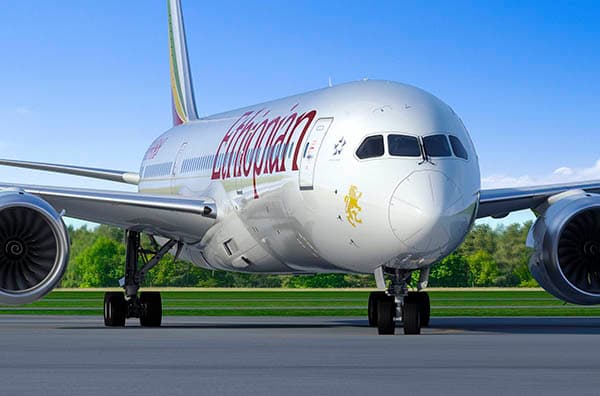
Ethiopian Airlines has solidified its commitment to fleet modernization by converting options for six Boeing 787-9 Dreamliners into firm orders, as announced in Washington on April 20, 2026. This decision is part of a broader framework agreement signed with Boeing in 2023, which includes up to 67 aircraft, and follows earlier orders for 11 787s and 20 737 MAXs, marking the largest Boeing order by an African airline. The conversion underscores Ethiopian's strategy to enhance its intercontinental network from Addis Ababa, targeting key markets in Europe, Asia, North America, and Africa, while leveraging the Dreamliner's efficiency and cargo capacity.
For aviation professionals, this expansion is more than just a fleet update; it reflects the growing importance of hub-and-spoke models in global aviation. Ethiopian Airlines aims to consolidate Addis Ababa as a premier pan-African hub, facilitating connectivity between continents. The Boeing 787-9, with its extended range and reduced fuel consumption compared to older quadjets, enables cost-effective operations on long-haul routes, such as those linking Africa to Western Europe and North America. This aligns with industry trends where airlines prioritize aircraft that balance passenger comfort, operational flexibility, and environmental considerations, making the Dreamliner a cornerstone for sustainable growth.
From a training perspective, this news highlights the operational realities that ATPL pilots and ATC students must understand. The integration of new 787-9s into Ethiopian's fleet involves complex logistics, including crew training on advanced avionics, maintenance protocols for composite materials, and route planning to optimize performance. For pilots, mastering the Dreamliner's systems—such as its fly-by-wire technology and fuel-efficient engines—is crucial for safe and efficient long-haul flights. ATC students should note the increased traffic and scheduling demands at hubs like Addis Ababa, requiring enhanced coordination for arrivals, departures, and cargo operations. This expansion also emphasizes the role of modern aircraft in reducing carbon footprints, a key factor in future regulatory frameworks.
Ethiopian Airlines' fleet, with an average age of seven years, is among the youngest in Africa, supporting operational excellence and cost management. The airline's continuous investment, including cabin retrofits for existing 787s, ensures alignment with industry standards. As a Star Alliance member and multiple-time Skytrax award winner, Ethiopian sets a benchmark for quality and resilience. For students, this case study illustrates how strategic fleet decisions impact everything from daily operations to long-term career opportunities, reinforcing the need for adaptability in a dynamic aviation landscape.