**Industry Context**
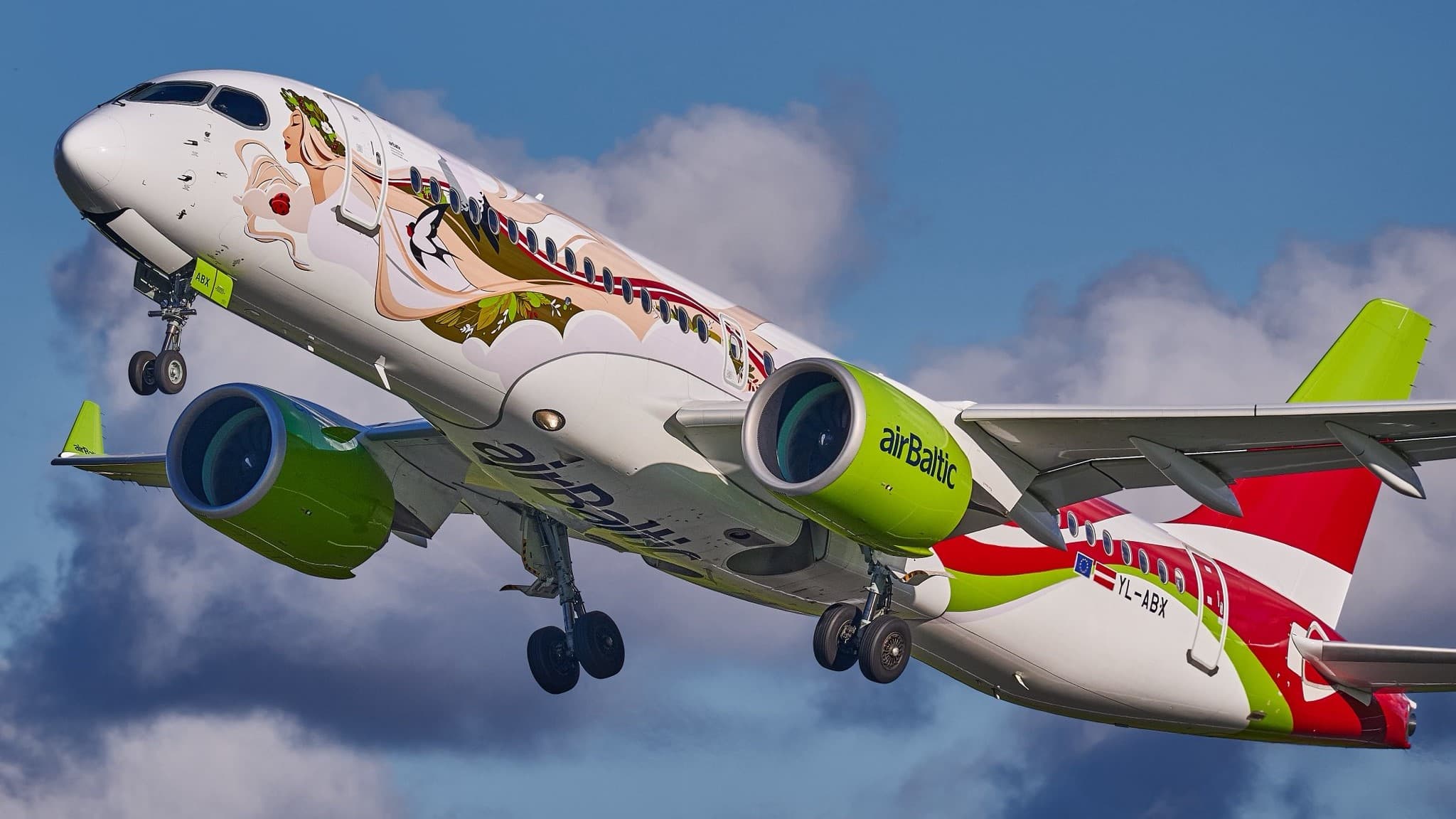
The situation at airBaltic offers a real-world lesson for aviation students on how technical failures and financial pressures can destabilise even a well-established carrier. The airline, which operates exclusively Airbus A220-300s, has been hit hard by the Pratt & Whitney PW1500G engine maintenance crisis, grounding up to nine aircraft and forcing the cancellation of 4,670 flights in summer 2025. This is not just a news item—it is a textbook example of the risks associated with single-type fleets and the cascading effects of supply chain disruptions on operations, crew scheduling, and customer satisfaction.
**MyATPS Angle**
For ATPL candidates studying aircraft performance, systems, and operational procedures, the airBaltic case illustrates how engine reliability directly affects dispatch reliability, fuel planning, and maintenance scheduling. ATC trainees can analyse the knock-on effects on slot coordination, airspace capacity, and passenger flow management when an airline cancels 19 routes and reduces frequencies on 21 others. The financial side—net loss of €70.1 million in Q1 2026, debt of €380 million at interest rates up to 14.5%, and a credit rating downgrade to CCC-—demonstrates the importance of cost control and revenue management, topics covered in ATPL modules on airline economics.
**Brief Analysis**
The search for a strategic investor is driven by the need to recapitalise and refinance debt while complying with EU state aid rules. The Latvian government, which holds nearly 90% of shares, has already injected funds post-COVID, but further public support could breach competition regulations. This tension between national interest and EU law is a recurring theme in aviation regulation. For students, it underscores the delicate balance between state intervention and market forces—a key topic in air law and policy courses.
**Conclusion**
airBaltic’s struggle is a cautionary tale for future aviation professionals. It shows that operational excellence alone cannot compensate for structural financial weaknesses or over-reliance on a single supplier. As the airline restructures with the help of Seabury consultants, ATPL and ATC students should watch how fleet adjustments, debt restructuring, and potential new ownership reshape its future. This is not just about one airline—it reflects broader trends in European aviation where hybrid models and single-type fleets face increasing scrutiny.