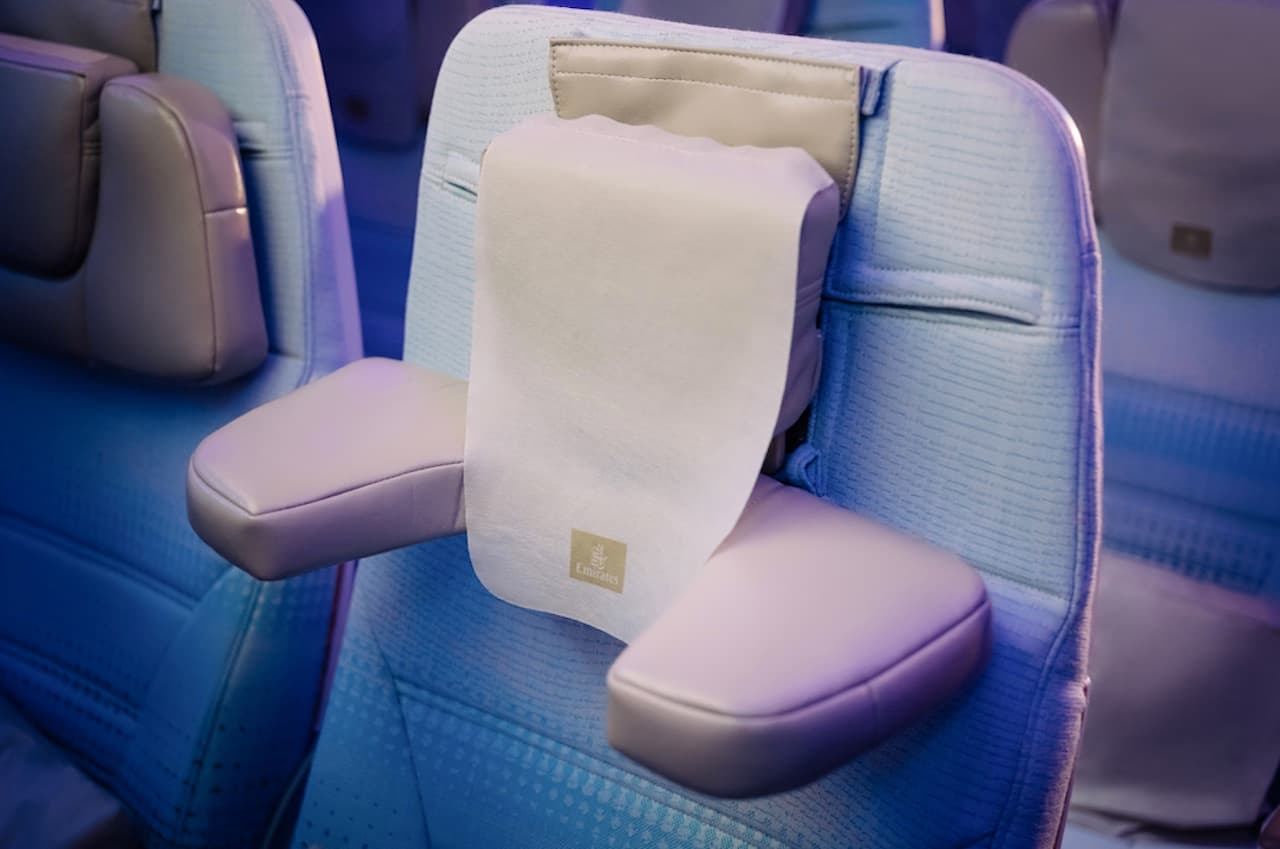
Emirates has unveiled the U-Dream headrest, a novel device aimed at improving rest for Economy class passengers on long-haul flights. Initially deployed on its Airbus A350 fleet, the headrest will later be introduced on retrofitted A380s and Boeing 777s starting in 2027. Developed in partnership with Safran Seats for the Z400 economy seat, the U-Dream features a leather headrest with flexible side wings that fold inward to cradle the head, preventing it from falling forward or sideways during sleep. It also offers vertical adjustment and tilt to suit different passenger morphologies.
This innovation is part of Emirates' broader strategy to differentiate its Economy product, which already includes 13.3-inch 4K screens, USB-C ports, and higher cabin ceilings on the A350. Chairman Tim Clark emphasized that the U-Dream eliminates the need for a neck pillow, promising a significant comfort upgrade for long-distance travelers. The airline claims this is a world first in Economy class, aiming to make sleep more restful on flights lasting 10 hours or more.
From a safety perspective, Emirates confirms that the U-Dream has been independently tested and certified by the European Union Aviation Safety Agency (EASA). This is crucial for ATPL and ATC students to understand: any cabin modification, even a headrest, must meet strict material resistance, ergonomic, and maintenance standards. The cabin crew is trained to assist passengers with the device, and the leather cover is cleaned after each flight, ensuring hygiene and durability.
The U-Dream rollout is phased: all A350s will be equipped by end of 2025, and it will be standard on the 270 Boeing 777X on order. From 2027, it will be installed on retrofitted A380s and 777s as part of Emirates' cabin modernization program. This trend reflects a wider industry push to improve Economy comfort, with airlines like United and Air New Zealand exploring similar solutions for ultra-long-haul routes.
For aviation students, this development highlights how cabin design innovations must balance passenger comfort with regulatory compliance. Understanding EASA certification processes and the operational impact of new equipment is essential for future pilots and controllers, as these changes affect cabin crew procedures, passenger safety briefings, and overall flight experience.