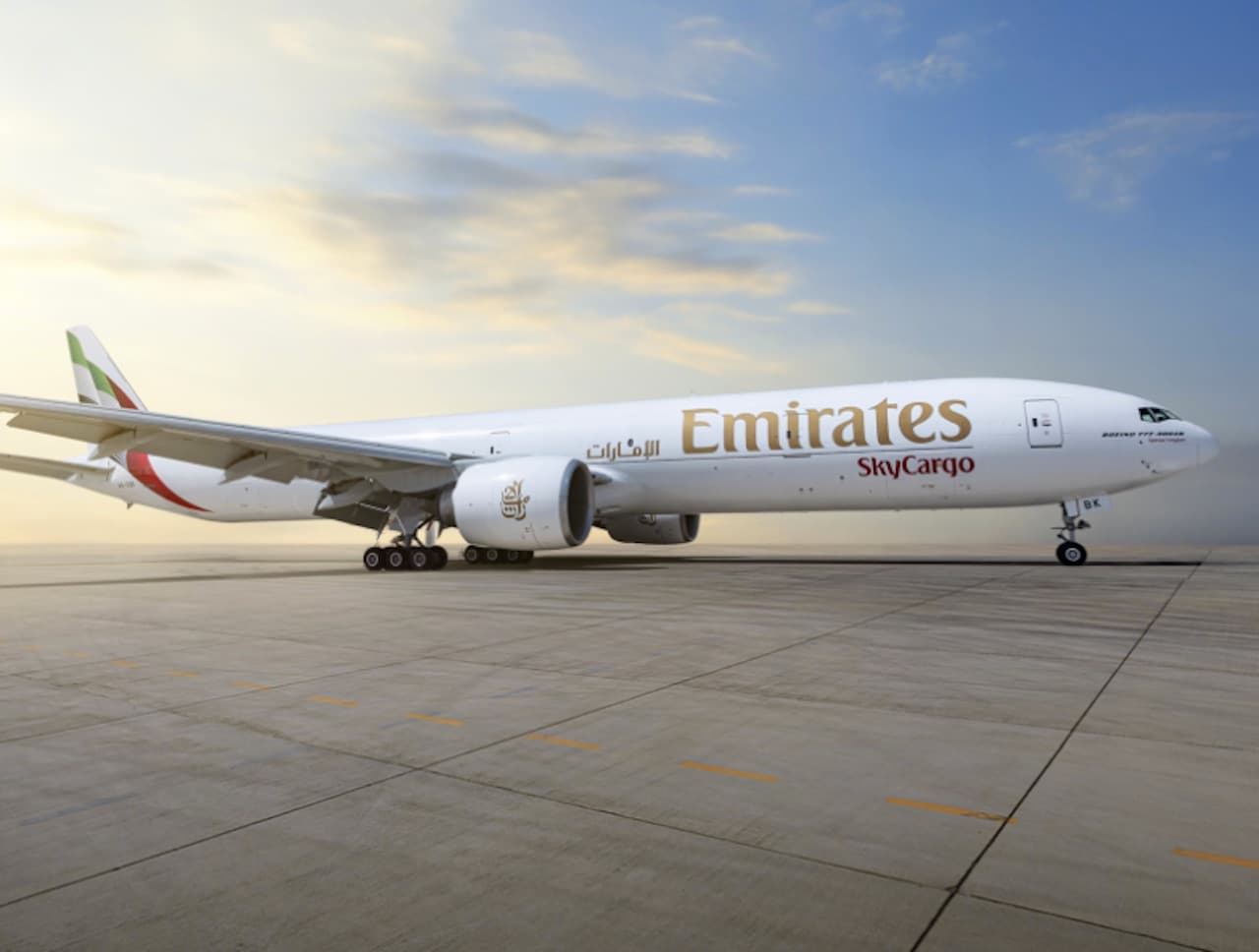
Emirates SkyCargo has taken a significant step in its expansion strategy by putting into service its first Boeing 777-300ERSF, a converted passenger 777-300ER now operating as a full freighter. The aircraft, registered A6-EBK, completed its first commercial flight from Hong Kong to Dubai carrying over 100 tonnes of cargo, marking a milestone for the carrier as it adapts to the booming e-commerce market.
The 777-300ERSF, which stands for "Extended Range Special Freighter," is the result of a conversion program developed by Israel Aerospace Industries (IAI) in partnership with lessor AerCap. The conversion process, which takes about 130 days per aircraft, involves installing a large cargo door, reinforcing the cabin floor, removing passenger amenities, and integrating a cargo handling and fire suppression system. Emirates is the first combined passenger-cargo carrier to operate this type, leveraging its passenger network flexibility while significantly expanding its all-cargo capacity.
Compared to the production 777F, the 777-300ERSF offers a payload of 100 tonnes and a cargo volume of 811 cubic meters—about 25% more volume—with 47 pallet positions, ten more than the 777F. This makes it particularly suited for bulky e-commerce parcels, which already account for about 20% of global air freight tonnage and are expected to grow further. Badr Abbas, Divisional Senior Vice President of Emirates SkyCargo, emphasized that this conversion strategy allows the airline to optimize fleet assets by converting older passenger 777-300ERs to meet rising cargo demand. Since February, Emirates SkyCargo has expanded its freighter network from just over 40 destinations to 62, with further growth planned.
The 777-300ERSF is the sixth new freighter to join Emirates SkyCargo since March 2026, following five production 777Fs. The airline plans to receive five more 777Fs and a second converted 777-300ERSF by December 2026, with three additional 777-300ERSFs in 2027. This rapid fleet expansion underscores the growing importance of air cargo in global trade and the shift toward converting older passenger aircraft to extend their useful life.
For ATPL and ATC students, this development highlights key industry trends: the role of aircraft conversion programs in fleet planning, the operational considerations of integrating different freighter types, and the impact of e-commerce on air cargo demand. Understanding these dynamics is crucial for future pilots and controllers who may work in cargo operations or manage mixed passenger-cargo networks.