**A Strategic Move for Supply Chain Resilience**
On May 11, 2026, Brazilian aircraft manufacturer Embraer announced a landmark contract with Bharat Forge Limited (BFL) to supply forged raw materials for its global supply chain. This is the first such agreement between Embraer and an Indian supplier, underscoring the company's push to diversify its supplier base and reduce reliance on traditional manufacturing regions. For aviation students, this move reflects a broader industry trend: as geopolitical tensions and logistical disruptions reshape global supply chains, manufacturers are seeking more resilient, multi-region sourcing strategies. Understanding these dynamics is crucial for future ATPL holders and ATCs who will operate in an increasingly interconnected and decentralized aviation ecosystem.
**India as a Rising Aviation Hub**
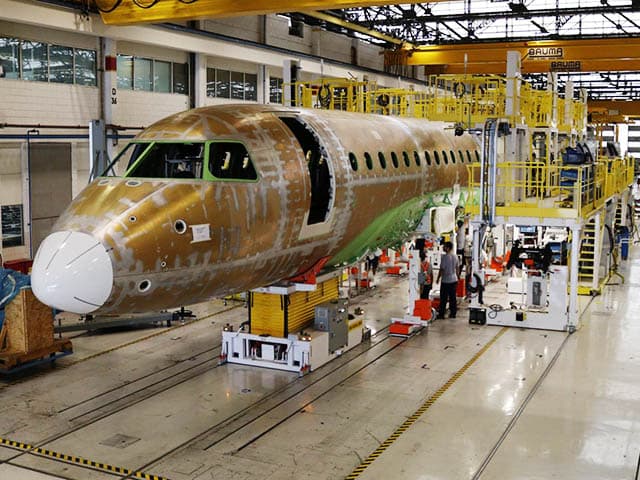
Embraer's deepening ties with India go beyond this single contract. The company has opened an office in New Delhi, established a dedicated procurement team, and signed a memorandum of understanding with Adani Defence & Aerospace to explore setting up a final assembly line (FAL) for the E175-E1 in India. If a firm order book of at least 200 aircraft is secured by end of 2026, the first Indian-assembled Embraer jets could roll off the line as early as 2028. India is now the world's third-largest domestic aviation market, with double-digit traffic growth, a doubling of airports to 157 in 2024, and a national target of 350–400 airports by 2047. For ATPL students, this means more regional routes, increased demand for regional jets like the E-Jets, and new opportunities in secondary airports—all of which affect flight planning, navigation, and ATC procedures.
**Bharat Forge: A New Player in Aerospace Forging**
Bharat Forge, based in Pune, is a global leader in high-value forged components for automotive, energy, rail, defense, and aerospace sectors. This contract validates its growing aerospace ambitions and adds scale to its production of critical structural and engine components. For ATC trainees, the rise of new suppliers and manufacturing hubs in countries like India can lead to changes in cargo flows, maintenance schedules, and even airspace usage around industrial zones. Understanding these industrial shifts helps future controllers anticipate traffic patterns and operational demands.
**Implications for ATPL and ATC Students**
For ATPL students, Embraer's strategy highlights the importance of regional aviation markets. The E-Jet family is a staple in regional operations worldwide, and as India expands its airport network, pilots will encounter more flights to smaller, less familiar airfields. This requires strong skills in VFR/IFR transitions, performance calculations for shorter runways, and awareness of local weather patterns. For ATC students, the growth of regional traffic in India and similar markets means managing increased density in terminal areas, coordinating with new FALs and MRO facilities, and adapting to evolving airspace structures. Embraer's multi-pole supply chain also mirrors the multi-sector coordination that ATCs handle daily—a lesson in resilience and adaptability.
**Conclusion**
Embraer's contract with Bharat Forge is more than a procurement deal; it is a signal of how the aviation industry is reshaping itself to be more flexible and geographically diversified. For those training to become ATPL pilots or ATCs, staying informed about such industrial moves is not optional—it is part of understanding the environment in which they will work. The future of aviation is being built not just in boardrooms, but in factories and assembly lines across the globe, and tomorrow's professionals need to be ready for that reality.