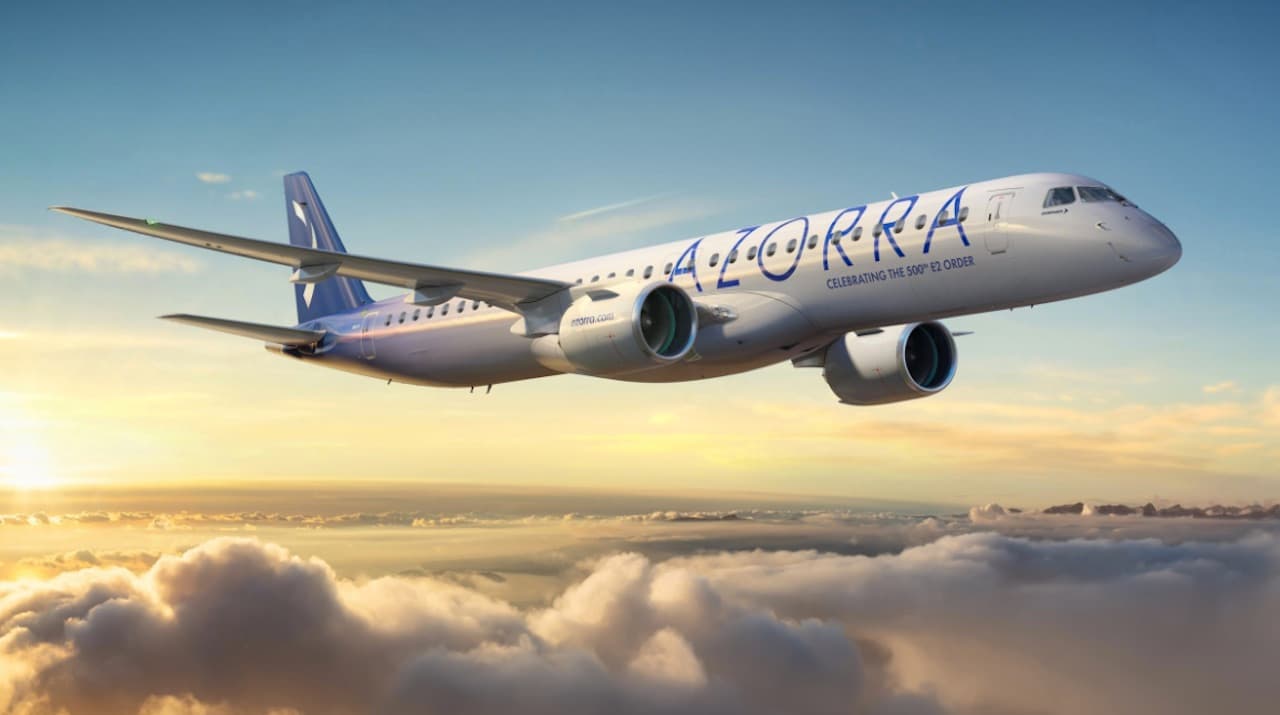
Embraer, the Brazilian aircraft manufacturer, is witnessing a remarkable surge in its order book, which has exceeded **$15 billion**. This growth is bolstered by a recent firm order for **15 E195-E2** aircraft from the American lessor Azorra, pushing total commitments for the E2 family beyond **500 aircraft**. Rodrigo Silva e Souza, Vice President of Marketing for the Commercial Aviation division, stated that the company is "well-positioned" to achieve its target of **80 to 85 commercial aircraft deliveries** in **2026**. This delivery rate is particularly significant for a manufacturer of Embraer's size, especially as many airlines are seeking additional capacity amid delays from industry giants Airbus and Boeing.
One of the critical challenges Embraer faced was related to the engines of the E2 models, which are powered by **Pratt & Whitney GTF** engines. These engines had previously caused operational difficulties, leading to prolonged groundings and increased maintenance costs for some operators. However, Embraer reports a substantial improvement in this situation, with the **Aircraft on Ground (AOG)** rate for E2 aircraft dropping from **22%** in March **2025** to just **1%** currently. Silva e Souza expressed confidence that by the end of **2026**, there would be no E2 aircraft grounded due to engine issues, attributing this to modifications made to the GTF engines that enhance their performance in hot and challenging conditions.
This improvement is particularly crucial for key markets for Embraer, including **Brazil**, the **Middle East**, **India**, and certain regions of **Africa**. Embraer also emphasizes its unique position in the market, noting that it still has production slots available through **2030**, unlike Airbus and Boeing, whose single-aisle lines are heavily saturated for the next decade. This flexibility presents a compelling selling point for airlines seeking deliveries before the end of the **2020s**, especially as they face long wait times for the A320neo, 737 MAX, and A220.
The E2 family focuses on aircraft with fewer than **150 seats**, positioning itself below the best-selling A320 and 737 models while offering fuel efficiency comparable to the latest single-aisle aircraft. The current context involves significant pressures on engine manufacturers like Pratt & Whitney, which have faced criticism from airline executives regarding repair delays and prolonged groundings of new aircraft. Reports suggest that ITA Airways is considering legal action against Pratt & Whitney due to ongoing failures, highlighting the urgency for manufacturers to resolve these issues swiftly.