**The Promise of Electric Regional Flights**
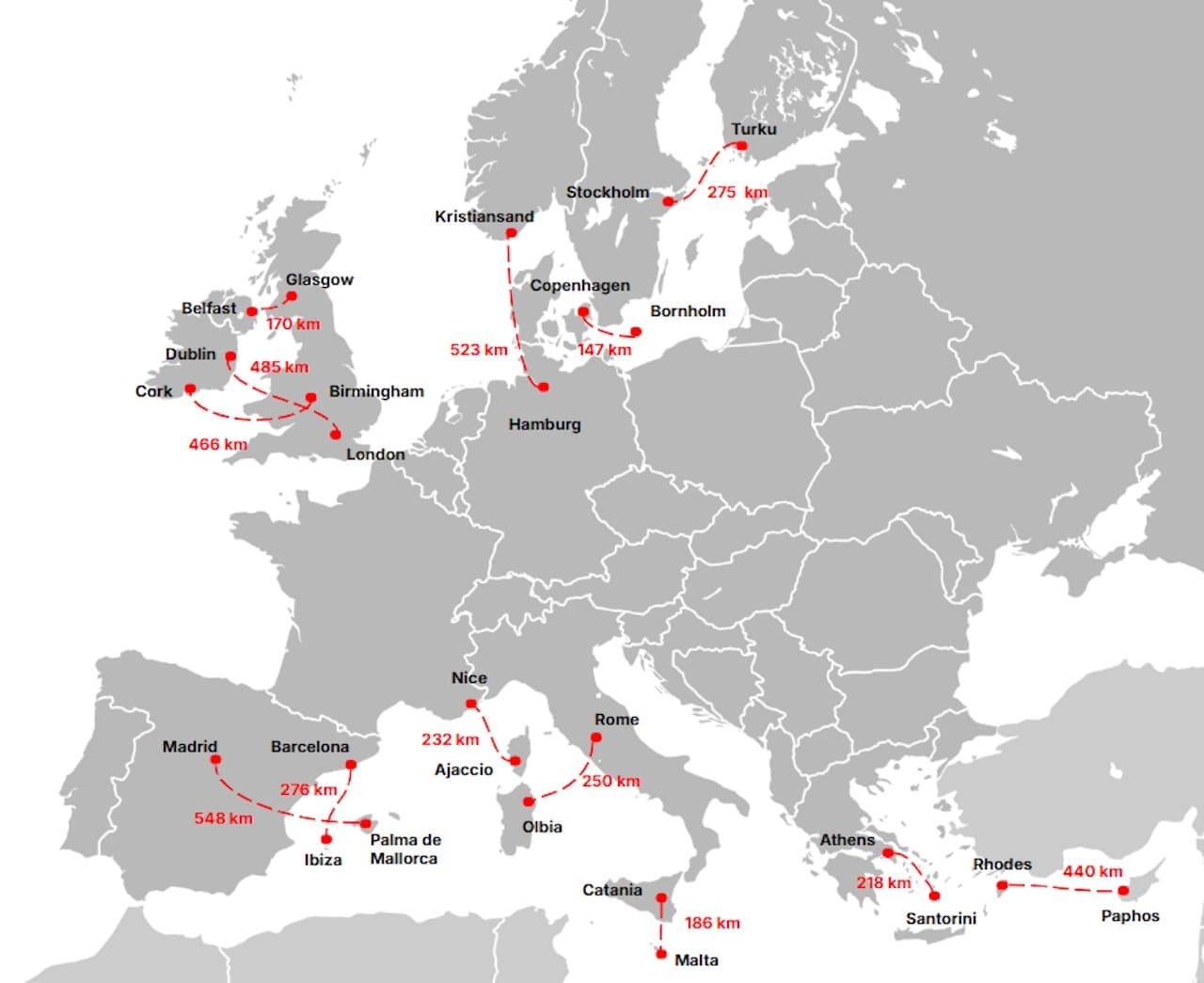
A recent analysis by the European Union Aviation Safety Agency (EASA) reveals that 25% of European flights cover distances under 500 km—a range that upcoming electric aircraft are designed to handle within this decade. Hybrid-electric models could extend that reach to 1,000 km. This means that one in four intra-European flights could potentially be served by electric or hybrid planes, offering a significant reduction in emissions and noise pollution. Transport & Environment, the organization behind the analysis, highlights that some of the busiest short-haul routes, including Nice–Corsica, could see electric service as early as 2030, with more routes following as battery technology improves.
**Why Nice–Corsica is a Prime Candidate**
The Nice–Corsica corridor stands out as an ideal candidate for electric aviation. These routes connect islands and cross water, making them impractical for train or car alternatives. An electric plane could offer a silent, fuel-free journey, dramatically reducing noise for residents near airports and eliminating exhaust fumes during taxi and takeoff. Beyond environmental benefits, proponents argue that electric aircraft could open new direct connections between mid-sized cities, bypassing congested hubs. For instance, passengers could fly directly from Rennes to Bastia without transiting through Paris, saving time and enhancing regional connectivity.
**Startups Leading the Charge**
Interestingly, it's not the major aerospace giants but a handful of European startups that are driving the electric aviation revolution. VÆRIDION, a German company, is developing the Microliner, a 9-seat electric regional aircraft with a range of 400–550 km, targeting certification by 2030 and already holding over 100 purchase commitments. Elysian Aircraft, a Dutch firm partnered with KLM, is working on a 90-seat battery-electric plane capable of flying up to 1,000 km, with entry into service planned for 2035. Meanwhile, French startup Aura Aero is developing ERA, a 19-seat hybrid-electric regional aircraft with eight electric motors and two SAF-compatible turbogenerators, aiming for certification in 2028–2029 and entry into service before 2030, with around 700 pre-orders already secured.
**Economic and Operational Advantages**
Beyond environmental gains, electric and hybrid aircraft promise significant economic benefits. Antoine Toulemont from Aura Aero notes that their hybrid-electric design could reduce direct operating costs by 50% even at current fuel prices, while cutting emissions by up to 80%. This resilience to fuel price volatility is a key selling point, especially for regional airlines operating on thin margins. As battery technology advances and more aircraft are certified, the dream of quiet, clean, and cost-effective short-haul flights is moving closer to reality, with Nice–Corsica poised to be a showcase for this transformation.