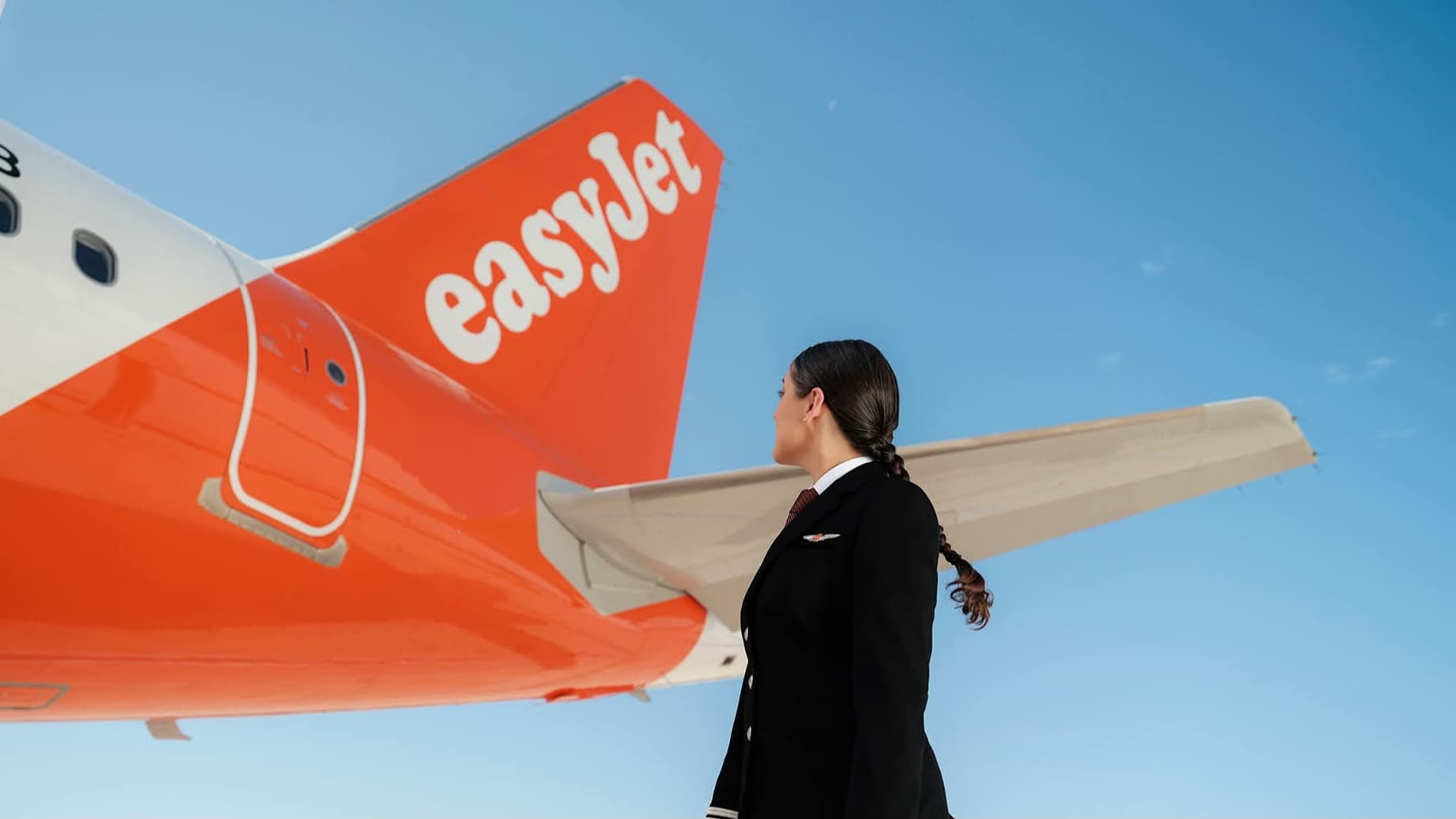
**EasyJet and Schiphol launch TaxiBot for greener taxiing**
EasyJet has announced the operational deployment of the electric TaxiBot at Amsterdam-Schiphol, making the Dutch airport the first European hub to roll out this semi-robotic towing system for its Airbus fleet. Following successful trials in March 2026 and a first commercial passenger flight on April 30, the airline is now equipping four Airbus aircraft (including three A320neo) to use the system permanently. The initiative is a joint effort with Schiphol, Menzies Aviation, Airbus, and Smart Airport Systems (SAS), and is part of the European HERON demonstrator under the SESAR programme.
**How the TaxiBot works**
The TaxiBot is a hybrid-electric semi-robotic tractor that connects to the aircraft's nose wheel and tows it from the gate to a point near the runway. Unlike a conventional pushback, it covers most of the taxi route while the main engines remain off, with only the auxiliary power unit (APU) running. This drastically reduces kerosene burn on the ground, cutting CO₂, NOx, and ultrafine particle emissions, as well as noise around the apron and taxiways. Smart Airport Systems claims fuel savings of up to 75% compared to two-engine taxiing, and pollutant reductions of up to 90% in optimal conditions. At Schiphol, where taxi times can be very long—especially to the Polderbaan runway—savings can reach 65% on those segments.
**Environmental and operational impact**
For easyJet, each TaxiBot-assisted flight saves an average of 95 kg of fuel and 299 kg of CO₂. With progressive fleet equipping, this could translate into thousands of tonnes of CO₂ avoided annually. Schiphol sees the TaxiBot as a key lever in its goal of fully sustainable ground operations by 2030, complementing other measures like electrification of ground support equipment and optimized traffic management. The airport has been a European testbed for green surface operations through the Digital Sky demonstrators co-funded by the European agency CINEA.
**Why this matters for ATPL and ATC students**
For ATPL students, understanding ground operations like TaxiBot is increasingly relevant as airlines adopt new technologies to reduce fuel burn and emissions. Knowledge of such systems may appear in performance calculations or operational procedures. For ATC trainees, the integration of semi-robotic towing changes taxiway management and sequencing, requiring awareness of new procedures and communication protocols. This real-world example highlights how sustainability drives operational changes that affect both pilots and controllers.