**A Milestone in Fleet Renewal**
British low-cost carrier easyJet has taken delivery of its 100th Airbus A320neo family aircraft at Hamburg, marking a significant step in its fleet modernization program. With this delivery, easyJet’s fleet now totals 359 aircraft, all from Airbus. The A320neo family now represents over a quarter of the fleet, confirming the acceleration of the carrier’s single-aisle renewal. Airbus highlights that the A320neo reduces fuel consumption and CO₂ emissions by up to 20% per seat, and cuts noise footprint by 50% compared to the previous generation, thanks in part to the CFM LEAP-1A engines.
**Airspace Cabin and Product Upgrade**
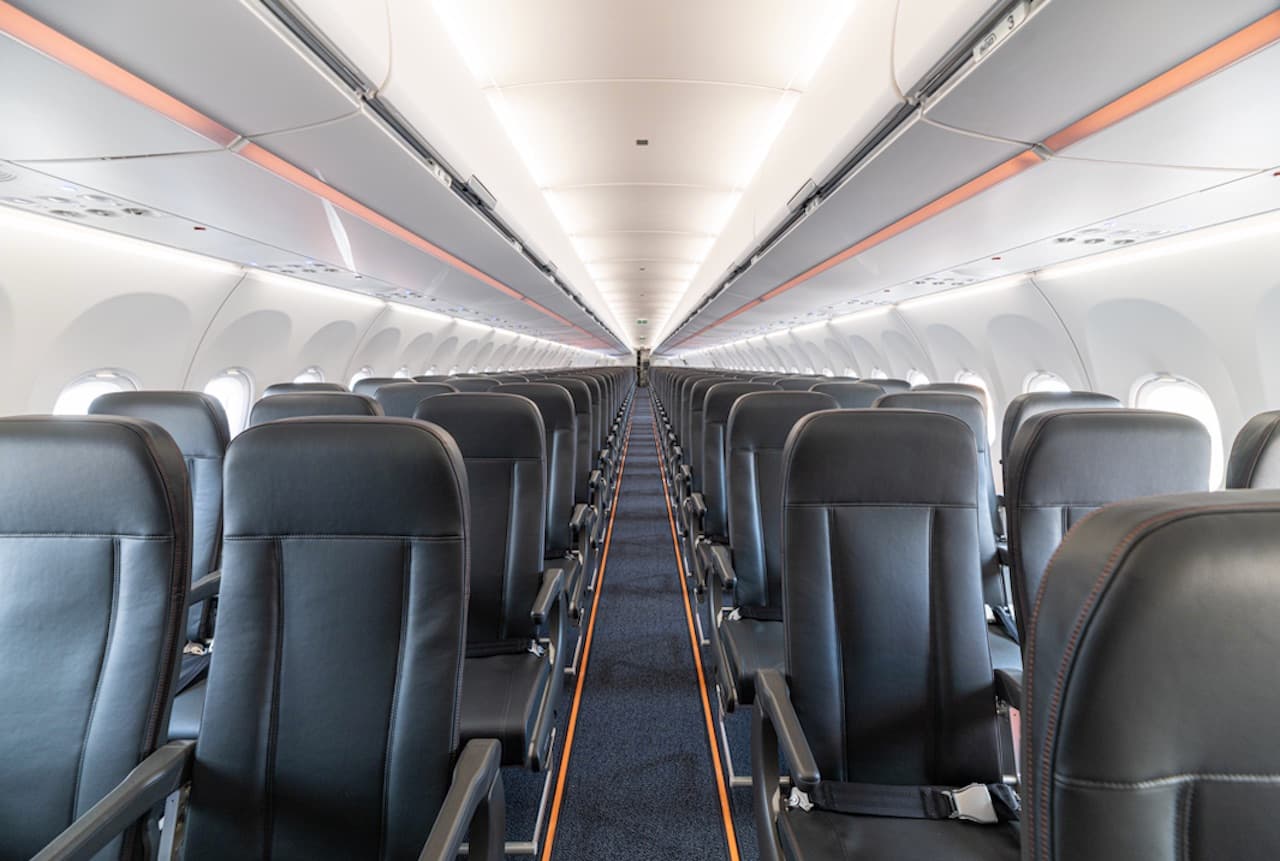
This 100th aircraft also introduces a notable cabin evolution. easyJet has decided to standardize the Airbus Airspace cabin on all future deliveries, and to retrofit 81 A320neo and A321neo already in service. Key changes include larger Airspace overhead bins, redesigned lighting with ambient colors, contactless lavatories, braille indicators for accessibility, and optimized galleys with double ovens at both ends. These upgrades reflect a broader trend in the low-cost segment: a gradual enhancement of the passenger experience while maintaining high-density seating.
**Technical Optimizations and Operational Gains**
Beyond the cabin, easyJet is introducing several technical improvements. New aircraft will feature non-retractable multi-function LED lights replacing nose-gear systems, reducing drag and weight. The aircraft are also compatible with up to 50% sustainable aviation fuel (SAF), with a target of 100% by 2030, in line with Airbus and engine manufacturer certifications. The airline is also leveraging digital tools, notably the Skywise platform, for predictive maintenance and operational optimization.
**A Carbon Strategy Based on Marginal Gains**
Fleet renewal is part of a broader goal: reducing carbon intensity by 35% by 2035. easyJet is also pursuing a series of operational gains: ultra-light Kestrel seats from 2028 (–20% weight, +5 cm legroom), advanced sharklet retrofits on A320ceo (saving up to 970 tonnes of CO₂ per aircraft per year), single-engine taxiing, optimized fuel loading, lighter paint (estimated to save over 4,000 tonnes of CO₂ by 2030), reduced APU usage (notably at Milan Malpensa), deployment of FANS-C communication for optimized European trajectories, and SpaceFlex cabin layouts to increase capacity and reduce per-seat footprint.
**Strengthened Industrial Partnership**
The delivery of the 100th aircraft also underscores the strength of industrial partnerships. "The delivery of the 100th A320neo demonstrates the common innovation DNA that links Airbus and easyJet," said Johan Pelissier, President Europe of Airbus Commercial Aircraft. "This important milestone testifies to more than 25 years of trust-based partnership," added Gaël Méheust, President of CFM International.
For ATPL and ATC students, this news illustrates real-world fleet planning, the operational impact of new technologies (engine efficiency, SAF compatibility, predictive maintenance), and the regulatory and environmental pressures shaping modern airline strategies. Understanding these trends is essential for future pilots and controllers who will operate within increasingly efficient and digitally connected fleets.