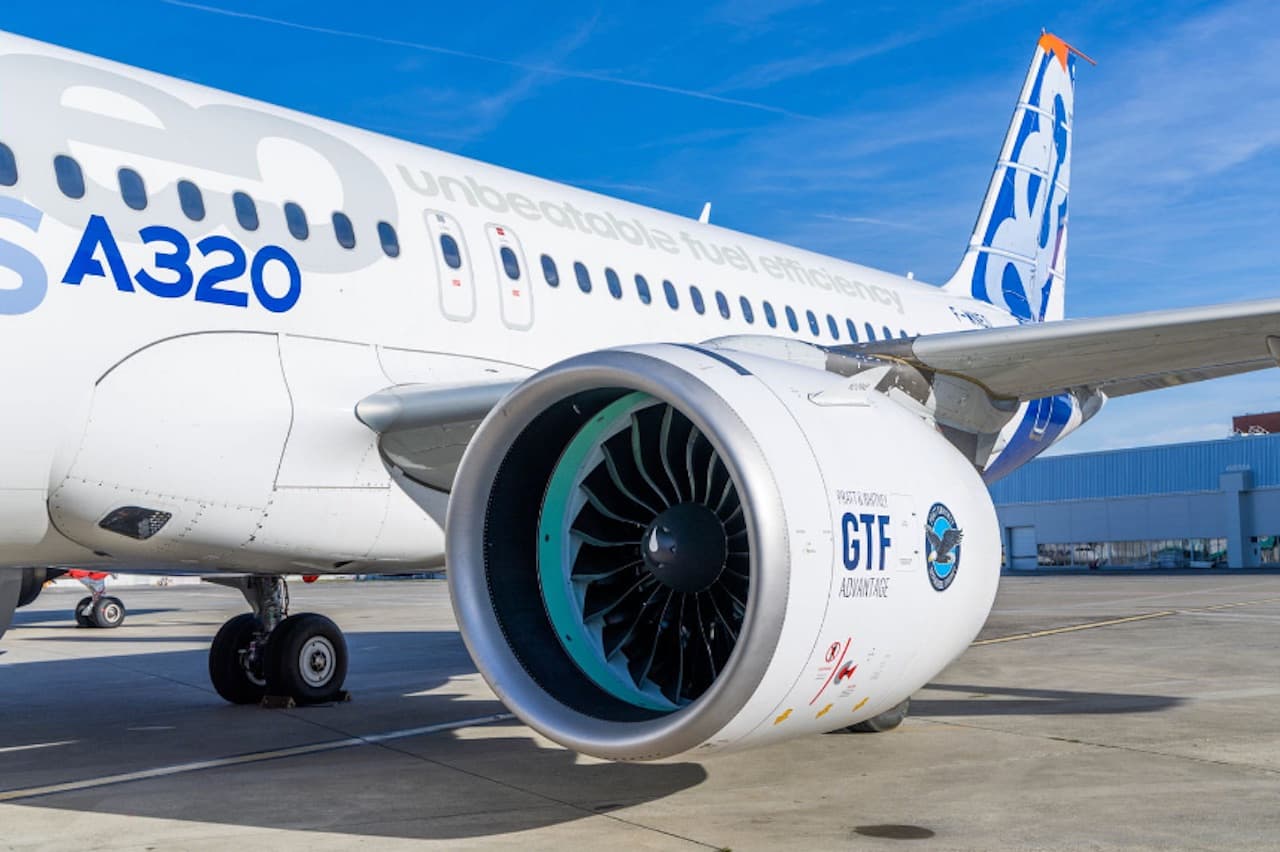
The European Union Aviation Safety Agency (EASA) has formally certified the Pratt & Whitney GTF Advantage engine for installation on Airbus A320neo family aircraft, completing the regulatory pathway that began with FAA certification in February 2025 and EASA type validation in October 2025. This final approval clears the way for production engine deliveries and commercial service entry later in 2026, marking a significant advancement in narrowbody propulsion technology that will gradually become the production standard by 2028.
From an operational perspective, the GTF Advantage offers tangible performance improvements that directly impact flight planning and aircraft capabilities. Pratt & Whitney claims the engine provides 4% additional sea-level thrust and up to 8% more thrust at high-altitude airports compared to current-generation GTF engines. This enhanced performance translates to increased maximum takeoff weight or extended range, potentially opening new route possibilities for A320neo and A321neo operators. For ATPL students, understanding these performance parameters is crucial as they affect weight and balance calculations, takeoff performance data, and route planning considerations that form the foundation of professional flight operations.
The engine's technical design features substantial upgrades to the hot section (combustion chamber and high-pressure turbine), which Pratt & Whitney describes as the most advanced in the narrowbody market. These improvements aim to enhance durability while maintaining the fuel efficiency advantages of the Geared Turbofan concept. Most significantly for maintenance planning, the GTF Advantage promises extended time-on-wing between major overhauls, potentially doubling maintenance intervals compared to earlier versions. This translates to reduced maintenance costs per flight hour and improved aircraft availability—critical factors for high-utilization narrowbody fleets that dominate short-to-medium-haul operations worldwide.
A key operational consideration for airlines is the engine's interchangeability with existing PW1100G-JM engines. The GTF Advantage is described as "fully intermixable and interchangeable" with current GTF engines, allowing operators to maintain mixed fleets during the transition period without significant operational complexity. Additionally, Pratt & Whitney offers a retrofit program called GTF Hot Section Plus (HS+) for existing PW1100G-JM engines, incorporating approximately 90-95% of the durability benefits of the GTF Advantage through hot section upgrades during scheduled maintenance visits beginning in late 2026.
For aviation professionals in training, this certification represents more than just another engine approval. It signals the continued evolution of propulsion technology that directly impacts aircraft performance, operational economics, and maintenance practices. ATPL students must understand how such technological advancements affect flight planning, performance calculations, and operational limitations. ATC students should recognize how improved aircraft performance might influence departure procedures, climb gradients, and route optimization. The GTF Advantage's development also occurs against the backdrop of previous GTF durability issues, highlighting the industry's ongoing efforts to balance technological innovation with operational reliability—a crucial lesson for future aviation professionals navigating complex technical systems.