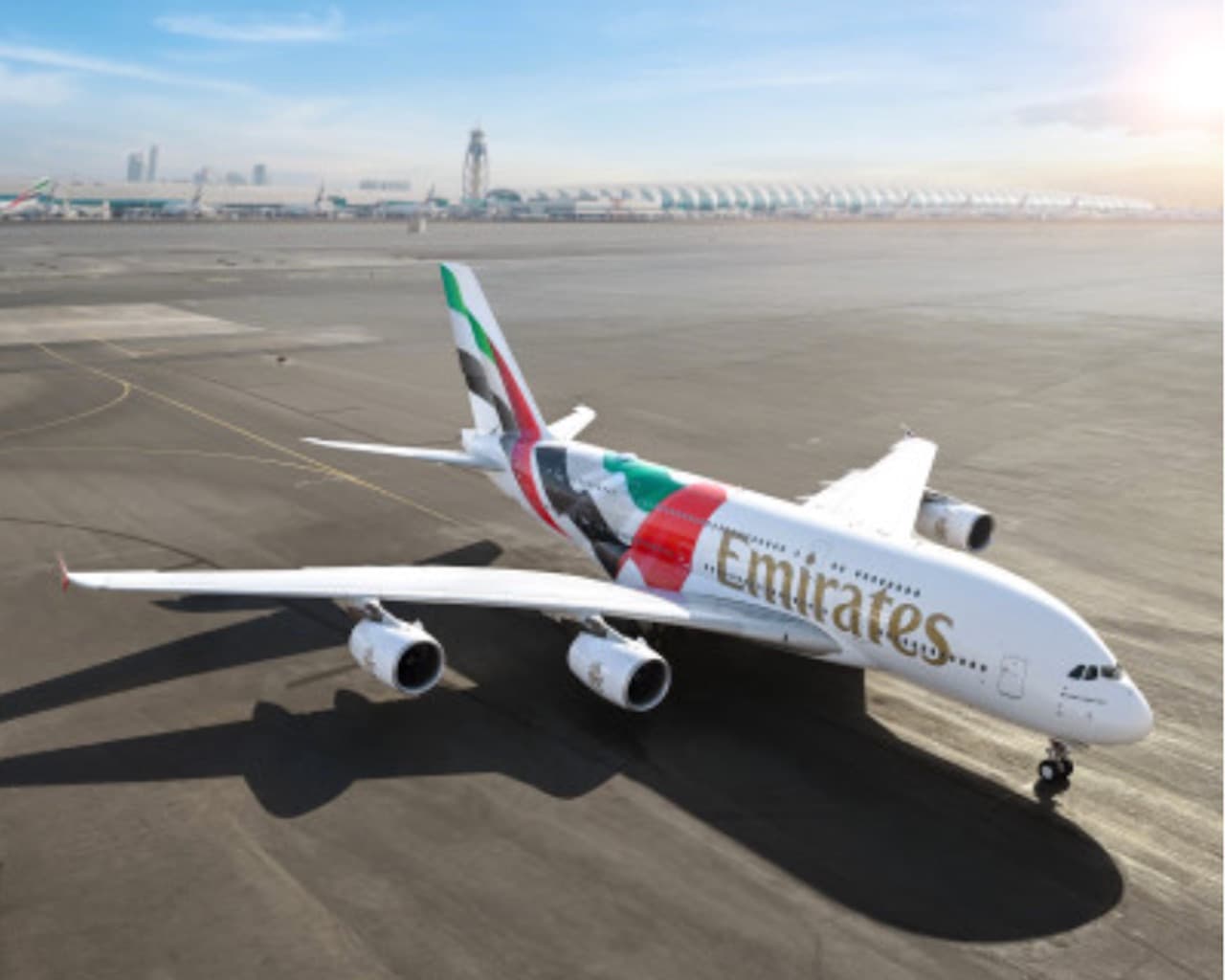
The European Union Aviation Safety Agency (EASA) has published an emergency airworthiness directive (AD 2026-0119-E) requiring immediate inspections on 16 Airbus A380 aircraft after cracks were discovered in critical wing structural elements. The directive targets the wing mid spars – key load-bearing components that handle significant bending and torsional forces during flight. Most affected aircraft are operated by Emirates, with some requiring inspections before their next flight, though EASA stresses that no immediate safety risk exists if checks are performed on time.
This is not the first time the A380 has faced cracking issues. In 2012, micro-cracks were found on rib feet connecting ribs to the wing structure, leading to fleet-wide inspections using non-destructive methods like eddy current and ultrasonic testing. The current directive follows a review of previous inspection data that revealed new cracks in specific spar zones: the Outer Rear Spar (ORS) between ribs 33 and 49, the Outer Inner Front Spar (OIFS) between ribs 8 and 14, and the Outer Front Spar (OFS) between ribs 38 and 49. Emirates, the world's largest A380 operator, had already flagged cracks on older aircraft, some stored during the pandemic and later returned to service, prompting Airbus to deploy up to 60 engineers to assist with inspections and structural upgrades.
For ATPL students, this case is a textbook example of how airworthiness directives work in practice. You will study ADs as part of your technical knowledge syllabus – they are legally binding documents issued by regulators like EASA or the FAA to correct unsafe conditions. Understanding the difference between an emergency AD (requiring immediate action) and a routine AD (with phased compliance) is crucial for your exams and future career. The A380's wing structure, with its composite materials and complex load paths, also highlights why modern aircraft require sophisticated inspection techniques beyond simple visual checks.
For ATC trainees, the operational impact is equally relevant. When an airline grounds multiple A380s for urgent inspections, it can disrupt slot coordination, increase holding patterns, and strain ground handling resources at major hubs like Dubai (DXB) or Frankfurt (FRA). You may see delayed departures or last-minute aircraft substitutions, which affect your sequencing decisions. Moreover, the fact that airlines like Lufthansa and Etihad are reactivating stored A380s due to post-pandemic demand shows how maintenance decisions directly influence fleet availability and, consequently, traffic flow.
EASA has not ordered a full fleet grounding, opting instead for targeted surveillance based on cycles (takeoffs and landings) and age. This balanced approach – maintaining safety while minimizing operational disruption – is a core principle of aviation regulation. For students, it reinforces the idea that safety management is about risk assessment and mitigation, not zero-risk absolutes. As you prepare for your ATPL or ATC exams, remember that real-world events like this are exactly the kind of scenarios examiners love to test: they combine technical knowledge, regulatory awareness, and operational thinking.